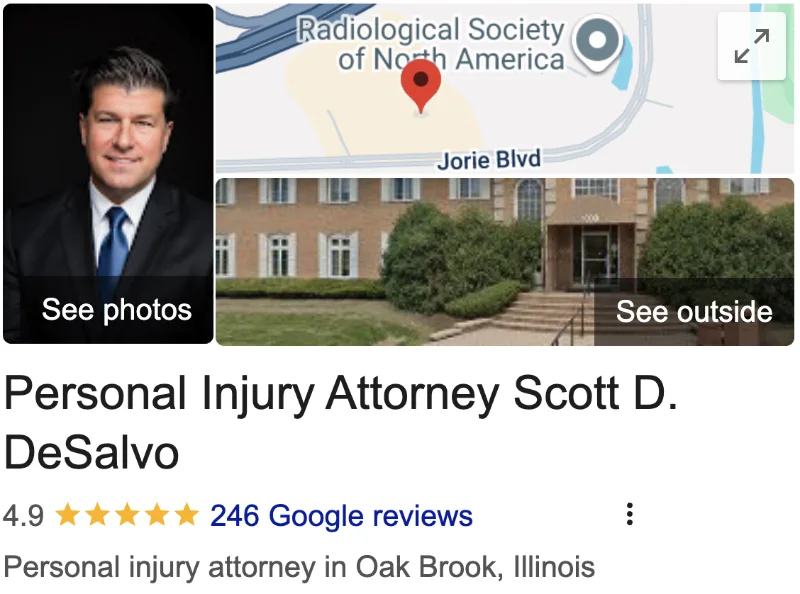


As a Manufacturing Accident Lawyer Chicago with over 27 years of experience handling complex industrial injury cases, I know exactly what it takes to hold employers, manufacturers, and third parties accountable when their negligence causes catastrophic injuries on the factory floor.
Whether you've been hurt by defective machinery at a South Side manufacturing plant, suffered a crushing injury in a West Side factory, or lost a loved one in a preventable industrial accident, an experienced Manufacturing Accident Lawyer Chicago can make the difference between financial devastation and the justice your family deserves.
Let me tell you why I do what I do, and why manufacturing accident cases hit so close to home for me.
When I was just nine years old, my father suffered a catastrophic workplace injury that changed everything for our family. He was a truck driver and proud Teamster, working hard every single day to provide for us. But one terrible day at work, something went horribly wrong. The injuries to his neck, back, and spine were permanent and life-altering. The strong, capable man I knew as my father was never the same again.
Here's the part that still makes me angry after all these years: my dad hired the wrong lawyer to handle his workplace injury case. These so-called attorneys were dismissive, condescending, and failed to communicate with our family about what was happening. Even worse, they didn't fight hard enough and left substantial compensation on the table—money that should have supported our family through the devastating aftermath of his injuries. His case dragged through the legal system for an agonizing seventeen years. And when it finally ended, his own lawyers had the audacity to sue him for additional fees.
After my dad could no longer work, our family struggled financially in ways that shaped my entire childhood. I watched my mother work multiple jobs trying to keep us afloat. I saw my father battle not just his physical pain, but the emotional anguish of feeling betrayed by a legal system that should have protected him. I witnessed firsthand what happens when injured workers don't get the aggressive, competent legal representation they desperately need.
That's exactly why I worked throughout high school to pay my own way, put myself through college without taking on debt, fought through law school, and ultimately dedicated my entire legal career to one mission: making absolutely certain that what happened to my family never happens to yours. I became a Manufacturing Accident Lawyer Chicago specifically because I understand the devastating impact industrial injuries have on working families.
You might be wondering why I'm sharing this personal story on a page about Chicago manufacturing accident cases. Here's why it matters: several months ago, I received a desperate call from a manufacturing worker on Chicago's Southeast Side. He'd been operating a metal press at an automotive parts factory when a safety guard failed, resulting in severe hand and arm injuries that required multiple surgeries. Three different law firms had already turned him away, claiming his case wasn't valuable enough or was too complicated. He felt hopeless, abandoned, and scared about how he'd support his wife and young children.
I met him at a local restaurant near the factory district where he'd worked for twelve years. We sat down over coffee, and I listened—really listened—to everything that happened. I reviewed his medical records, investigated the machinery involved, and discovered that the manufacturer had actually issued a safety recall on that specific press model six months before his accident, but his employer never implemented the required modifications. Within eight months, we secured a settlement that covered every medical expense, compensated him for permanent disability, and provided financial security for his family's future.
That's what I do as a Manufacturing Accident Lawyer Chicago. I help injured factory workers, assembly line employees, machine operators, maintenance personnel, forklift drivers, warehouse workers, and other manufacturing employees throughout Chicago, Cook County, and surrounding areas who've been hurt on the job and need someone who genuinely understands their situation and fights like hell for their rights. As a Manufacturing Accident Lawyer Chicago, I've dedicated over two decades to ensuring that injured industrial workers receive the maximum compensation they deserve.
You shouldn't have to drain your savings or take out loans just to hire legal representation when you're already dealing with medical bills, lost wages, and an uncertain future. That's precisely why I work exclusively on contingency. No money upfront. No out-of-pocket costs. No fee whatsoever until we win your case. And you can reach me directly any time—literally 24 hours a day, 7 days a week, 365 days a year—because manufacturing accidents don't happen on a convenient schedule, and you deserve immediate access to experienced legal counsel.
CALL NOW: 312-500-4500
Here's something most personal injury lawyers won't tell you because they simply don't understand: manufacturing accident cases are exponentially more complex than typical car accident or slip-and-fall cases. The legal landscape is completely different.
I'm not just a general injury lawyer who occasionally handles a factory case. As a Manufacturing Accident Lawyer Chicago, I've spent years developing specialized expertise in industrial accidents, OSHA regulations, machinery safety standards, workers' compensation laws, and third-party liability claims that arise in manufacturing environments. I know the difference between a power press accident and a lockout/tagout failure. I understand machine guarding requirements, conveyor system hazards, forklift operation standards, and chemical exposure protocols.
When you work with a Manufacturing Accident Lawyer Chicago who truly understands industrial environments, knows the applicable federal and state safety regulations, and comprehends how manufacturing equipment should operate versus how it malfunctioned in your case, you're getting a massive strategic advantage. I've been practicing injury law since 1998—that's over 27 years—and I've spent a significant portion of that time specifically focused on manufacturing and industrial accidents throughout Chicago and the surrounding areas.
The insurance industry and self-insured manufacturers count heavily on injured workers not understanding their legal rights and available options. They're betting that you'll accept whatever inadequate workers' compensation benefits they offer without realizing you might have additional valuable claims against equipment manufacturers, maintenance contractors, or other third parties.
I've witnessed these tactics literally thousands of times in my career as a Manufacturing Accident Lawyer Chicago. An employee gets seriously injured in a factory accident, and the workers' comp adjuster shows up at the hospital acting friendly and concerned. They pressure you to give recorded statements before you've even had time to process what happened. They downplay the severity of your injuries. They rush you into settlements before you know the full extent of your permanent disabilities. They conveniently fail to mention that you might have claims worth hundreds of thousands or even millions of dollars beyond basic workers' comp benefits.
That's absolutely not happening when you have me as your Manufacturing Accident Lawyer Chicago.
I know every single tactic, scheme, and dirty trick these companies employ because early in my legal career, I worked for a large defense firm representing insurance companies and corporations. Yes, you read that correctly. I saw the insurance defense playbook from the inside. I observed how they manipulate injured workers, minimize valid claims, and prioritize profits over people. It was disturbing and unethical. That experience is precisely why I switched sides and now exclusively represent injured people—regular working folks like you who deserve honest representation and maximum compensation. Now, as a Manufacturing Accident Lawyer Chicago, I use that insider knowledge to fight for you, not against you.
As your Manufacturing Accident Lawyer Chicago, I handle every type of industrial and factory accident case, including:
Manufacturing plants throughout Chicago operate thousands of dangerous machines daily, and when safety protocols fail or equipment malfunctions, the results are often catastrophic. From the industrial corridors of the South Side to the manufacturing districts on the West Side, from Bridgeport to Back of the Yards, from Pilsen to Little Village, Chicago's factories present constant hazards to workers.
I handle machinery accident cases involving:
People mistakenly assume that if you're hurt by machinery at work, workers' compensation is your only option. That's completely wrong. As a Manufacturing Accident Lawyer Chicago, I investigate who manufactured the defective equipment, who was responsible for maintenance, who designed the safety systems, and who failed to provide adequate training. These third-party claims can result in compensation many times larger than workers' comp benefits alone.
Forklifts, pallet jacks, tuggers, reach trucks, and other industrial vehicles operate constantly in Chicago manufacturing facilities, and accidents involving these machines cause some of the most severe workplace injuries. According to OSHA, approximately 85 workers die annually in forklift-related accidents, and another 34,900 suffer serious injuries.
I've successfully handled forklift accident cases involving:
Forklift cases often involve multiple responsible parties beyond your direct employer. The forklift manufacturer might be liable for design defects. The maintenance company might be responsible for failing to properly service the equipment. A third-party contractor operating the forklift might bear responsibility. As your Manufacturing Accident Lawyer Chicago, I investigate all potential defendants to maximize your recovery.
Manufacturing facilities throughout Chicago use thousands of hazardous chemicals daily, including solvents, acids, bases, adhesives, coatings, degreasers, and other toxic substances. When proper safety protocols aren't followed or protective equipment fails, workers suffer devastating chemical burns, respiratory injuries, neurological damage, and occupational diseases.
I handle chemical exposure cases involving:
Chemical exposure cases require extensive medical documentation and expert testimony to prove causation. As a Manufacturing Accident Lawyer Chicago with experience in toxic tort litigation, I work with occupational medicine specialists, toxicologists, and industrial hygienists to build compelling cases that demonstrate how chemical exposures caused your injuries and what the long-term health consequences will be.
Manufacturing workers frequently perform tasks at dangerous elevations—on mezzanines, catwalks, ladders, scaffolding, and aerial lifts. When fall protection equipment fails or isn't provided, when elevated work surfaces lack proper guardrails, or when ladders are defective, workers plunge to concrete floors and suffer life-altering injuries.
I've successfully represented manufacturing workers injured in:
Fall cases in manufacturing environments often trigger OSHA investigations, which generate valuable evidence for your case. As your Manufacturing Accident Lawyer Chicago, I obtain all OSHA inspection reports, citations, and findings to use as proof of safety violations that caused your injuries.
Caught-between hazards represent one of OSHA's "Fatal Four" causes of construction deaths, but they're equally deadly in manufacturing settings. Workers get caught between moving machinery parts, pinned between equipment and walls, or crushed by falling materials, resulting in severe injuries or death.
I handle caught-between accident cases involving:
Manufacturing facilities contain numerous fire and explosion hazards—welding operations, combustible dust, flammable liquids, compressed gases, hot surfaces, and electrical equipment. When these hazards aren't properly controlled, devastating burns and explosion injuries occur.
I represent manufacturing workers who've suffered:
Burn injuries often result in the most catastrophic and expensive cases I handle as a Manufacturing Accident Lawyer Chicago. Severe burns require extended hospitalization, multiple surgeries, skin grafts, and years of painful rehabilitation. The medical costs are astronomical, and the permanent disfigurement and disability devastate victims' lives and earning capacity.
Not all manufacturing injuries happen in a single traumatic event. Many workers develop serious injuries over months or years from repetitive motions, awkward postures, forceful exertions, and poor ergonomics on assembly lines and manufacturing workstations.
I handle cumulative trauma cases including:
Insurance companies love to claim that repetitive stress injuries are just "normal wear and tear" or result from activities outside work. As your Manufacturing Accident Lawyer Chicago, I work with ergonomics experts and occupational medicine physicians to prove that your job duties directly caused your disabling conditions.
Manufacturing facilities contain extensive electrical systems—high-voltage equipment, control panels, motor connections, and temporary power supplies. When electrical systems aren't properly maintained or when lockout/tagout procedures fail during maintenance, workers suffer severe electrical burns, cardiac injuries, and often death.
I handle electrical injury cases involving:
Manufacturing environments present constant amputation hazards—unguarded machines, rotating equipment, cutting tools, and crushing mechanisms. When safety guards are removed, disabled, or never installed, workers lose fingers, hands, arms, feet, and legs in preventable accidents.
I've successfully represented manufacturing workers who've suffered:
Amputation cases require aggressive legal action to secure compensation that truly reflects the permanent life-altering consequences. As a Manufacturing Accident Lawyer Chicago, I retain vocational experts to calculate lifetime lost earning capacity, life care planners to project future medical costs for prosthetics and adaptations, and economic experts to present the full financial impact to juries.
Too many manufacturing workers never come home from their shifts. When industrial accidents prove fatal, surviving family members face emotional devastation compounded by financial catastrophe—lost income, burial expenses, and an uncertain future.
I handle wrongful death cases arising from:
No amount of money can bring back a loved one, but maximum compensation ensures the family maintains financial stability and honors the deceased worker's memory. As your Manufacturing Accident Lawyer Chicago, I pursue every available claim—workers' compensation death benefits, wrongful death lawsuits against third parties, and survival actions for the deceased's pain and suffering.
Most injured manufacturing workers assume that workers' compensation is their only option after a workplace injury. That's a dangerous misconception that costs victims hundreds of thousands of dollars in compensation they should receive.
Workers' compensation provides:
However, workers' compensation has significant limitations. It doesn't compensate you for pain and suffering. It doesn't provide full wage replacement—only two-thirds of your average weekly wage up to state-mandated maximums. It doesn't account for future earning capacity if your injuries prevent you from advancing in your career. As a Manufacturing Accident Lawyer Chicago, I make sure you understand all your options, not just workers' comp.
Here's where an experienced Manufacturing Accident Lawyer Chicago becomes absolutely essential: identifying all potentially liable third parties beyond your direct employer. These third-party claims allow you to recover full damages—pain and suffering, complete lost wages, future earning capacity, and punitive damages—far exceeding workers' compensation limits.
Potentially liable third parties in manufacturing accident cases include:
Investigating and pursuing these third-party claims requires specialized knowledge and aggressive advocacy. As your Manufacturing Accident Lawyer Chicago, I thoroughly investigate every accident to identify all responsible parties and pursue maximum compensation from every available source.
Manufacturing equipment must meet rigorous safety standards, and when machines are defectively designed, improperly manufactured, or lack adequate safety warnings, the manufacturers can be held strictly liable for resulting injuries.
Product liability claims can be based on:
These cases require extensive investigation, engineering analysis, and expert testimony. As a Manufacturing Accident Lawyer Chicago, I work with mechanical engineers, safety experts, and product designers to prove that equipment defects caused your injuries and that manufacturers should have implemented safer designs.
Property owners and facility management companies have a legal duty to maintain reasonably safe conditions. When dangerous conditions exist at manufacturing facilities—inadequate lighting, slippery floors, structural defects, missing guardrails—and someone gets hurt, premises liability claims may apply.
I pursue premises liability claims involving:
Manufacturing facilities regularly employ contractors for maintenance, repairs, cleaning, and specialized services. When these contractors' negligence causes injuries, they can be held legally liable separate from your employer.
Contractor negligence claims arise from:
As your Manufacturing Accident Lawyer Chicago, I investigate what contractors were working at your facility when your injury occurred and whether their negligent actions or omissions contributed to your accident.
Evidence disappears quickly after manufacturing accidents. Machines get repaired or replaced. Video footage gets automatically overwritten. Witnesses' memories fade. Physical evidence vanishes. Manufacturing companies and their insurance carriers know this, which is why they move aggressively to control and destroy evidence that proves their liability.
When you hire me as your Manufacturing Accident Lawyer Chicago, I take immediate action:
This aggressive early investigation often makes the difference between winning and losing manufacturing accident cases.
Proving the full extent of your injuries and their long-term consequences requires more than just medical records. As your Manufacturing Accident Lawyer Chicago, I ensure your case includes comprehensive medical documentation and expert opinions that maximize your compensation.
I work with:
Manufacturing facilities must comply with hundreds of detailed OSHA safety regulations covering everything from machine guarding to lockout/tagout procedures to hazard communication. When companies violate these regulations and workers get hurt, the violations provide powerful evidence of negligence.
As your Manufacturing Accident Lawyer Chicago, I:
Insurance companies and corporations respect lawyers who actually try cases. They know which attorneys will fold when negotiations get difficult and which lawyers have the skills, resources, and determination to take cases to trial and win.
I've tried cases to verdict and have a reputation as a Manufacturing Accident Lawyer Chicago who doesn't back down. That reputation translates directly into higher settlement offers for my clients. Insurance adjusters and defense lawyers know that if they don't make reasonable offers, I won't hesitate to file lawsuits and prepare for trial.
My approach includes:
My job as your Manufacturing Accident Lawyer Chicago is to identify every possible source of compensation and pursue maximum recovery from each. This typically includes:
Each of these compensation sources requires different legal strategies, documentation, and expertise. As an experienced Manufacturing Accident Lawyer Chicago, I handle all aspects simultaneously to maximize your total recovery.
Manufacturing companies often "fix" dangerous conditions immediately after accidents, making it impossible to prove what actually caused your injuries. Equipment gets repaired, modified, or removed. Maintenance records mysteriously disappear. Witnesses suddenly develop amnesia.
How I overcome this: Immediate preservation letters, independent investigations, witness interviews before companies pressure employees, and aggressive discovery litigation to uncover hidden evidence. When companies destroy evidence, I pursue sanctions and adverse inference instructions that help prove liability.
Defense lawyers love blaming injured workers for their own accidents. They claim you weren't paying attention, you failed to follow procedures, you disabled safety equipment, or you were improperly trained and shouldn't have been operating the machinery.
How I overcome this: Comprehensive investigation proving that employer negligence, defective equipment, or third-party actions caused your injuries. Even when workers share some fault, Illinois law allows recovery as long as you're less than 50% at fault. I present evidence that employers failed to provide adequate training, supervision, and safe equipment.
Insurance companies routinely claim that your injuries aren't as severe as you claim, that you've reached maximum medical improvement sooner than your doctors recommend, or that you can return to work when you clearly cannot.
How I overcome this: Comprehensive medical documentation from treating physicians, independent medical examinations from respected specialists, functional capacity evaluations proving work limitations, life care plans documenting future needs, and vocational rehabilitation assessments demonstrating lost earning capacity.
Manufacturing accidents often involve multiple potentially responsible parties—your employer, equipment manufacturers, component suppliers, maintenance contractors, staffing agencies, and others. Each party has its own insurance company and defense lawyers, all trying to blame each other while minimizing your compensation.
How I overcome this: Thorough investigation identifying all liable parties, strategic litigation that prevents defendants from escaping liability by blaming each other, aggressive discovery uncovering each party's role in causing your injuries, and expert testimony proving causation and shared responsibility.
Insurance adjusters frequently offer settlements based solely on workers' compensation formulas, ignoring additional third-party claims and full damages. They hope injured workers will accept inadequate compensation without understanding their true rights.
How I overcome this: Comprehensive case evaluation identifying all compensation sources, detailed damages calculation including pain and suffering and lost earning capacity, presentation of comparable jury verdicts demonstrating true case value, and willingness to litigate when settlement offers are unreasonable.
While I can't share specific settlement amounts or client identities due to confidentiality agreements, I can tell you about the types of outcomes I've achieved for injured manufacturing workers:
These results don't happen by accident. They're the product of thorough investigation, aggressive advocacy, expert support, and a willingness to fight insurance companies and corporations who try to minimize compensation for injured workers. As your Manufacturing Accident Lawyer Chicago, I bring these same strategies and determination to every case I handle.
Your health comes first, always. Report your injury to your supervisor immediately and seek appropriate medical care. If it's an emergency, call 911 or go to the emergency room. For less urgent injuries, see the company doctor or your own physician as soon as possible.
Do not minimize your symptoms or tough it out. Pain that seems minor immediately after an accident often worsens substantially over the following hours and days. Get examined, get treatment, and create documentation of your injuries from the very beginning.
Illinois law requires that you notify your employer of a work injury within 45 days, but earlier notification is always better. Report the accident to your supervisor verbally, and then follow up with written notification. Keep a copy of any accident reports, incident reports, or written notifications for your records.
Be honest and accurate in your reporting, but don't speculate about what happened or make unnecessary statements. Stick to the basic facts: when the accident occurred, where it happened, what equipment was involved, and what injuries you sustained.
If you're physically able and it's safe to do so, document the accident scene before conditions change:
Insurance adjusters will contact you quickly—sometimes within hours of your accident—wanting to take your recorded statement. They'll act friendly and concerned, but their goal is to get you to say things that damage your case.
Politely decline to give any recorded statements until you've spoken with a Manufacturing Accident Lawyer Chicago. You're required to cooperate with workers' compensation proceedings, but you should have legal representation before making any statements that could affect your rights.
The sooner you have an experienced lawyer protecting your rights, the better your outcome will be. Evidence disappears. Memories fade. Companies hide information. Insurance companies lock in unfavorable statements. Deadlines pass.
Call me at (312) 500-4500 anytime—day or night, weekends and holidays included. The consultation is completely free, and you're under no obligation. I'll evaluate your case, explain your rights, and advise you on the best path forward. If I take your case, you pay nothing unless we win compensation for your injuries.
"Scott is absolutely fantastic. He will always go the extra mile for his clients. They always take the time to return phone calls at all hours and I highly recommend him to all my friends."
-Melissa Brooks
"Great people and Scott's a great lawyer. They helped me make the wisest decision for my case, and that's important in serious legal matters. I trust him completely. He is the one to call."
-Tony Skvarenina
"Beyond satisfied with the services I received from this law firm. Definitely recommend! They got me fully paid and all the doctor bills, too. If you want the best, this is the law firm for your injury case!"
-Cynthia Rodriguez
"Scott represented me and I was really pleased with everything, my car accident paid a lot and quick. If you want a good Lawyer who is responsive, and straight with you, I highly recommend him."
-Greg Garcia
Workers' compensation cases typically follow this general timeline:
Timeline varies significantly based on injury severity, disputes over medical treatment or benefits, and whether the employer contests liability.
Third-party personal injury lawsuits against manufacturers, contractors, or other liable parties typically involve:
Complex manufacturing cases involving multiple defendants, extensive discovery, and expert testimony often take longer.
Several factors affect how long your case takes:
As your Manufacturing Accident Lawyer Chicago, I work to resolve cases as efficiently as possible while never sacrificing the compensation you deserve. Sometimes quick settlements are appropriate. Other times, taking more time to fully develop
I work exclusively on contingency for manufacturing accident cases, which means you pay absolutely nothing upfront and nothing throughout the entire process. I only get paid if and when I successfully recover compensation for your injuries.
My contingency fee structure:
If I don't win your case, you owe me nothing. That's my guarantee as a Manufacturing Accident Lawyer Chicago who believes in fighting for justice, not collecting fees from people who can't afford to pay.
Manufacturing accident cases require significant expenses for investigation, expert witnesses, medical records, court costs, and other necessities. I advance all these costs on your behalf—you don't pay anything out of pocket.
Typical case expenses include:
These expenses are reimbursed from your settlement or verdict, but only if we win. If we don't recover compensation, you don't owe me for these advanced costs either.
Your initial consultation with me is completely free and comes with zero obligation. We'll discuss what happened, review any documentation you have, explain your legal rights and options, and answer all your questions. If I believe you have a valid case, I'll explain my recommended strategy and fee arrangement. If I don't think you have a strong case, I'll tell you that honestly.
You have absolutely nothing to lose by calling. You'll leave our consultation better informed about your rights whether or not you hire me.
Check out the free guide right now or call us right now.
For workers' compensation claims, you must notify your employer within 45 days of the accident (or within 45 days of when you should have reasonably known a work-related injury existed). You have three years from the accident date to file an Application for Adjustment of Claim with the Illinois Workers' Compensation Commission, although filing earlier is strongly recommended.
For third-party personal injury lawsuits, Illinois law gives you two years from the date of injury to file. Missing these deadlines means losing your rights permanently, which is why immediate consultation with a Manufacturing Accident Lawyer Chicago is critical.
Generally no—workers' compensation is your exclusive remedy against your direct employer. However, you can pursue additional claims against third parties whose negligence contributed to your injuries, including equipment manufacturers, maintenance contractors, staffing agencies, property owners, and others.
There are limited exceptions where you might be able to sue your employer directly: if your employer doesn't carry required workers' compensation insurance, if your employer intentionally injured you, or if your employer committed fraud or acted with deliberate intent to harm you. These exceptions are narrow and difficult to prove.
For workers' compensation cases, fault doesn't matter at all. You're entitled to benefits regardless of whether you were partially or even entirely at fault for the accident. Workers' comp is a no-fault system.
For third-party lawsuits, Illinois follows "modified comparative negligence" rules. As long as you're less than 50% at fault, you can still recover damages. Your compensation is simply reduced by your percentage of fault. For example, if you're found 20% at fault and your damages are $500,000, you'd recover $400,000. An experienced Manufacturing Accident Lawyer Chicago knows how to minimize your fault percentage and maximize recovery.
Case value depends on numerous factors including:
Minor injuries with complete recovery might settle for tens of thousands of dollars. Catastrophic injuries causing permanent disability often result in settlements or verdicts exceeding one million dollars. Fatal accidents can result in multi-million-dollar recoveries.
Every case is unique, which is why you need a thorough evaluation from an experienced Manufacturing Accident Lawyer Chicago. I'll review all facts and provide an honest assessment of your case's value range.
For workers' compensation cases, you'll need to testify at an arbitration hearing before a workers' compensation arbitrator. This is less formal than court and typically takes place in a conference room rather than a courtroom.
For third-party lawsuits, most cases settle without going to trial. However, if we do proceed to trial, you'll need to testify in court before a judge and jury. You might also need to give a deposition—sworn testimony taken outside court—during the discovery phase of litigation.
I thoroughly prepare all clients for testimony, explaining what to expect, conducting practice sessions, and ensuring you feel confident and comfortable.
Don't panic—not all statements damage your case. Sometimes early statements are factually accurate and don't create problems. Other times, statements contain inconsistencies, admissions, or information that insurance companies use to deny or minimize your claim.
Contact me immediately so I can review what you said and develop strategies to address any issues. It's critical that you don't give any additional statements without legal representation. As your Manufacturing Accident Lawyer Chicago, I'll handle all future communications with insurance companies and employers.
Absolutely yes—and these cases often result in the largest settlements. Equipment manufacturers have a legal duty to design, manufacture, and sell reasonably safe machinery. When defects cause injuries, manufacturers can be held strictly liable regardless of whether they were "negligent."
Product liability claims can be based on:
These cases require extensive investigation and expert testimony from engineers and safety specialists. As an experienced Manufacturing Accident Lawyer Chicago, I have the resources and expertise to successfully litigate complex product liability claims.
Illinois law strictly prohibits employers from firing, demoting, harassing, or retaliating against employees who file workers' compensation claims or pursue legal rights after workplace injuries. Such retaliation violates public policy and gives you a separate legal claim against your employer.
If you've been retaliated against, document everything:
Contact me immediately if you believe you're experiencing retaliation. As your Manufacturing Accident Lawyer Chicago, I can pursue a retaliatory discharge lawsuit in addition to your injury claims.
It depends on how long ago the accident occurred and what claims you're pursuing.
For workers' compensation: You have three years from the accident date to file an Application for Adjustment of Claim. However, if you've been receiving benefits, this deadline may be extended. You also have three years from the date you last received benefits to file a claim.
For third-party lawsuits: You have two years from the injury date to file. If you didn't immediately discover your injury (such as with cumulative trauma or occupational diseases), the deadline may run from when you discovered or should have discovered the injury.
Don't assume it's too late. Call me immediately for a case evaluation. Statutes of limitations have numerous exceptions and nuances, and I might be able to help even if significant time has passed.
If your manufacturing injuries permanently prevent you from returning to any gainful employment, you may be entitled to permanent total disability (PTD) benefits through workers' compensation. PTD benefits pay you two-thirds of your average weekly wage for life (subject to state maximum rates).
Additionally, in third-party lawsuits, I pursue full compensation for lost earning capacity—the difference between what you would have earned over your remaining work life versus what you can now earn given your restrictions. These calculations often exceed one million dollars for younger workers with decades of potential earnings lost.
I also help clients apply for Social Security Disability Insurance (SSDI) and any long-term disability benefits available through employer-sponsored plans. Maximizing your total recovery from all sources is critical when you can never work again.
Workers' compensation should cover all reasonable and necessary medical treatment related to your injury. The employer's insurance company selects the initial treating physician, but you have rights to change doctors and obtain second opinions under Illinois law.
If treatment is being unreasonably denied or delayed, I can file expedited petitions with the Illinois Workers' Compensation Commission to order treatment.
If you need medical care for non-work-related aspects of your injuries or if workers' comp is denying necessary treatment, I can help arrange for doctors who treat on a lien basis—meaning they agree to be paid from your eventual settlement or verdict. Your own health insurance may also cover some treatment.
You should never skip necessary medical treatment because of cost concerns. Call me to discuss your options.
If you've been injured in a manufacturing accident in Chicago or anywhere throughout Illinois, time is critical. Evidence disappears. Deadlines pass. Insurance companies take advantage of unrepresented workers. The longer you wait, the more you risk losing compensation you deserve.
Don't try to navigate this complex legal process alone. Manufacturing accident cases involve intricate workers' compensation laws, product liability principles, OSHA regulations, and personal injury doctrines that general practice lawyers simply don't understand. You need an experienced Manufacturing Accident Lawyer Chicago who has successfully handled hundreds of industrial injury cases and knows exactly how to maximize your recovery.
I'm available right now to take your call and provide a free, no-obligation consultation. We'll discuss what happened, review your medical situation, explain your legal rights, identify all potential claims and compensation sources, and develop a strategic plan to get you maximum compensation.
Remember: no money out of pocket, no fee until we win.
You have everything to gain and absolutely nothing to lose by calling right now.
Don't let insurance companies, employers, or manufacturers take advantage of you during this vulnerable time in your life. Get a dedicated, experienced Manufacturing Accident Lawyer Chicago who actually cares about injured workers and fights relentlessly for justice on your side.
Your fight is my fight. Your family's future is my priority.
Call me now: (312) 500-4500

Scott DeSalvo founded DeSalvo Law to help injured people throughout Chicago and surrounding suburbs. Licensed to practice law in Illinois since 1998, IARDC #6244452, Scott has represented over 3,000 clients in personal injury, workers compensation, and accident cases.
No Fee Unless You Win | Free Consultation | 24/7 Availability Call or Text: (312) 500-4500
>>Read More
Main Office:
1000 Jorie Blvd Ste 204
Oak Brook, IL 60523
New Cases: 312-500-4500
Office: 312-895-0545
Fax: 866-629-1817
service@desalvolaw.com
Chicago and Other Suburban Offices
By Appointment Only