

I need to talk to you about something that no parent should ever have to face. If your child was sexually abused at school, whether by a teacher, a coach, an administrator, a counselor, or even another student whose behavior the school knew about and did nothing to stop, you have legal rights. Your child has legal rights. And the institution that was supposed to keep your child safe may owe your family significant compensation for what happened.
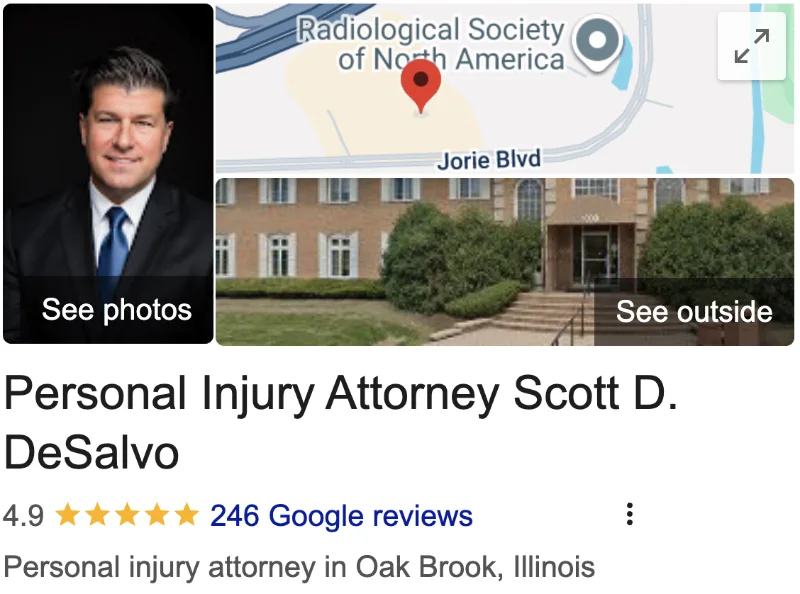
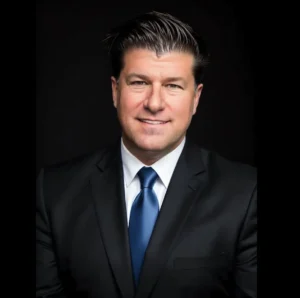
My name is Scott DeSalvo. I’ve been representing injured people in Chicago and throughout Illinois for over 27 years. I handle cases where powerful institutions fail the people they are supposed to protect, and school sexual abuse cases are among the most important cases I take. These cases are not just about money. They are about accountability. They are about making sure that the school that let this happen to your child faces real consequences and is forced to change so it does not happen to someone else’s child.
I understand the weight of what you are going through right now better than most lawyers. When I was nine years old, my father was catastrophically injured at work. What followed was 17 years of legal hell with a lawyer who did not care. That experience shaped everything about how I practice law. Every client I take on is someone I fight for the way I wish someone had fought for my father. When a child is the victim, I fight even harder.
Call me at 312-500-4500. Day or night. Weekends. Holidays. The consultation is free, completely confidential, and there is no obligation. You can tell me what happened, and I will tell you honestly whether you have a case and what I think it could be worth. If I take your case, you pay nothing out of pocket. My fee comes only from what we recover.

School sexual abuse is any sexual conduct, sexual contact, or sexually exploitative behavior directed at a student by someone in a position of trust or authority at the school, or by another student when the school knew or should have known about the danger and failed to act. Under Illinois law, it does not matter whether the student appeared to “consent.” A minor cannot legally consent to sexual activity with an adult in a position of authority. Period.
The forms of school sexual abuse I see most often include physical sexual contact such as touching, fondling, and sexual assault by teachers, coaches, counselors, administrators, or other school staff. I also see grooming behavior, which is the process by which an abuser deliberately builds trust and emotional dependency with a student before escalating to physical abuse. Grooming often involves special attention, gifts, private communication through text or social media, and manipulation of the student’s emotional vulnerabilities. It is a calculated predatory strategy, and schools that fail to recognize or respond to it are negligent.
School sexual abuse also includes abuse by other students when the school had reason to know about the threat. If a student has a documented history of sexually aggressive behavior and the school fails to take appropriate steps to protect other students, the school can be held liable for the resulting harm. I have seen cases where schools were warned about a student’s behavior through formal complaints, disciplinary records, or direct reports from parents, and the school did nothing. When a sexual assault follows, the school bears responsibility.
Other forms include sexual exploitation such as the production or distribution of sexual images of students, sexual harassment that the school allows to persist, and abuse that occurs during school-sponsored activities, field trips, or extracurricular programs. If it happens within the school’s sphere of responsibility, the school has a duty to prevent it.
In most school sexual abuse cases, the goal is not just to hold the individual abuser accountable. The individual abuser belongs in prison, and the criminal justice system handles that. The civil lawsuit is about holding the institution accountable, because the institution is almost always where the real failure occurred, and the institution is where the money is to fund your child’s recovery.
For public schools in Illinois, the school district is the primary institutional defendant. Under Illinois law, public school districts owe students a duty of care. When a school district is negligent in hiring, supervising, or retaining an employee who abuses a student, or when the district fails to respond to known dangers, it can be held liable. School districts are governmental entities protected by the Illinois Local Governmental and Governmental Employees Tort Immunity Act (745 ILCS 10/1-101 et seq.), which provides certain immunities. However, and this is critical, those immunities do not apply when the school district’s conduct rises to the level of willful and wanton misconduct.
Willful and wanton conduct is defined under the Tort Immunity Act as “a course of action which shows an actual or deliberate intention to cause harm or which, if not intentional, shows an utter indifference to or conscious disregard for the safety of others.” When a school receives complaints about a teacher’s inappropriate behavior with students, or sees red flags like a teacher spending excessive one-on-one time with a student behind closed doors, and does nothing, that is willful and wanton conduct. That is how you overcome governmental immunity.
Illinois juries have shown they will hold school districts accountable when the evidence supports it. In March 2025, a Cook County jury awarded $15 million against a suburban Chicago school district after finding that the district engaged in willful and wanton misconduct by failing to protect a male student from repeated sexual abuse by a female teacher, despite the student’s mother making repeated complaints. In December 2025, the Chicago Board of Education approved a $17.5 million settlement, the largest school-related sexual abuse settlement in Illinois history, for a former student who was groomed and sexually abused by a school dean over the course of her junior and senior years. The school had failed to act on complaints and failed to enforce its own reporting policies.
Private schools do not have governmental immunity. They can be sued under standard negligence principles. If the school owed a duty to protect its students, breached that duty through negligent hiring, supervision, or retention, and that breach caused harm, the school is liable. Private religious schools, including Catholic schools, have faced significant litigation in Illinois for patterns of concealing abuse, transferring abusers to new schools without disclosure, and failing to implement basic child protection protocols.
School principals, vice principals, superintendents, and other administrators who knew about abuse or complaints and failed to act can be individually liable. In Illinois, the Tort Immunity Act may protect individual public employees from liability for negligence, but not for willful and wanton conduct. An administrator who receives a report of a teacher’s inappropriate relationship with a student and covers it up rather than reporting it has engaged in conduct that goes far beyond mere negligence.
While the primary focus of most civil cases is the institution, the individual abuser can also be named as a defendant. In practice, the abuser often has limited personal assets and no insurance coverage for intentional criminal acts, which is why the institutional claim is so important. But naming the abuser in the civil case can serve other strategic purposes, including obtaining discovery from the abuser about what the school knew.
After 27 years of practice, the patterns of institutional failure in school sexual abuse cases are depressingly consistent:
Illinois law requires schools to conduct criminal background checks on employees. But background checks only catch people who have already been caught. Schools also need to check references thoroughly, verify employment history, and follow up on any gaps or inconsistencies. The Illinois Supreme Court ruled in Jane Doe-3 v. McLean County Unit District No. 5 that a school district that provides false or misleading employment information about a teacher who was disciplined for sexual misconduct breaches its duty of care. That case arose because one district concealed a teacher’s sexual misconduct from the hiring district, and the teacher went on to abuse students at the new school.
This is the most common institutional failure. A student or parent reports that something is wrong. A teacher is spending too much time alone with a student. A coach is sending text messages to a student at night. A counselor is giving a student rides home. And the school does nothing. Or worse, the school tells the parent they will “look into it” and then sweeps it under the rug to protect the school’s reputation. Every complaint that goes uninvestigated is a failure of the school’s duty to protect its students.
Under the Illinois Abused and Neglected Child Reporting Act (325 ILCS 5/4), every teacher, administrator, school employee, school board member, and guidance counselor in Illinois is a mandatory reporter. They are legally required to immediately report suspected child abuse or neglect to the Department of Children and Family Services. A mandated reporter who willfully fails to report suspected abuse is guilty of a Class A misdemeanor for a first violation and a Class 4 felony for a second or subsequent violation. Despite this clear legal obligation, schools routinely fail to report. They conduct their own “internal investigations” instead of calling DCFS. They give the accused employee a chance to resign quietly. They prioritize the school’s image over the child’s safety.
This is the practice of allowing an accused abuser to resign or transfer to another school without disclosing the reason for their departure. The abuser moves to a new school with a clean record and gains access to a new set of victims. Illinois courts have found that school districts that provide false employment references for teachers with histories of sexual misconduct can be held liable for the abuse those teachers commit at their next school.
Schools have a duty to supervise students and staff in a manner commensurate with the known risks. When a school allows a teacher to have unsupervised access to students in classrooms, offices, or vehicles, when it fails to enforce policies about one-on-one contact between adults and students, or when it fails to monitor digital communications between staff and students, it has created conditions that enable abuse.
I have seen cases where students who reported sexual abuse or harassment were punished by the school rather than protected. They were transferred to different classes, treated as troublemakers, or subjected to disciplinary action. This retaliation silences other victims and creates an environment where abuse can continue unchecked.



Illinois has some of the strongest protections for survivors of childhood sexual abuse in the country when it comes to filing deadlines. This is important because many survivors do not come forward for years or even decades after the abuse.
For childhood sexual abuse, meaning abuse that occurred when the victim was under 18, Illinois law under 735 ILCS 5/13-202.2 provides that survivors have 20 years from the date they turn 18 to file a civil lawsuit. That means you have until age 38 to bring your claim. The 20-year period can also run from the date the survivor discovers, or through reasonable diligence should discover, both that the abuse occurred and that an injury was caused by the abuse. This discovery rule is particularly important for survivors who experienced repressed memories or who did not understand the connection between the abuse and their psychological injuries until later in life.
For criminal prosecution, Illinois eliminated the statute of limitations for all felony sex offenses in 2019. There is no deadline to press criminal charges for childhood sexual abuse, regardless of when the abuse occurred.
For adults who are sexually abused, the standard two-year personal injury statute of limitations under 735 ILCS 5/13-202 applies, running from the date of the most recent incident. However, if the abuser or institution used threats, intimidation, or fraud to prevent the victim from coming forward, the statute of limitations can be tolled during that period.
There is one critical exception that many lawyers miss. If the school is a public school district, meaning a governmental entity, you may be required to file a notice of claim within one year of the abuse under the Illinois Tort Immunity Act. Failure to file this notice can bar your claim entirely. This is one of many reasons why contacting a lawyer as soon as possible is essential. The earlier I am involved, the better I can protect your rights.

Illinois does not cap damages in personal injury cases, including sexual abuse cases. The Illinois Supreme Court struck down damage caps as unconstitutional in 2010. That means your child’s recovery is limited only by the evidence and the facts of the case.
Economic damages include the cost of psychological treatment and therapy, which many survivors need for years or even a lifetime. They include psychiatric care, medication, and any specialized treatment programs. They include the cost of educational support if the abuse has affected your child’s academic performance or ability to remain in school. If the abuse has long-term effects on the survivor’s ability to work and earn a living, lost future earning capacity is also recoverable.
Non-economic damages address the profound emotional and psychological harm of sexual abuse: the trauma, the anxiety, the depression, the loss of trust, the loss of childhood, the loss of normal life experiences, and the ongoing psychological injuries that survivors carry. These damages often represent the largest component of recovery in school sexual abuse cases because the psychological harm is so severe and so lasting.
In cases involving particularly egregious institutional conduct, such as deliberate cover-ups, retaliation against reporting students, or patterns of ignoring known predators, punitive damages may be available. Punitive damages are designed to punish the wrongdoer and deter similar conduct in the future.
Illinois also has a Crime Victims Compensation Program that can provide up to $45,000 to eligible victims for medical bills, counseling, lost income, and other expenses. This program operates separately from any civil lawsuit and can provide immediate financial support while your case is pending.
Find Out What YOUR Case Might Be Worth...for free.
I take these cases seriously, and I evaluate them carefully. Here is what I look for:
First, I look for institutional failure. Was the school negligent in hiring, supervising, or retaining the abuser? Did the school receive complaints or observe red flags and fail to act? Did the school violate mandatory reporting requirements? Did the school have policies in place to prevent abuse, and did it follow them? The stronger the evidence of institutional negligence or willful and wanton conduct, the stronger the case against the school.
Second, I look at the severity and duration of the abuse. Cases involving repeated abuse over an extended period, especially where the school had multiple opportunities to intervene and failed to do so, carry the highest damages. Cases involving a single incident can still be viable if the institutional negligence is clear, but the damages analysis is different.
Third, I look at the impact on the survivor. Has the abuse affected the survivor’s mental health, academic performance, relationships, and ability to function? Is the survivor receiving or in need of psychological treatment? The long-term psychological impact of childhood sexual abuse is well documented in medical literature, and I work with qualified mental health experts to establish the full scope of harm.
Fourth, I evaluate the defendants. Does the school district have the resources or insurance to pay a significant settlement or verdict? Is this a public school district, a large private school, a religious institution, or a well-funded organization? Cases against defendants with the capacity to pay meaningful compensation are cases where I can make the biggest difference for my clients.
School sexual abuse cases are emotionally complex and legally challenging. The defense will be aggressive. School districts will invoke governmental immunity under the Tort Immunity Act. They will argue that they had no knowledge of the abuse. They will claim that their policies were adequate. They will hire experts to minimize the psychological harm to the survivor. And they will have experienced defense lawyers who handle these cases regularly.
To win, you need a lawyer who can match them. Someone who has actually tried cases to a jury and won. Someone who understands how to prove willful and wanton conduct against a governmental entity. Someone who knows how to handle sensitive testimony from survivors with care and competence.
I’ve tried over 30 cases to a jury. I trained at Gerry Spence’s Trial Lawyer’s College, one of the most selective trial advocacy programs in the country, and I’ve completed “The Edge,” an advanced program for experienced trial lawyers. I also bring trauma-informed interview training to every case involving abuse. When I work with survivors and their families, I know how to ask the right questions, how to listen, and how to build trust without causing additional harm. This skill matters enormously in these cases, both in working with the survivor and in presenting their story to a jury.
For families who speak Spanish, my office provides bilingual services. No family should have to navigate a legal process this difficult through a language barrier.
Many parents ask me whether they need to choose between criminal prosecution and a civil lawsuit. You do not. They are separate proceedings with different purposes, different standards of proof, and different outcomes.
The criminal case is brought by the state. Its purpose is to punish the abuser. If the abuser is convicted, the punishment is imprisonment, sex offender registration, and a criminal record. The criminal case does not compensate the victim or family financially.
The civil lawsuit is brought by the victim or the victim’s family. Its purpose is to obtain compensation for the harm the abuse caused and to hold the institution accountable. The standard of proof in a civil case is lower than in a criminal case. In a criminal case, the prosecution must prove guilt beyond a reasonable doubt. In a civil case, you only need to prove your claims by a preponderance of the evidence, meaning more likely than not. This means it is possible to win a civil case even if the abuser is acquitted or never charged criminally.
In fact, pursuing both can strengthen your position. Evidence developed in one proceeding can inform the other. And a criminal conviction, if obtained, can be powerful evidence in the civil case.

The school is legally responsible if it was negligent in hiring, supervising, or retaining the person who committed the abuse, or if it knew or should have known about the danger and failed to act. This includes failing to investigate complaints, failing to report to DCFS, ignoring red flags, and failing to enforce its own safety policies. I review the facts of every case in detail during a free consultation to determine whether the school can be held liable.
For childhood sexual abuse, survivors have 20 years from the date they turn 18, which means until age 38. The clock can also start from the date the survivor discovers the connection between the abuse and their injury. There is no statute of limitations for criminal prosecution of felony sex offenses. For claims against public school districts, a notice of claim may need to be filed within one year. Contact a lawyer immediately to protect your rights.
Yes. Illinois’s extended statute of limitations for childhood sexual abuse is specifically designed to give survivors time to come forward. Many survivors do not fully understand or disclose what happened to them until years or decades later. As long as you file within 20 years of turning 18, or within 20 years of discovering the abuse and its connection to your injury, you may have a viable claim.
If the school knew or should have known that the student posed a danger and failed to take reasonable steps to protect other students, the school can be held liable. This includes situations where the abusing student had a documented history of sexually aggressive behavior, where parents or other students had reported concerns, or where the school failed to supervise students adequately.
A background check only catches prior criminal convictions. It does not catch misconduct that was handled internally, complaints that were never reported, or abusers who have not yet been caught. The school’s obligation goes beyond a background check. It includes thorough reference checking, ongoing supervision, enforcement of boundaries between staff and students, and prompt investigation of any complaints or red flags.
I work on a contingency fee basis. You pay nothing upfront and nothing out of pocket. My fee is a percentage of what we recover. If we recover nothing, you owe me nothing. There is zero financial risk to you. I invest my own time, money, and resources into every case I take.
Not necessarily. Many school sexual abuse cases resolve through settlement before trial. If the case does go to trial, your child may need to testify, but there are legal protections available. Illinois courts can allow children to testify in less intimidating settings, and my trauma-informed approach ensures that your child’s involvement in the legal process is handled with the utmost care and sensitivity.
When you call my office, you talk to me. Not a paralegal. Not a call center. Not a case manager. Me. I personally evaluate every case, and if I take yours, I am your lawyer from start to finish. I’ve been doing this for over 27 years. I’ve tried over 30 cases to a jury. I trained at the nation’s most selective trial advocacy programs. I have trauma-informed interview training. And I speak Spanish, so my office can serve bilingual families throughout the entire process. Your fight is my fight.

If your child was sexually abused at school, or if you are an adult survivor of school sexual abuse, I want to hear from you. Call me at 312.500.4500 for a free, completely confidential consultation. I am available 24 hours a day, 7 days a week, 365 days a year. You can also text me or reach out through our website at desalvolaw.com.
There is no fee unless we win your case. There is no judgment. There is no pressure. There is only an honest conversation about what happened, what your rights are, and what I can do to help.
Schools are supposed to be safe places. When they fail in that fundamental obligation, when they allow predators to operate unchecked, when they ignore complaints and cover up abuse, they deserve to be held accountable. That is what I do. And I take it personally.



Scott DeSalvo founded DeSalvo Law to help injured people throughout Chicago and surrounding suburbs. Licensed to practice law in Illinois since 1998, IARDC #6244452, Scott has represented over 3,000 clients in personal injury, workers compensation, and accident cases.
No Fee Unless You Win | Free Consultation | 24/7 Availability Call or Text: (312) 500-4500
>>Read More
Main Office:
1000 Jorie Blvd Ste 204
Oak Brook, IL 60523
New Cases: 312-500-4500
Office: 312-895-0545
Fax: 866-629-1817
service@desalvolaw.com
Chicago and Other Suburban Offices
By Appointment Only