

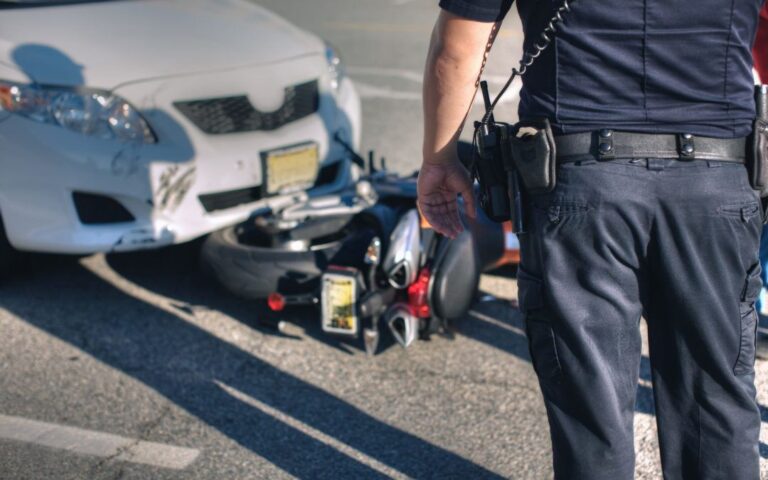
Motorcycle accident claims in Illinois come with a set of challenges that car accident cases simply don't have. I've been representing motorcycle accident victims for close to 30 years, and the single biggest challenge we face is bias. There's a segment of the population — and therefore a segment of potential jurors — that believes motorcycle riders assume the risk of getting hurt just by riding. That bias is real, and it affects everything from insurance settlement offers to jury verdicts.
How do we overcome it? By building an airtight case. That means proving liability beyond any reasonable doubt, documenting the full extent of injuries, and presenting the client as a responsible rider who was doing nothing wrong when someone else's negligence caused the crash. We gather police reports, witness statements, accident reconstruction evidence, and surveillance footage when available.
Another unique challenge in motorcycle cases is the severity of the injuries. Motorcycle riders don't have the protection of a steel frame, airbags, and seatbelts. When a car turns left in front of a motorcycle — which is the most common type of motorcycle accident — the rider often goes over the handlebars or gets thrown into the vehicle. The injuries are typically catastrophic: broken femurs, pelvis fractures, traumatic brain injuries even with a helmet, road rash that requires skin grafts, and internal organ damage.
Because the injuries are so severe, the medical bills are much higher than a typical car accident case. We're frequently dealing with bills in the hundreds of thousands of dollars. The challenge becomes making sure we recover enough to cover those bills and still leave the client with a meaningful amount for their pain and suffering. That sometimes means looking beyond the at-fault driver's insurance policy to other sources of coverage, including the rider's own underinsured motorist policy.
If you've been in a motorcycle accident in Illinois, don't let anyone make you feel like it was your fault just because you ride. Illinois law gives motorcycle riders the same rights as every other driver on the road. Call us at 312-500-4500 for a free consultation.

If you have been injured in a motorcycle accident, there are several things you should know heading into an injury claim.
Motorcycle accident cases are similar to other kinds of motor vehicle crashes, like car accidents or truck accidents. But there are differences you should be aware of. Here are the three things you need to know if you’ve been involved in a motorcycle crash.
First, hire a lawyer who knows something about motorcycles and motorcycle crash cases. You know, having a lawyer who has experience in the particular area of injury law where you need help is absolutely essential.
Attorneys like that know what to look for and what to avoid, as far as putting evidence in and they understand that jurors are often very biased against motorcyclists. Hiring an attorney who has some experience in the are of law like motorcycle crashes is very important.
If you have your irrefutable proof that the crash was the other guy’s fault, the insurance company may try to make a quick settlement with you by offering you less than what your case is really worth.
They will definitely try to take a recorded statement from you before you have a chance to consult with an attorney. My honest advice is that you should have a free case evaluation with an experienced injury lawyer before making any decisions like that.
The second thing I wanna tell you is that it’s important to tell your doctor about all your injuries.
A common issue I see in motorcycle crash cases is that people will talk to their doctor. For example, if they have a broken ankle, all of the treatment is focused on the broken ankle.
But, if you have problems with your foot, or problems with your shoulder or your elbow or something like that, you have to make sure that the doctor documents those injuries and addresses them.
Keep this in mind even though it’s natural in medicine for a doctor to treat the most serious injury first. If you’ve got a little pain in your shoulder or your elbow but a fractured ankle, of course the doctor is going to address the ankle first.
However, it’s important to get all of your injuries documented in the medical records. This is because otherwise, the insurance company will say that maybe your shoulder or elbow injury wasn’t related to the crash.
Always make all of your complaints to the doctor and make sure that they get documented, even if they defer the treatment.The third thing you need to know about motorcycle crash cases is that having a witness is key.
Having an independent witness who says you were driving the speed limit, you were obeying all safety rules and that it was the other person who crashed into you is really important in a motorcycle crash case.
If you keep this info in mind, you are definitely helping yourself and your case if you get hurt in a motorcycle crash.
Any lawyer or judge who handles lots of injury cases in court can tell you that juries think that motorcycle riders are risk takers and are more likely than the driver of the car or truck to speed or drive dangerously.
In an injury case, you have to prove that the other driver caused the collision, not you. How do you fight a case when the jury, or most of them at least, have a preconceived idea that you were probably at least partially at fault?
In my motorcycle accident cases, I stress my client’s experience riding. The number of years he or she has been riding is also important. I also find being very precise about where the crash occurred and exactly what my client was doing is very important.
Even more than any other kind of case, establishing that you are an experienced and safe rider is key to a good outcome for you in a motorcycle crash injury case.
In most motorcycle crash cases I handle, the other driver at some point claims that the motorcycle “came out of nowhere,” so he must’ve been speeding. Just because the other driver did not see you, does not mean that you are doing anything wrong.
But that is certainly the impression the insurance defense attorney will attempt to create with the jury.
I always make sure that the jury understands that motorcycles are much smaller than cars and trucks. It is the duty of the other driver to pay attention to all motor vehicles and people on or near the roadway, not just the ones who are in larger vehicles.
I will also often argue that if a driver doesn’t think he should have to see a vehicle as small as a motorcycle, then does he think it is okay to run over a pedestrian? Pedestrians are even smaller than motorcycles.
The rules of the road in Illinois require drivers to maintain the lookout for other vehicles on the roadway. It is no defense to say that a driver did not see the motorcycle rider.

First, get medical care immediately - motorcycle accident injuries are often severe and adrenaline masks pain. Second, document everything at the scene if you can: photos of the vehicles, road conditions, your injuries, the other driver's information, and witness contacts. Third, do not give a recorded statement to any insurance company before speaking with an attorney. Fourth, know that insurance adjusters will try to blame you for the accident by exploiting bias against motorcyclists. Having an attorney from the start neutralizes that strategy.
No - Illinois is one of the few states without a universal motorcycle helmet law. Adults 18 and over are not required to wear helmets in Illinois. However, if you were not wearing a helmet and suffered a head injury, the insurance company may try to use this against you by arguing you contributed to your own injuries. I challenge those arguments by showing that the accident itself - not the absence of a helmet - caused your injuries, and that comparative fault for not wearing a helmet is limited under Illinois law.
All economic damages including medical bills, future medical costs, lost wages, and future earning capacity. Non-economic damages including pain and suffering, disfigurement from road rash scarring, and loss of normal life. Motorcycle accidents frequently cause catastrophic injuries - amputations, spinal cord damage, traumatic brain injury - for which Illinois imposes no cap on non-economic damages. The human cost of a serious motorcycle accident is enormous and every component of that cost can be pursued in a personal injury claim.
Don't accept that assignment without fighting it. Insurance companies blame motorcyclists reflexively because it's an effective strategy with unrepresented claimants. The actual liability depends on the facts - who had the right of way, who changed lanes unsafely, who failed to yield. I build the evidence case from accident reconstruction, witness testimony, traffic analysis, and the specific road geometry to establish what actually happened. Comparative fault assignments can be changed with the right evidence and advocacy. Call 312-500-4500.
Left-turn crashes - where a car turns left in front of an oncoming motorcycle - are the single most common type of motorcycle accident. The car driver either does not see the bike or misjudges its speed. The rider often goes over the handlebars or gets thrown into the vehicle, and the injuries are typically catastrophic: broken femurs, pelvis fractures, traumatic brain injuries even with a helmet, and severe road rash. Other common types include lane-change crashes where a car merges into the motorcycle's lane, rear-end collisions at intersections, and crashes caused by drivers using cell phones.
Two years from the date of the crash. That is the Illinois personal injury statute of limitations and it is strict - miss it and your case is over no matter how badly you were hurt. There are limited exceptions for minors and certain other categories. If a government entity may be partly responsible - for example, if a dangerous road condition contributed to the crash - the notice deadline can be as short as one year. Do not wait. Call me at 312-500-4500 as soon as possible after the accident.
No - not before you have a lawyer. Insurance adjusters are trained to ask questions in ways that get motorcyclists to say things that hurt their case. They will exploit any phrasing that hints at speed, lane position, or attention to make you partly at fault. They start that recorded statement with questions designed to lock in a story that helps them, not you. I handle those calls so you do not have to. Call me at 312-500-4500 before you talk to any insurance company - yours or theirs.
Motorcycle injuries are often catastrophic and the at-fault driver's insurance policy frequently is not enough to cover medical bills, lost wages, and pain and suffering. That is where your own underinsured motorist (UIM) and uninsured motorist (UM) coverage kicks in. UIM pays the gap between the at-fault driver's policy limit and your actual damages, up to your UIM limit. UM applies when the at-fault driver has no insurance or fled the scene. I review every motorcycle case for these additional coverage sources to maximize what you actually recover.
Would you like to know more about motorcycle accident lawyer chicago?
If you or a loved one is dealing with a situation like this, give us a call any time, day or night. We are here to help. 312-500-4500

Scott DeSalvo founded DeSalvo Law to help injured people throughout Chicago and surrounding suburbs. Licensed to practice law in Illinois since 1998, IARDC #6244452, Scott has represented over 3,000 clients in personal injury, workers compensation, and accident cases.
No Fee Unless You Win | Free Consultation | 24/7 Availability Call or Text: (312) 500-4500
>>Read More
Main Office:
1000 Jorie Blvd Ste 204
Oak Brook, IL 60523
New Cases: 312-500-4500
Office: 312-895-0545
Fax: 866-629-1817
service@desalvolaw.com
Chicago and Other Suburban Offices
By Appointment Only