

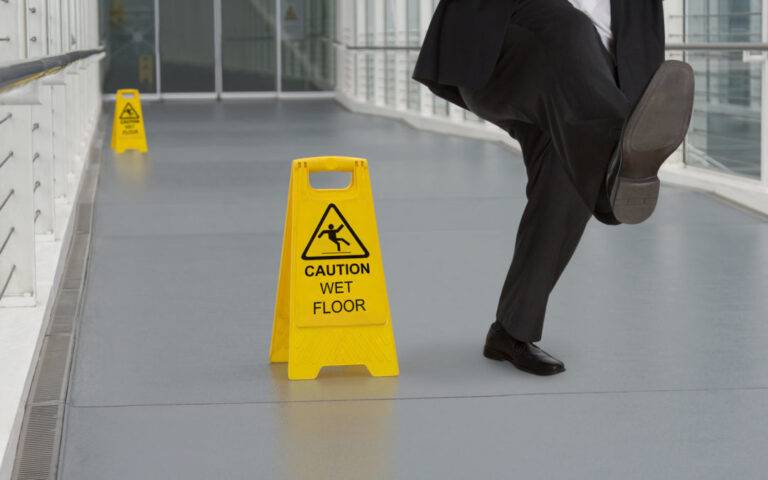
I know I've told you that slip and fall cases are hard to win—and they are. The statistics are rough: you're looking at roughly a 20 to 25 percent win rate on these cases, and insurance companies fight them viciously. But here's what I've also learned: some slip and fall cases settle strong, and some get lowballed. The difference often comes down to what you do immediately after the accident, while evidence is fresh and witnesses are still around.

First: physical evidence preservation. Photographs are everything. If you fall on a wet floor at a grocery store, that wet floor needs to be photographed. The wet floor sign that was or wasn't there needs to be photographed. The condition of your clothing after the fall, your injuries at the scene—all of it. If you can't photograph it yourself because you're injured, ask someone else to do it immediately. Once a store cleans up, those photos are your proof of what was there. After a few hours, that evidence is gone.
Second: witness information. Get the names, phone numbers, and addresses of anyone who saw what happened. Don't rely on the store manager to "get that for you." Get it yourself, right there at the scene. I've worked cases where witnesses disappeared before trial because nobody captured their contact information. That's a catastrophe for your claim.
Third: incident reports. File one with the property owner immediately. For a store, that's usually the manager on duty. For a restaurant, that's the owner or manager. Get a copy for yourself. Document exactly what happened, when it happened, and what condition you found that caused the fall. This is critical because insurance companies will argue later that you're misremembering or exaggerating. Your contemporaneous incident report is proof of what you said right away.
Fourth: get proper medical documentation timed correctly. See a doctor the day of the fall if possible, or at the latest within 48 hours. Why? Because if you wait a week and then show up at the hospital with injuries, the defense will argue you must have fallen again or hurt yourself in the meantime. A same-day or next-day medical record documents that your injuries came from this specific fall.
Fifth: avoid giving recorded statements to the insurance company without legal representation. This is huge. Insurance companies will call you after your fall and say, "We just need to get your statement about what happened." What they're really doing is trying to lock you into a story they can later use against you. They'll twist your words, claim you said things you didn't say, or use technical language in a way that makes it sound like you admitted liability. If you give a statement, have an attorney present.
Sixth: document your damages thoroughly. Keep receipts for everything related to your injury: medical bills, physical therapy, medications, travel to medical appointments, lost wages. Keep a journal of your pain, your limitations, how the injury affected your daily life. This documentation becomes the foundation for your settlement demand.
And seventh: preserve the location. If your slip and fall happened somewhere you have a legitimate reason to return—your workplace, a place you shop regularly—photograph it again a week later, a month later. Document whether the hazardous condition still exists. Document whether the property owner has made any changes to prevent future falls. All of this is evidence.
Slip and fall cases are won by attorneys who are meticulous about evidence and documentation. When you handle these details properly from day one, you create a narrative that's hard for insurance companies to fight. They become more willing to settle because the risk of losing at trial increases. You give yourself leverage.
If you've already had a slip and fall accident, don't panic if it's been a few days. But start documenting now. And please, call me at 312-500-4500 at our Oak Brook office. We handle slip and fall cases, and we know how to build them properly.

In a car accident, liability is often clear. Slip and fall cases require you to prove the property owner created or knew about the hazard and failed to fix it. Insurance companies know this standard is harder to meet, so they fight harder. They also argue you were not watching where you were going. Evidence collected right after the fall is critical to building a strong case.
The main factors are the severity of your injuries, your medical bills and lost income, your age and pre-existing conditions, and how clearly the property owner was at fault. Cases involving broken bones, surgery, or permanent injuries generally settle for more. The property owner's insurance coverage limits also matter. I analyze all of these factors to give you a realistic picture of what your case is worth.
Most slip and fall cases that settle do so within one to two years of filing the lawsuit, sometimes earlier if liability is clear. I don't drag cases out, but I also won't take a lowball offer just to close a file. The insurance company's first offer is almost never their best offer.
No. Do not give a recorded statement to any insurance company without talking to me first. Insurance adjusters are trained to ask questions in ways that minimize your claim. Call me first - 312-500-4500. Consultations are free and available 24/7.
Two years from the date of the fall under 735 ILCS 5/13-202 for claims against private property owners, tenants, property managers, snow and ice removal contractors, and other private defendants. If the fall happened on government property, the Illinois Local Governmental and Governmental Employees Tort Immunity Act applies a one-year statute of limitations under 745 ILCS 10/8-101, plus written notice requirements that can be shorter. Miss the deadline by one day and the case is over - contact a lawyer immediately.
Illinois follows a long-standing rule that property owners are generally not liable for falls on natural accumulations of ice and snow - fresh snowfall, frost, freezing rain. The Illinois Snow and Ice Removal Act, 745 ILCS 75, reinforces this protection for residential property owners. The big exception is unnatural accumulation: ice or snow that exists or was made worse because of the property owner's actions - a downspout that drains onto a walkway and freezes, a plowed snow pile that melts and refreezes across a sidewalk, a poorly drained surface that ices over, a roof that drips onto an entrance area. The natural-versus-unnatural distinction is where winter slip and fall cases are won or lost.
The open and obvious doctrine is the defense raised in almost every Illinois slip and fall case. The property owner argues that the hazard was so apparent a reasonable person would have noticed and avoided it - therefore the owner had no duty to warn or correct. The doctrine has two important exceptions: the distraction exception (where the claimant's attention was reasonably diverted in a foreseeable way, such as a customer looking at displayed merchandise) and the deliberate encounter exception (where the claimant had no reasonable alternative but to confront the danger). Many cases that defendants try to dismiss under open and obvious survive on one of these exceptions.
Nothing upfront. I handle slip and fall cases on contingency. There is no retainer, no hourly billing, and no out-of-pocket cost. I advance all case expenses - police reports, medical records, surveillance preservation, expert witnesses. My fee comes out of the recovery, and if there is no recovery, you owe nothing. Call 312-500-4500.

Scott DeSalvo founded DeSalvo Law to help injured people throughout Chicago and surrounding suburbs. Licensed to practice law in Illinois since 1998, IARDC #6244452, Scott has represented over 3,000 clients in personal injury, workers compensation, and accident cases.
No Fee Unless You Win | Free Consultation | 24/7 Availability Call or Text: (312) 500-4500
>>Read More
Main Office:
1000 Jorie Blvd Ste 204
Oak Brook, IL 60523
New Cases: 312-500-4500
Office: 312-895-0545
Fax: 866-629-1817
service@desalvolaw.com
Chicago and Other Suburban Offices
By Appointment Only