

If someone falls on your sidewalk and gets hurt, can they sue you? In Illinois, the answer is: it depends. Property owners have a legal duty to maintain their property in a reasonably safe condition, but the extent of that duty depends on the circumstances. Let me explain what the law actually says so you understand your exposure.
In Illinois, the general rule is that a property owner must exercise reasonable care to maintain their property and protect visitors from known or foreseeable hazards. If there's a crack in your sidewalk that you know about and haven't repaired, and someone trips on it and breaks their wrist, you could be liable. If there's ice on your walkway and you haven't salted or shoveled, and someone slips and hurts their back, you could be liable.
But here's an important nuance for residential homeowners: the Illinois Snow and Ice Removal Act (745 ILCS 75/) generally protects homeowners from liability for natural accumulations of snow and ice. If it snowed last night and someone slips on the fresh snow on your sidewalk before you had a chance to shovel, you're usually not liable. However, if you shovel your sidewalk and create an unnatural condition — like piling snow in a way that causes a drainage problem that creates a sheet of ice — you could be liable for that unnatural accumulation.
For commercial property owners, the rules are more strict. If you own a business and customers come onto your property, you have a heightened duty to inspect for hazards and correct them promptly. That includes keeping walkways clear of debris, fixing uneven surfaces, cleaning up spills, and treating icy conditions during winter. If a customer falls and gets hurt because of a condition you knew about or should have known about, you're likely looking at a premises liability claim.
Whether you're a property owner worried about liability or someone who fell on someone else's property, understanding these rules matters. If you've been hurt in a fall on someone else's property in Illinois, call us at 312-500-4500 for a free evaluation of your case.

The short answer is yes. However, whether that person will ever find a lawyer willing to file a lawsuit really depends on the particular facts of your case. It is a good idea to speak with a lawyer who has handled fall down cases when talking about the details of your case.
If you have homeowners insurance and somebody was hurt on your property, you should call your insurance company and report it right away. Part of your homeowner’s insurance includes that your insurance company will hire a lawyer to represent you if you are sued.
If you have fallen on somebody else’s property and you believe it is the result of their neglect or carelessness, then talk to a lawyer right away.
I have quite a bit of experience in these kinds of cases. In fact, I have been able to obtain settlements for clients in cases where other lawyers turned them away or told them they did not have much of a chance.
There are a lot of law cases and rules for these kinds of cases and this makes fall down cases complex. But a good lawyer with lots of experience handling these kinds of cases knows all the cases and laws.
One little detail in a case like this can mean the difference between winning and losing. Either way, if you have this sort of situation going on (if you are afraid of being sued, or if you have been injured on somebody else’s property), then you should call me.
As mentioned earlier, yes, you can sue for falling on a sidewalk. Many people I speak to who is injured in a fall believe that the law says that if you fall on someone else’s property, they have to pay your medical bills. I don’t know where this comes from, but it is not the law in Illinois.
In Illinois, if you want to sue for injuries related to a fall down, you have to prove:
(1) what caused you to fall;
(2) prove that what caused you to fall was unreasonably dangerous;
(3) prove that the thing which caused you to fall was created by the property owner or;
(4) that the property owner knew or should have known about it.
If you trip on a sidewalk, a big challenge in a case like that is proving that the crack in the sidewalk is “unreasonably dangerous.” Most people don’t think of a crack or a height difference between two slabs in a sidewalk as unreasonably dangerous.
Due to the crummy conditions of Chicago city sidewalks, people see that as a normal condition of the sidewalk. They think that you should just have been more careful. Of course, when THEY fall on the sidewalk, their opinion changes!
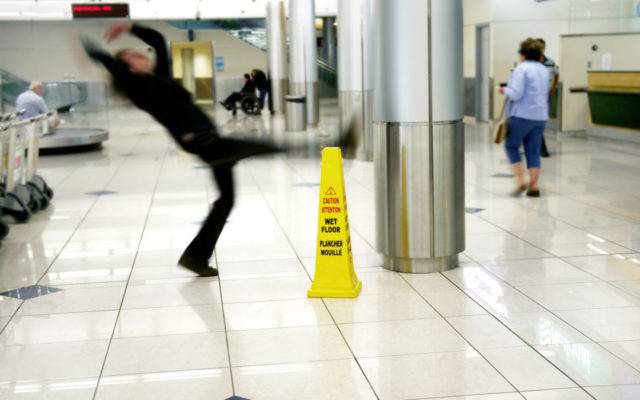
The City of Chicago often defends sidewalk fall down cases by claiming that they did not know about the particular broken sidewalk, even when it is in terrible condition. They make the argument that they have hundreds of miles of sidewalks to monitor and repair.
Unless someone specifically complains about a sidewalk, there’s not much that can be done.If you have fallen in a sidewalk, one of the best things that you can do is talk to people who live in the area to see if you can get witnesses who will testify about how long the problem existed.
If you can call ordinary people who can honestly say that a problem existed for five years, then it will be up to the jury to decide whether they want to live in a city that leaves sidewalks broken for five years.
You can fall on a private sidewalk or one owned by the City of Chicago. Well, technically ‘held in trust’ by the City of Chicago.
Chicago has no sidewalk inspection system and I have honest doubts as to whether their record keeping is for the express purpose of helping them defend fall down cases on City sidewalks.
Many lawyers have abandoned taking city sidewalk cases because they are hard to win and the City of Chicago rarely or never makes a settlement offer. But I am not afraid of them.
Keep in mind that the City of Chicago defends hundreds of fall down cases on city sidewalks per year. They have lawyers assigned to nothing but these kinds of cases. How good would you be at your job if you did the same thing every day?
There is no question that city of Chicago lawyers know how to defend these cases, so you better hire a lawyer who is very good at putting these cases together. Also, the Tort Immunity Act gives the City many, many advantages on sidewalk fall down cases.
Literally, it is harder to prove a case against the City for a sidewalk fall down than any other Defendant, other than maybe a fall in a park or other recreational property.
Since they do not settle, that means a lawyer who takes a case like this knows he or she is going to be working on the case for years.
They also know that it is virtually guaranteed that the case is going to go to trial, though there is a small possibility that the case will settle right before trial. This is small consolation to an injured person and their lawyer.
Because at this point, the client has already given a deposition. In addition, the lawyer had handled the case for a long time, has advanced case costs and invested a lot of time into the case. As you can see, you can sue for falling on a sidewalk.
But these cases are much more complicated than many people understand them to be. A fall on a private sidewalk or driveway is easier to prove than a fall on a city sidewalk.
"Scott is absolutely fantastic. He will always go the extra mile for his clients. They always take the time to return phone calls at all hours and I highly recommend him to all my friends."
-Melissa Brooks
"Great people and Scott's a great lawyer. They helped me make the wisest decision for my case, and that's important in serious legal matters. I trust him completely. He is the one to call."
-Tony Skvarenina
"Beyond satisfied with the services I received from this law firm. Definitely recommend! They got me fully paid and all the doctor bills, too. If you want the best, this is the law firm for your injury case!"
-Cynthia Rodriguez
"Scott represented me and I was really pleased with everything, my car accident paid a lot and quick. If you want a good Lawyer who is responsive, and straight with you, I highly recommend him."
-Greg Garcia
Yes, but it depends on the circumstances. Property owners in Illinois have a duty to maintain their property in a reasonably safe condition. If you fell because of a hazard the property owner created or knew about, you may have a claim. The key facts are: what caused you to fall, was that condition unreasonably dangerous, and did the property owner know about it or should they have known. A crack in a sidewalk that the owner has known about for months is different from a fresh hazard that just appeared. Call me at 312-500-4500 to talk through your specific situation.
The Illinois Snow and Ice Removal Act (745 ILCS 75/) protects residential homeowners from liability for natural accumulations of snow and ice. If it snowed last night and someone slips on the fresh snow on your sidewalk before you had a chance to shovel, you are generally not liable. The law was designed to encourage homeowners to shovel without fear that an imperfect job would expose them to lawsuits. Important: this protection only applies to natural accumulations. If you shovel in a way that creates an unnatural hazard, the law does not protect you.
Natural accumulation is snow or ice that falls from the sky and lands where physics put it - on the sidewalk, the steps, the driveway. Unnatural accumulation is when human action changes where that snow or ice ends up. If you shovel snow into a pile that melts and refreezes as a sheet of ice across your walkway, that's unnatural. If your gutter is broken and drips water onto the sidewalk where it freezes, that's unnatural. The unnatural accumulation can support a premises liability claim because the property owner created the dangerous condition.
Both can be sued, but the cases are very different. Private property owners typically have homeowners insurance that hires defense counsel, and most cases settle through the insurance company. City of Chicago sidewalk cases are much harder. The City defends hundreds of these per year, rarely makes settlement offers, and benefits from the Tort Immunity Act. You will almost certainly need to go to trial. Either case requires proving what caused the fall, that the condition was unreasonably dangerous, and that the owner knew or should have known about it - but City cases require significantly more time and resources.
The Illinois Local Governmental and Governmental Employees Tort Immunity Act gives cities and other government entities significant defenses in personal injury cases. For sidewalk falls, the most important provisions generally require you to prove the City had actual or constructive notice of the dangerous condition - which means proving someone reported it or the condition existed long enough that the City should have known. The Act also imposes a shortened deadline: you must serve written notice on the City within one year of the injury, in addition to the regular statute of limitations. Missing that one-year notice deadline ends the case.
Four things. First, what caused you to fall - the specific defect, ice patch, debris, or hazard. Second, that the condition was unreasonably dangerous - not just a typical sidewalk imperfection. Third, that the property owner created the condition, OR fourth, that the property owner knew or should have known about it. Missing any one of these elements ends the case. The hardest element is usually proving the condition was unreasonably dangerous, because juries often see sidewalk cracks as normal. Good evidence includes photos, witness testimony about how long the defect existed, and prior complaints if you can find them.
Yes, in most cases. Standard homeowners insurance includes liability coverage that pays for injuries to people on your property and provides a lawyer to defend you if you are sued. Coverage limits vary by policy - check your declarations page or call your insurance agent. If you have an umbrella policy, that adds another layer of protection on top. If someone fell on your property, report it to your insurance company right away. Do not admit fault or discuss the case with the injured person or their attorney - let your insurance company handle it. They have an interest in protecting you because their money is at stake.
Two years from the date of the fall for cases against private property owners. That is the Illinois personal injury statute of limitations and it is strict - miss it and your case is gone. For sidewalk falls on City of Chicago property or any other government property, the deadlines are shorter: you generally must serve written notice on the government entity within one year, in addition to filing within the statute of limitations. The notice requirement is unforgiving - miss it and your case dies even if the fall is the City's fault. Don't wait. Call me at 312-500-4500 as soon as possible.
Would you like to know more about homeowner liability slip and fall sidewalk?
If you or a loved one is dealing with a situation like this, give us a call any time, day or night. We are here to help. 312-500-4500

Scott DeSalvo founded DeSalvo Law to help injured people throughout Chicago and surrounding suburbs. Licensed to practice law in Illinois since 1998, IARDC #6244452, Scott has represented over 3,000 clients in personal injury, workers compensation, and accident cases.
No Fee Unless You Win | Free Consultation | 24/7 Availability Call or Text: (312) 500-4500
>>Read More
Main Office:
1000 Jorie Blvd Ste 204
Oak Brook, IL 60523
New Cases: 312-500-4500
Office: 312-895-0545
Fax: 866-629-1817
service@desalvolaw.com
Chicago and Other Suburban Offices
By Appointment Only