

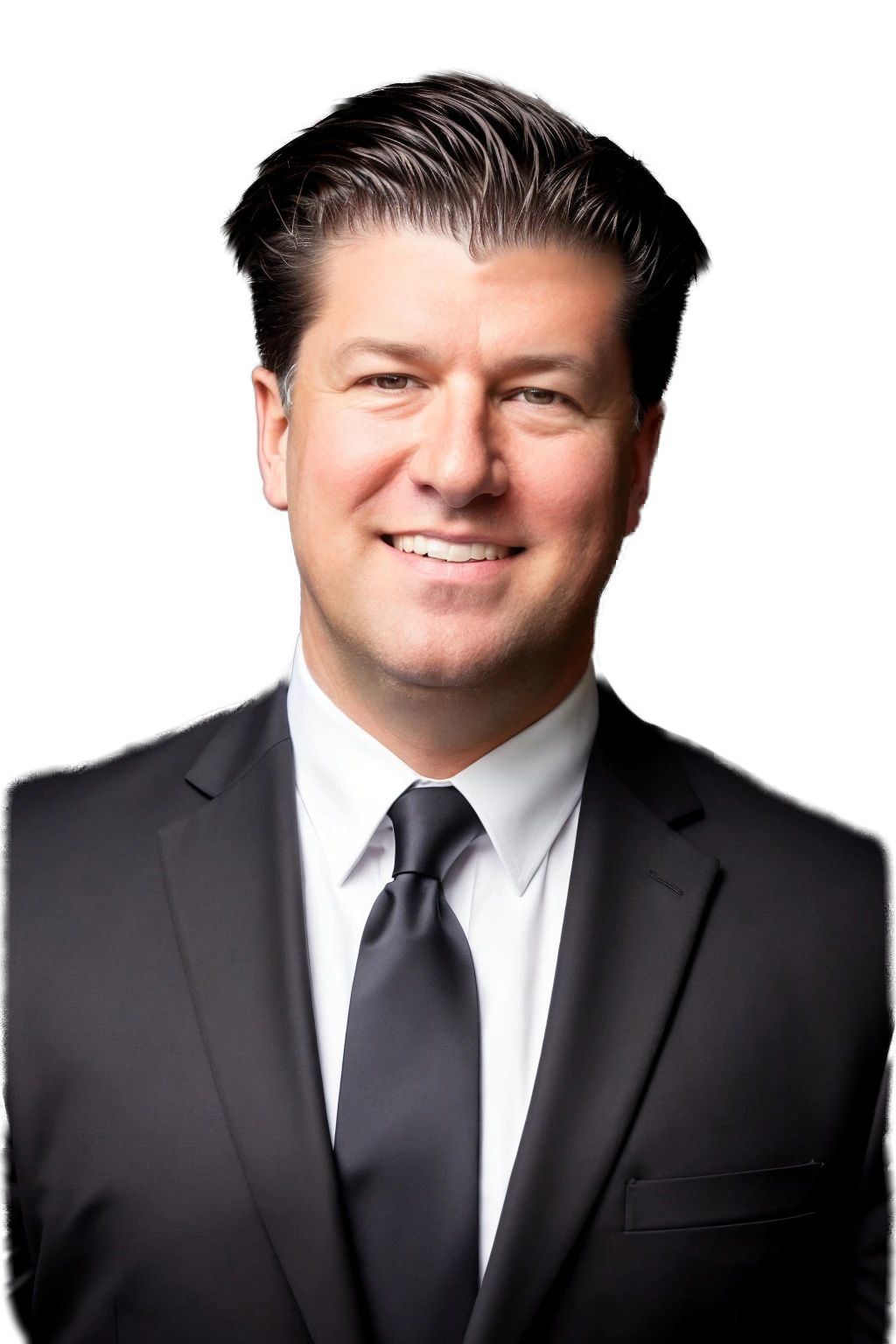

I'm Scott DeSalvo, and I've been representing car accident victims across DuPage County for over 30 years. My office is in Oak Brook, about five minutes from Elmhurst, and I've handled hundreds of crash cases from this area. Before I became a lawyer, I worked in construction and drove trucks. I know what it's like to work for a living and get jerked around by someone with more power than you. That's why I went to law school, and that's why I practice the way I do — aggressively, personally, and with zero tolerance for insurance company games.
I trained at the Gerry Spence Trial Lawyers College in Wyoming and the Keenan Trial Institute — two of the most selective trial advocacy programs in the country. Both teach something most law schools don't: how to connect with a jury by telling the truth, plainly, without corporate double-talk. I bring that to every Elmhurst case I take.
This article isn't about me, though. It's about the specific playbook that insurance adjusters run on Elmhurst crash victims — and how to beat it before they bury your case.
Within 48 hours of your Elmhurst crash, an insurance adjuster is assigned to your file. Not to help you. To minimize what the company pays. Here's the sequence they follow, almost without exception.
Step one: the recorded statement call. They call you sounding friendly and concerned. They ask you to 'just describe what happened in your own words.' Everything you say is being recorded and will be used to establish that your injuries are minor, that you were partially at fault, or that you said something inconsistent with what you later tell your doctor. The single most damaging thing a crash victim does is take this call without a lawyer.
Step two: surveillance. On cases with any real value, insurance companies hire private investigators within the first week. They follow you to the grocery store, the gym, your kid's soccer game. They take video of you lifting a bag of groceries and later show it to a jury to argue you're not really hurt. This is legal. And it happens in Elmhurst all the time, especially on Route 83 corridor cases where the policies are larger because commercial vehicles are involved.
Step three: the lowball offer. Before you've finished treatment, before you know the full extent of your injuries, they offer you a check. It's always a fraction of what the case is worth. They're counting on the fact that you have bills piling up and you'll take whatever's in front of you. Once you cash that check, it's over. You can't come back for more.
Step four: delay. If you don't take the lowball, they slow everything down. They 'lose' paperwork. They request records you already sent. They schedule an IME — an 'independent' medical exam with a doctor they pay — and that doctor says you're fine. They drag it out hoping you'll get frustrated and settle cheap.
I've seen this playbook thousands of times. I know every move before they make it. And I have a counter for each one.
Elmhurst sits at the intersection of several major routes, and each one has its own crash pattern. York Road and Lake Street form the busiest intersection in town — left-turn collisions happen constantly because the signal timing doesn't give turning drivers enough protected time. Route 83, also called Kingery Highway, runs north-south through the west side and carries heavy truck and commercial traffic, leading to rear-end crashes at the signals near North Avenue and St. Charles Road. I-290 borders the south end of Elmhurst, and the exit ramps onto surface streets create merge-related collisions daily, especially during rush hour. North Avenue carries high speeds and distracted drivers through a corridor of shopping centers and strip malls.
Each crash location creates different legal issues. A rear-end on Route 83 involving a delivery truck opens up a commercial policy worth ten or twenty times a personal auto policy. A left-turn crash at York and Lake involves a clear duty-to-yield analysis. An I-290 ramp collision may involve IDOT road design issues. Knowing which legal theory applies to which intersection is part of what 30 years of DuPage experience gives you.

Every driver in Illinois is required to carry minimum liability insurance of $25,000 per person. That's barely enough to cover an ER visit and an MRI. Most Elmhurst drivers carry more — $100,000 or $250,000 policies are common — but even those limits can be exhausted quickly in a serious injury case.
Beyond the at-fault driver's policy, there are additional layers most people don't know about. Your own underinsured motorist coverage (UIM) kicks in when the other driver's policy isn't enough. If the at-fault vehicle was being driven for work purposes, the employer's commercial policy applies. If a road defect contributed to the crash, the municipality or IDOT may be liable under different coverage. I identify every available policy on every case. That's how you maximize recovery instead of settling for the first check they wave at you.

Illinois law allows you to recover past and future medical expenses, past and future lost wages, loss of earning capacity if your ability to work is permanently affected, pain and suffering, loss of normal life, disability, disfigurement, and property damage. If someone died, the family recovers wrongful death damages including loss of companionship and support.
The insurance company will try to tell you your case is worth the total of your medical bills and nothing more. That's not how Illinois law works. Pain and suffering, loss of normal life, and disability are often the largest components of a verdict. A herniated disc case with $40,000 in medical bills can be worth $200,000 to $400,000 at trial when presented correctly. The key is documenting everything — not just the medical treatment, but how the injury has changed your daily life, your sleep, your ability to work, your relationships, your hobbies. I build that evidence from day one.
"Scott is absolutely fantastic. He will always go the extra mile for his clients. They always take the time to return phone calls at all hours and I highly recommend him to all my friends."
-Melissa Brooks
"Great people and Scott's a great lawyer. They helped me make the wisest decision for my case, and that's important in serious legal matters. I trust him completely. He is the one to call."
-Tony Skvarenina
"Beyond satisfied with the services I received from this law firm. Definitely recommend! They got me fully paid and all the doctor bills, too. If you want the best, this is the law firm for your injury case!"
-Cynthia Rodriguez
"Scott represented me and I was really pleased with everything, my car accident paid a lot and quick. If you want a good Lawyer who is responsive, and straight with you, I highly recommend him."
-Greg Garcia
Most car accident cases settle before trial, and that's often the right outcome. But the only reason insurance companies offer fair settlements is because they know the lawyer on the other side will actually go to trial. If your lawyer has never tried a case in DuPage County, the adjuster knows it, and they adjust their offer downward accordingly.
I've tried cases in the DuPage County Courthouse in Wheaton for over three decades. DuPage juries are more conservative than Cook County juries — they want documentation, specifics, and credibility. I prepare every case as if it's going to trial, even when I expect it to settle. That preparation is what drives the settlement number up, because the adjuster knows the alternative is a courtroom where I'm comfortable and they're exposed.

Call 312-500-4500. Tell me where the crash happened, who hit whom, and what the police report says. I'll tell you whether the adjuster playbook has already started running on your case and what to do about it. If I take your case, you pay nothing up front and nothing unless we win. Free consultation. Available 24/7.

No. The recorded statement is designed to lock you into a version of events before you have legal advice. Anything you say can be used to reduce or deny your claim. Call a lawyer first. I'll tell you exactly what to say and what not to say, and in most cases I handle the communication with the adjuster directly so you don't have to deal with them at all.
Your own underinsured motorist (UIM) coverage fills the gap. If you carry $100,000 in UIM coverage and the at-fault driver only has $25,000, you can collect up to your UIM limit on top of the other driver's policy. If a commercial vehicle, employer, or road defect is involved, additional policies may apply. I identify every available source of coverage.
Most cases resolve in 12 to 18 months, though complex cases with multiple defendants or serious injuries can take longer. The biggest variable is your medical treatment — we can't value your case until you've finished treating or reached maximum medical improvement. Settling too early almost always means leaving money on the table.
DuPage County Circuit Court in Wheaton. DuPage is a more conservative venue than Cook County, which means documentation and credibility matter more than sympathy. That works in your favor when your case is well-prepared. I've been trying cases in Wheaton for 30+ years and know what DuPage juries expect.
Nothing up front. I work on a contingency fee, which means I only get paid if we win. I front all costs — medical records, expert fees, filing fees, everything. If we don't recover, you owe me nothing. Call 312-500-4500.

Scott DeSalvo founded DeSalvo Law to help injured people throughout Chicago and surrounding suburbs. Licensed to practice law in Illinois since 1998, IARDC #6244452, Scott has represented over 3,000 clients in personal injury, workers compensation, and accident cases.
No Fee Unless You Win | Free Consultation | 24/7 Availability Call or Text: (312) 500-4500
>>Read More
Main Office:
1000 Jorie Blvd Ste 204
Oak Brook, IL 60523
New Cases: 312-500-4500
Office: 312-895-0545
Fax: 866-629-1817
service@desalvolaw.com
Chicago and Other Suburban Offices
By Appointment Only