

Something went wrong in the emergency room. You know it. You felt it happening, or you found out afterward when the damage was already done. Maybe a doctor rushed through your exam and sent you home with a diagnosis that turned out to be dangerously wrong. Maybe the nurses missed warning signs on your chart that should have triggered immediate action. Maybe someone you love walked into an ER alive and never walked out. Whatever brought you to this page, I want you to know two things: what happened to you matters, and there are laws in Illinois designed specifically to hold hospitals and emergency room staff accountable when their mistakes cause harm.
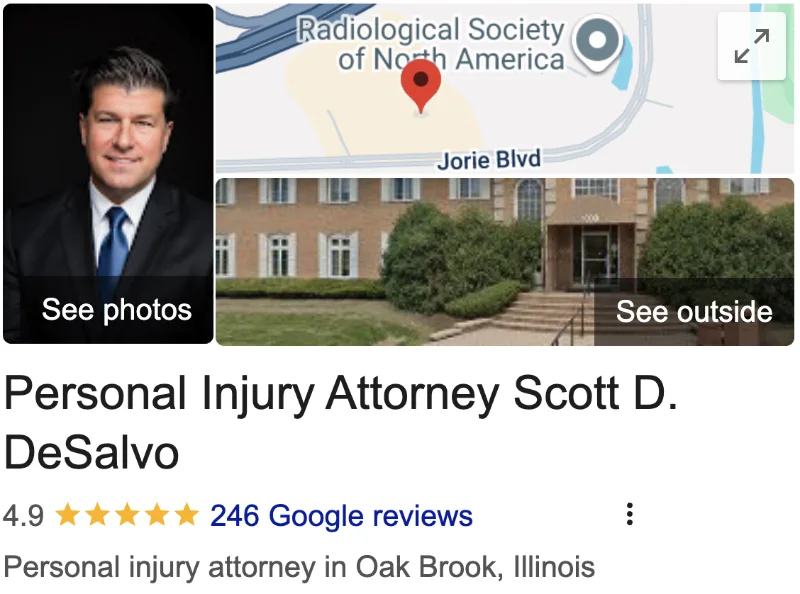
My name is Scott DeSalvo. I have practiced personal injury law in Illinois for over 27 years, and I have represented more than 3,000 injured people during that time. Emergency room malpractice cases are among the most challenging in all of personal injury law, but they are also among the most important. When an ER fails you, the consequences are often life-altering or fatal. Hospitals know this. Their lawyers know this. And they will fight aggressively to characterize what happened to you as an unavoidable complication rather than a preventable error.
I became a trial lawyer because of what I watched my father endure. He was a truck driver, a proud Teamster, who got seriously hurt on the job when I was nine years old. His lawyer treated him like a file number, not a person. Seventeen years of legal battles followed, and none of it had to be that difficult. That experience is the reason I answer my own phone, the reason I stay personally involved in every case, and the reason I prepare every case as though it is going to trial. If an emergency room made a mistake that harmed you or someone in your family, call me at 312-500-4500. There is no charge for the call, no obligation, and I will be straight with you about whether you have a case.

Emergency room cases are not like other medical malpractice cases. They come with a set of built-in complications that make them harder to prove, harder to litigate, and harder to win. A lawyer who does not understand these specific challenges will miss critical issues that can make or break your case.
The first complication is the standard of care itself. ER physicians operate under extreme time pressure, often with incomplete patient histories, limited diagnostic tools, and an unpredictable volume of patients competing for attention. Defense attorneys exploit this reality relentlessly. They argue that the chaotic nature of emergency medicine means that what looks like a mistake in hindsight was actually a reasonable clinical judgment made under impossible conditions. Breaking through that argument requires a lawyer who understands emergency medicine, who can work with qualified expert witnesses, and who can demonstrate that the error fell below what even the stressful reality of the ER demands.
The second complication is proving causation. In many ER cases, the patient was already sick or injured before arriving at the hospital. The defense will argue that the bad outcome was caused by the underlying condition, not by anything the ER staff did or failed to do. Illinois law requires that causation be established with a reasonable degree of medical certainty. That means you cannot simply show that the ER made a mistake. You must prove that the mistake, more likely than not, caused the harm. This is a high bar, and clearing it requires sophisticated medical expert testimony.
The third complication involves who actually employs the people who treated you. Most patients assume that every doctor, nurse, and technician they encounter in an emergency room works for the hospital. That assumption is frequently wrong, and hospitals rely on that confusion to dodge liability. I will explain this issue in detail below, because it is one of the most important things to understand about ER malpractice in Illinois.
Not every bad outcome in an emergency room is malpractice. But when a bad outcome results from care that fell below the accepted standard of practice, the hospital and the responsible providers can and should be held accountable. These are the categories of ER error that generate the most malpractice claims in Illinois:
Premature discharge is the single most dangerous mistake an emergency room can make. A patient presents with symptoms that could indicate a serious or evolving condition. The ER physician conducts a surface-level evaluation, attributes the symptoms to something benign, and sends the patient home. Hours or days later, the patient collapses, suffers organ failure, or dies from the condition the ER should have caught. Heart attacks misidentified as acid reflux or anxiety. Strokes dismissed as migraines. Internal bleeding overlooked because the patient appeared stable at the moment of discharge. Appendicitis sent home as a stomach bug. Every one of these scenarios produces catastrophic outcomes and every one of them is preventable with adequate evaluation.
Emergency physicians are responsible for an outsized share of diagnostic errors in American medicine. Research published in peer-reviewed medical journals has found that diagnostic errors in emergency departments contribute to roughly 350,000 cases of serious misdiagnosis-related harm each year in the United States. The conditions most frequently missed include heart attacks, strokes, meningitis, pulmonary embolism, aortic dissection, ectopic pregnancy, and sepsis. Each of these conditions has a narrow treatment window. When the ER gets the diagnosis wrong, the window closes, and the consequences are devastating.
The emergency room is a high-volume medication environment where drugs are ordered, prepared, and administered under intense time pressure. Errors include prescribing the wrong drug, administering the wrong dose, giving a medication to which the patient has a documented allergy, failing to account for drug interactions, or mixing up medications between patients. Medication errors in the ER can cause anaphylaxis, organ damage, cardiac arrest, and death. When the error results from a systemic failure, such as understaffing, inadequate pharmacy oversight, or deficient electronic health record protocols, the hospital itself bears direct responsibility.
An ER physician orders lab work or imaging, and the results reveal something urgent. But nobody follows up. The lab report sits in a queue. The radiologist’s findings are filed but never communicated to the treating physician. The patient is discharged before the results are even reviewed. This is not a gray area. When a test reveals a critical finding and no one acts on it, the failure is clear and the liability is substantial. Some of the largest ER malpractice verdicts in Illinois have involved situations where abnormal test results were available but were never communicated to the patient or the treating team.
Triage is the process by which emergency rooms assign priority to incoming patients based on the severity of their conditions. When triage goes wrong, patients with life-threatening emergencies wait too long for evaluation and treatment. A patient presenting with chest pain and shortness of breath who is classified as low-priority and left in the waiting room for hours may suffer irreversible cardiac damage or death. Triage errors are often the product of undertrained staff, overcrowded facilities, or flawed triage protocols, all of which point to institutional negligence by the hospital.
Emergency rooms operate around the clock, which means patients are regularly handed off from one care team to another during shift changes. These transitions are among the most dangerous moments in emergency medicine. Critical information about a patient’s condition, test results, treatment plan, or pending orders can be lost or garbled during handoffs. If a physician going off duty fails to communicate key details to the incoming physician, and the patient suffers harm as a result, both the individual providers and the hospital can be held liable for the breakdown in continuity of care.
Patients in the emergency room require ongoing monitoring, especially those awaiting test results, receiving IV medications, or presenting with conditions that can deteriorate rapidly. When ER staff fail to check vital signs at appropriate intervals, fail to reassess a patient whose condition is changing, or fail to recognize signs of clinical deterioration, the results can be fatal. Inadequate monitoring is frequently tied to understaffing, and when a hospital knowingly operates its emergency department with insufficient nursing coverage, the hospital’s own staffing decisions become the basis for a negligence claim.
This is something most people never think about until they are trying to hold a hospital accountable for an ER mistake. In many Illinois hospitals, the emergency room physicians are not employees of the hospital. They are independent contractors, employed by a separate staffing company that contracts with the hospital to provide ER coverage. The same is often true of radiologists, anesthesiologists, and other specialists who provide services in the ER setting.
Why does this matter? Because under general principles of agency law, a hospital is not automatically liable for the negligence of an independent contractor. If the doctor who harmed you is technically employed by a staffing company rather than the hospital, the hospital will argue that you need to sue the staffing company, not the hospital. The staffing company, meanwhile, may have minimal insurance and limited assets.
Illinois law provides a powerful tool to overcome this defense: the doctrine of apparent authority. The Illinois Supreme Court established in Gilbert v. Sycamore Municipal Hospital (1993) that a hospital can be held vicariously liable for the negligence of independent contractor physicians if the patient reasonably believed the physician was an agent or employee of the hospital. The Gilbert test requires the plaintiff to show three things: first, that the hospital or its agents acted in a way that would lead a reasonable person to believe the doctor was a hospital employee; second, that the hospital knew of and acquiesced in this appearance; and third, that the patient relied on the hospital’s conduct in seeking treatment.
The Supreme Court later expanded this principle in York v. Rush-Presbyterian St. Luke’s Medical Center (2006), holding that even ancillary medical staff with whom the patient had no direct contact could be deemed apparent agents of the hospital under most circumstances. The court recognized the reality that patients who go to a hospital’s emergency room reasonably expect that the people treating them are hospital employees.
Hospitals have tried to counter this by inserting clauses into the consent forms you sign when you arrive at the ER, stating that the physicians are independent contractors. Whether these disclaimers are effective depends on the specific circumstances. In Wallace v. Alexian Brothers Medical Center (2009), the Illinois Appellate Court held that a signed consent form acknowledging the doctors’ independent contractor status defeated an apparent agency claim. But in other cases, courts have found that consent forms signed by patients who are in pain, frightened, or medically compromised do not meaningfully inform the patient of the doctors’ employment status. If you signed a consent form in the ER, do not assume it eliminates the hospital’s liability. That determination requires a careful legal analysis of the specific facts.



The Emergency Medical Treatment and Labor Act, known as EMTALA, is a federal statute that imposes specific obligations on every hospital in the country that participates in Medicare, which is virtually all of them. EMTALA was enacted in 1986 to combat the practice of patient dumping, where hospitals turned away or transferred uninsured and underinsured patients without providing adequate evaluation or stabilization.
Under EMTALA, any person who comes to an emergency department requesting evaluation or treatment must receive an appropriate medical screening examination to determine whether an emergency medical condition exists. The hospital cannot delay this screening to inquire about the patient’s insurance status or ability to pay. If the screening reveals an emergency medical condition, the hospital must provide stabilizing treatment within its capabilities before discharging or transferring the patient. If the hospital lacks the capability to stabilize the condition, it must arrange an appropriate transfer to a facility that can provide the necessary care.
Violations of EMTALA can result in civil monetary penalties of up to $119,942 per violation for hospitals with more than 100 beds, and up to $119,942 per violation for individual physicians who refuse or fail to provide stabilizing care. Beyond federal penalties, an EMTALA violation can also support a private civil lawsuit by the patient. EMTALA claims are filed in federal court and can be pursued alongside state malpractice claims.
EMTALA violations are more common than people realize. A study published through the National Institutes of Health found that between 4 and 5 percent of American hospitals are cited for EMTALA violations in any given year. Large, urban, for-profit hospitals with high emergency department volumes are the most frequently cited. The most common violations involve failure to provide an adequate medical screening examination and failure to stabilize patients with identified emergency conditions.

Illinois has a procedural requirement that trips up many lawyers who do not regularly handle medical malpractice cases. Under 735 ILCS 5/2-622, before filing a medical malpractice lawsuit, the plaintiff’s attorney must attach an affidavit from a qualified medical expert stating that there is a reasonable and meritorious cause for filing the action. The affidavit must be accompanied by a written report from the expert setting forth the basis for the determination that the standard of care was breached and that the breach caused the patient’s injuries.
This requirement exists to filter out frivolous malpractice lawsuits before they burden the court system. But it also means that your lawyer must secure a qualified expert review of your medical records before the case can even be filed. This takes time, and it takes resources. If your lawyer files a malpractice complaint without the required affidavit and report, the case can be dismissed. This is one of the many reasons why choosing the right attorney from the start is so important. I invest the resources necessary to obtain thorough expert reviews before any case is filed, because cutting corners on this step is a recipe for disaster.
Find Out What YOUR Case Might Be Worth...for free.
The statute of limitations for medical malpractice in Illinois is governed by 735 ILCS 5/13-212 and contains several interlocking rules that can be confusing:
The general rule is that a malpractice action must be filed within two years from the date the patient knew or reasonably should have known that the injury was caused by malpractice. However, no malpractice action may be filed more than four years after the date of the act or omission that caused the injury, regardless of when the patient discovered the problem. This four-year outer limit is called the statute of repose.
For minors, special rules apply. A minor has eight years from the date of the alleged malpractice to file suit, but the deadline cannot extend beyond the minor’s 22nd birthday.
If the healthcare provider fraudulently concealed the malpractice, the statute of limitations may be tolled, meaning the clock does not start running until the concealment is discovered.
For patients treated at VA hospitals, federally qualified health centers, or other federal facilities, the timeline is different. Claims against federal employees acting within the scope of their employment must be brought under the Federal Tort Claims Act, which requires an administrative claim to be filed within two years of the incident. Missing the FTCA deadline can permanently bar your claim, even if the state deadline has not yet expired.
These deadlines are absolute. Missing them by a single day eliminates your right to bring the case. This is why it is critical to consult with a lawyer as soon as possible after you suspect an ER error caused you harm.
Multiple parties may bear liability in an ER malpractice case, and identifying all responsible parties is essential to maximizing your recovery:
The emergency room physician who directly treated you can be personally liable for failing to meet the standard of care. If the physician is a hospital employee, the hospital is also vicariously liable for the physician’s negligence. If the physician is an independent contractor, the hospital may still be liable under the apparent authority doctrine described above.
Nurses and physician assistants can be individually liable for errors in medication administration, monitoring, documentation, and communication. Their employing entity, whether the hospital or a staffing agency, can also be held responsible.
Radiologists and laboratory professionals who misread imaging studies or lab results, or who fail to communicate critical findings in a timely manner, may be liable for the downstream consequences of their errors.
The hospital itself can be directly liable, apart from any vicarious liability for its employees or agents, when the ER error results from institutional failures. Understaffing, inadequate training, deficient equipment, flawed protocols, and systemic communication breakdowns are all bases for direct negligence claims against the hospital. When a hospital knowingly operates an understaffed ER and a patient suffers because there were not enough nurses to monitor incoming patients, the hospital made a business decision that put profit ahead of patient safety. That decision is the foundation of a direct negligence claim.

Illinois eliminated caps on medical malpractice damages when the Illinois Supreme Court struck them down in Lebron v. Gottlieb Memorial Hospital (2010). That means there is no statutory limit on what a jury can award in an ER malpractice case. The types of compensation available include:
Medical expenses, both past and future, covering emergency care, hospitalization, surgeries, rehabilitation, ongoing therapy, prescription medications, and any additional treatment required because of the ER error. Lost income for time missed from work during recovery, as well as diminished earning capacity if the injury has permanently affected your ability to work. Pain and suffering, which encompasses physical pain, emotional distress, anxiety, depression, post-traumatic stress, loss of sleep, and loss of enjoyment of daily life. Loss of consortium, a claim available to the spouse of an injured patient for the loss of companionship, affection, and marital relations. In cases where the ER error caused death, the surviving family members can pursue a wrongful death claim for the full range of losses, including the financial contributions the deceased would have made, the loss of guidance and companionship, and grief. In cases of particularly egregious conduct, such as a hospital that deliberately understaffs its ER despite known patient safety risks, punitive damages may be available to punish the institution and deter future misconduct.


If you believe you or a loved one was harmed by an ER mistake, there are steps you can take right now to protect your legal rights:
Seek immediate follow-up medical care. If you were discharged from an ER and your symptoms have worsened or new symptoms have appeared, go to a different emergency room or see your primary care physician as soon as possible. Your health comes first, and the records from your follow-up treatment will also serve as evidence of the harm caused by the original ER error.
Request your complete medical records from the ER visit, including triage notes, nursing notes, physician notes, lab results, imaging reports, medication administration records, and discharge instructions. Under Illinois law (410 ILCS 50/3), you have the right to obtain copies of your medical records. These records are the foundation of any malpractice claim.
Write down everything you remember about the ER visit while it is fresh in your memory. Note the timeline: when you arrived, how long you waited, who you spoke with, what tests were performed, what you were told about your condition, and what instructions you received at discharge. Document the names of any doctors, nurses, or other staff members you interacted with.
Do not give recorded statements to the hospital’s risk management department or their insurance company without first speaking to a lawyer. Hospitals begin their internal defense process the moment they become aware of a potential claim. Anything you say can be used against you.

I treat ER malpractice cases the way I treat every serious injury case: I prepare from day one as though this case is going to be decided by a jury. That means retaining top medical experts early, conducting exhaustive discovery into the hospital’s staffing records and internal protocols, deposing every provider who touched the patient, and building a case narrative that a jury can understand and connect with emotionally.
I have tried more than 30 jury trials. I graduated from Gerry Spence’s Trial Lawyer’s College, a program that admits fewer than one in 10,000 practicing attorneys. I completed The Edge, an advanced trial advocacy program for experienced trial lawyers. Hospitals and their insurance companies understand what those credentials mean. They know that when I file a case, the threat of trial is real.
My office also serves Spanish-speaking clients. Si usted o un familiar fue lastimado por un error en la sala de emergencias, podemos ayudarle en español.
Not every bad result is malpractice, but the distinction is not always obvious. Malpractice occurs when the care you received fell below the standard that a competent emergency physician would have provided under similar circumstances, and that failure caused your injury. The only way to make this determination with confidence is through an expert medical review. When you call my office, I will arrange for a qualified medical professional to evaluate your records and give us an honest assessment.
In many cases, yes. Under the doctrine of apparent authority established by the Illinois Supreme Court, hospitals can be held liable for the negligence of independent contractor physicians if you reasonably believed the doctor was a hospital employee. The analysis depends on specific facts, including what you were told and what consent forms you signed. This is exactly the kind of issue I evaluate during an initial consultation.
Generally, you must file within two years of discovering the injury, but no more than four years from the date of the error. Minors have until age 22. Federal facility claims have a separate two-year deadline under the Federal Tort Claims Act. Because these deadlines interact in complex ways, I strongly recommend contacting a lawyer as soon as you suspect something went wrong.
This is the most common defense in ER malpractice cases. The hospital will argue that you were already sick and the outcome would have been the same regardless of what the ER did. Overcoming this defense requires expert testimony establishing that the ER’s specific errors, not your underlying condition, caused the additional harm you suffered. This is a battle of experts, and having the right medical witnesses on your side is critical.
At DeSalvo Law, there is no upfront cost and no hourly billing. I handle ER malpractice cases on a contingency fee basis, which means my fee comes exclusively from the compensation we recover for you. If we do not win, you owe me nothing. I fund the investigation, the expert reviews, and the litigation costs out of my own resources.
The surviving family members, typically a spouse, children, or parents, can bring a wrongful death action against the hospital and the responsible providers. Wrongful death claims in Illinois allow recovery for lost financial support, loss of companionship, grief, and other damages. These cases carry their own procedural requirements, and the sooner you involve a lawyer, the better we can preserve the evidence needed to prove what went wrong.
ER malpractice cases in Illinois typically take between two and four years from filing to resolution. The timeline depends on the complexity of the medical issues, the number of defendants, the pace of discovery, and whether the case settles or goes to trial. I keep my clients informed at every stage and never pressure anyone to accept a settlement that does not fully compensate them for what they have been through.
Most large malpractice firms assign your case to an associate or a case manager. You may never meet the named partner. At DeSalvo Law, I handle your case personally. I am the one who reviews your medical records, retains the experts, takes the depositions, and tries the case if it goes to trial. I have been practicing for more than 27 years. I have represented over 3,000 injured people. And I am reachable any day of the week, any hour of the day, at 312-500-4500.
If you were harmed by an emergency room error, the hospital already knows about it. Their risk management team has already reviewed the incident. Their lawyers are already preparing a defense. The longer you wait, the more advantage they gain. Medical records can be altered. Surveillance footage can be erased. Staff members transfer to other facilities. Memories fade. The statute of limitations keeps ticking.
I am not asking you to commit to anything. I am asking you to pick up the phone and tell me what happened. The consultation is free. The conversation is confidential. And if you have a case, I will tell you exactly what I think it is worth and how I plan to pursue it. If you do not have a case, I will tell you that too, and I will explain why. Either way, you will hang up the phone with answers you did not have before.
Call me at 312-500-4500 I am here to help.
>>Go To Main Topic Page <<


Scott DeSalvo founded DeSalvo Law to help injured people throughout Chicago and surrounding suburbs. Licensed to practice law in Illinois since 1998, IARDC #6244452, Scott has represented over 3,000 clients in personal injury, workers compensation, and accident cases.
No Fee Unless You Win | Free Consultation | 24/7 Availability Call or Text: (312) 500-4500
>>Read More
Main Office:
1000 Jorie Blvd Ste 204
Oak Brook, IL 60523
New Cases: 312-500-4500
Office: 312-895-0545
Fax: 866-629-1817
service@desalvolaw.com
Chicago and Other Suburban Offices
By Appointment Only