

Nothing will make you feel more helpless than watching your child suffer because of something a doctor, nurse, or hospital did wrong.
I know that feeling. Not as a parent in your exact situation, but as the son of a man who was catastrophically injured by people who were supposed to help him. When I was nine years old, my father—a truck driver and proud Teamster—was seriously hurt at work. Neck, back, spine. The kind of injuries that never heal. What followed was 17 years of legal hell with a lawyer who couldn’t have cared less about him. At the end of it, his own attorney sued him for more fees.
That experience broke something in our family. But it built something in me. I made a promise as a kid: what happened to my father would never happen to anyone I could help. That’s why I became a trial lawyer. That’s why I’ve spent 27 years fighting for people—especially children—who’ve been hurt by the negligence of people and institutions that were supposed to protect them.
If your child was injured because a doctor, hospital, or medical professional in Chicago made a preventable mistake, I want you to know three things right now. First, you have legal rights, and your child has legal rights. Second, Illinois gives children significantly more time to file a medical malpractice claim than adults get—up to eight years from the date of injury, or until your child turns 22, whichever comes first. Third, you don’t pay me anything out of pocket. Not a dime. I work on contingency. No fee until we win.
Call me at (312) 500-4500. Day or night. Weekends. Holidays. I’m here. We’ll talk like two people trying to figure out the best path forward for your child—not some lawyer giving you a sales pitch.

Children are not small adults. Their bodies are still developing. Their brains are still forming. An injury that might resolve in a few months for a grown adult can permanently alter a child’s developmental trajectory. A misdiagnosis that delays treatment by a week could mean the difference between a full recovery and a lifetime of disability.
That’s what makes these cases so devastating—and so important to get right.
When a medical professional injures a child through negligence, we’re not just calculating the cost of the hospital stay and the follow-up appointments. We’re calculating the cost of a changed life. Special education. Ongoing therapy. Assistive devices they’ll need as they grow. Career earnings they may never have. Independence they may never fully achieve. The emotional toll on the child and on every member of the family.
These are high-stakes cases with enormous lifetime consequences. They demand a lawyer who understands the medicine, the law, and the very specific way Illinois handles claims involving injured children. They also demand a lawyer who isn’t afraid to take on the hospitals, medical groups, and insurance companies that will spend millions defending themselves.
That’s what I do.
This is one of the most important things you need to understand, and it’s something most parents don’t know.
For adults in Illinois, the statute of limitations for medical malpractice is two years from the date you knew or should have known about the injury, with an absolute maximum of four years from the date the malpractice occurred. Miss that window, and your case is gone forever. No exceptions.
But Illinois law recognizes that children can’t be expected to identify malpractice or take legal action on their own. Under 735 ILCS 5/13-212(b), if the injured person was under 18 at the time the malpractice occurred, they have up to eight years from the date of the negligent act to file a lawsuit. However, the claim must be filed before the child turns 22.
This is critical because many childhood medical injuries don’t reveal their full impact immediately. A birth injury may not manifest as cerebral palsy until the child misses developmental milestones at age two or three. A surgical error on a toddler may not show its consequences until the child starts school and can’t keep up physically or cognitively. A missed diagnosis of meningitis in an infant might not be fully understood until years later when the child shows signs of hearing loss or learning disabilities.
The extended statute of limitations exists precisely because children’s injuries often take time to fully reveal themselves.
But here’s what I tell every parent who calls me: just because you have more time doesn’t mean you should wait. Evidence deteriorates. Medical records can become harder to obtain. Witnesses leave hospitals, retire, move away. The doctors and nurses involved may change their documentation practices. And the hospital’s defense team starts working the moment they know a claim might be coming.
The sooner I’m involved, the stronger your child’s case will be.
One important warning about federal employees:
Some doctors at private hospitals are actually federal government employees, often through federally funded clinics. If your child was treated by a federal employee, the Federal Tort Claims Act may apply, and the deadline to file could be as short as two years—not eight. This is not always obvious and needs to be investigated immediately. It’s one more reason to call a lawyer sooner rather than later.
Over 27 years of practice, I’ve represented families whose children were harmed by virtually every type of medical negligence. Here are the situations I see most often.
Errors during labor and delivery are among the most common and most devastating forms of pediatric medical malpractice. Failure to monitor fetal distress, delayed emergency C-sections, improper use of forceps or vacuum extractors, mismanagement of shoulder dystocia, and failure to respond to umbilical cord complications can cause permanent brain damage, cerebral palsy, Erb’s palsy, and other lifelong conditions. These injuries often aren’t fully diagnosed until the child begins missing developmental milestones months or even years later.
Children present symptoms differently than adults. A pediatrician or emergency room doctor who fails to recognize the signs of meningitis, appendicitis, cancer, diabetes, or other serious conditions in a child can cause catastrophic harm through delayed treatment. When a treatable condition becomes permanently damaging because a doctor missed it or dismissed a parent’s concerns, that’s malpractice.
Children require carefully calculated medication dosages based on their weight and age. Prescribing the wrong medication, administering an incorrect dose, failing to account for drug interactions, or giving a child a medication intended for adults can cause serious injury or death. These errors happen in hospitals, pharmacies, pediatric clinics, and emergency rooms.
Pediatric surgery demands specialized skill and extraordinary care. Wrong-site surgery, anesthesia errors, nerve damage, retained surgical instruments, and post-operative complications caused by inadequate monitoring are all forms of surgical malpractice. When these errors happen to a child whose body is still growing and developing, the consequences can compound over a lifetime.
Children who are brought to emergency rooms with acute symptoms are sometimes triaged incorrectly, sent home prematurely, or treated by providers who lack pediatric training. A child presenting with signs of a brain bleed, appendicitis, or sepsis who gets sent home with a diagnosis of “stomach bug” or “viral infection” may suffer catastrophic consequences from the delay.
Nurses and hospital staff who fail to monitor a child properly, ignore changes in vital signs, delay notifying the attending physician, or make errors in administering treatment can cause serious harm. Understaffing and fatigue in pediatric units contribute to these failures, but the hospital is responsible for maintaining adequate staffing and supervision.
Premature and critically ill newborns in the NICU require constant, meticulous care. Errors in oxygen administration, feeding, medication, temperature regulation, or infection control can cause brain damage, organ failure, retinopathy of prematurity, and other permanent conditions. These tiny patients are completely dependent on their medical team, and mistakes carry devastating consequences.



I’m going to be direct with you about something. I’m selective about the cases I take, and there’s a reason for that.
Medical malpractice cases involving children are among the most expensive and complex cases in all of personal injury law. They require extensive medical expert review, detailed life care planning, economic analysis of lifetime damages, and often years of litigation against hospitals and medical groups that have virtually unlimited legal budgets. I invest heavily—my own money, my time, my team’s resources—in every case I accept.
Because of that investment, I need to be honest with families about what makes a case I can take on and fight effectively.
A strong case typically involves clear evidence that the medical provider deviated from the accepted standard of care. It involves a child who suffered serious, permanent, or life-altering harm as a direct result of that deviation. The damages—medical costs, future care needs, lost earning capacity, pain and suffering—need to be substantial, generally $100,000 or more in value. And there needs to be a liable party with the resources to pay a judgment, whether that’s a hospital system, a medical group, an insurance carrier, or a combination.
The cases I handle best involve a clear power imbalance: a vulnerable child or family on one side, and a well-resourced institution—a hospital, a medical corporation, a school district medical program, a nursing facility—on the other. These are the cases where having an experienced trial lawyer in your corner makes the biggest difference.
If your child’s situation doesn’t fit this profile, I’ll tell you honestly. And if I can point you toward someone who might be a better fit, I will. But if your child was seriously hurt by a medical mistake and the evidence supports a strong claim, I’m the lawyer you want fighting for your family.

Let me explain something that most people don’t realize about medical malpractice litigation.
When you sue a hospital or a doctor for injuring your child, you’re not going up against some small-time insurance adjuster. You’re going up against some of the best-funded, most aggressive defense law firms in the state. Hospitals retain top-tier defense attorneys. They hire medical experts to testify that everything was done correctly. They have teams dedicated to minimizing or denying your child’s injuries.
To win, you need a lawyer who can match them. Step for step. Expert for expert. Dollar for dollar.
I’ve spent 27 years building the skills, relationships, and resources to do exactly that. I’m a graduate of Gerry Spence’s Trial Lawyer’s College—one of the most selective trial training programs in the country. I’ve completed “The Edge” program. Fewer than one in 10,000 lawyers have done the training I’ve done. I’ve tried over 30 jury trials, handled hundreds of depositions, and completed roughly 100 arbitrations.
I also bring something most medical malpractice attorneys don’t: trauma-informed interview training. When I’m working with families whose children have been seriously injured—especially in cases involving sensitive circumstances like abuse, sexual assault, or institutional failures—I know how to listen with care, ask the right questions, and build trust without retraumatizing anyone. This matters more than most lawyers understand.
For families who speak Spanish, my office provides bilingual services. No one should have to navigate the most difficult legal process of their life through a language barrier.
Find Out What YOUR Case Might Be Worth...for free.
One of the things that distinguishes the cases I take is the nature of the defendants. These aren’t cases against individual family doctors operating a solo practice. The cases I handle most effectively involve institutional defendants with the resources to pay what they owe.
That includes major hospital systems like Lurie Children’s, Advocate, Northwestern Medicine, Rush, Loyola, and the University of Chicago Medical Center. It includes large medical groups and physician practices that carry substantial malpractice insurance. It includes municipal hospitals and county facilities. And it includes the insurance carriers that back all of these institutions.
These defendants have deep legal teams and deep pockets. They fight hard. But they’re also capable of paying the multi-million dollar settlements and verdicts that severely injured children deserve and need. When your child is facing a lifetime of medical care, therapy, and adaptive support, you need a recovery that actually covers that lifetime. That only happens when the defendant has the assets or insurance to make it happen.
If you’re a parent considering legal action, here’s what the process looks like.
You call me. We talk. I listen to everything that happened—the medical events, the symptoms, the diagnosis, what went wrong, and how your child has been affected. I ask detailed questions because I need to understand both the medical facts and the human impact. This consultation is completely free and confidential.
If I believe there may be a viable case, my team obtains all relevant medical records. I then have those records reviewed by independent medical experts—physicians who specialize in the same field as the doctor who treated your child. Illinois law requires a Certificate of Merit from a qualified expert before a medical malpractice lawsuit can even be filed. This isn’t optional. It’s the law. And it’s one of the reasons these cases are expensive to pursue and require a lawyer who knows what they’re doing.
Simultaneously, we begin documenting the full extent of your child’s injuries and future needs. This means working with life care planners who map out every medical expense, therapy session, adaptive device, and support service your child will need for life. It means retaining economists who calculate the child’s lost future earning capacity. And it means documenting the pain, suffering, and diminished quality of life your child and your family are experiencing.
Once we have expert support and a clear picture of damages, I file suit. The litigation phase involves written discovery, depositions of the medical providers, testimony from our experts, and often mediation. Many cases resolve during litigation, but I prepare every case as though it’s going to trial. Insurance companies and hospital defense teams make better settlement offers when they know they’re facing a lawyer who has actually stood before a jury and won.
Whether through settlement or trial verdict, the goal is a recovery that truly reflects the lifetime cost of your child’s injuries. For children, we also consider structured settlements that provide guaranteed income over time, protecting the funds until the child reaches adulthood and ensuring resources are available for decades of care.

Illinois law allows families to pursue comprehensive compensation when a child is injured by medical malpractice. There is no cap on damages in Illinois medical malpractice cases—the Illinois Supreme Court declared damage caps unconstitutional in 2010.
Economic damages include all past and future medical expenses, hospitalization, surgery, rehabilitation, therapy, medications, medical equipment, home modifications, and the cost of ongoing care. They also include the child’s lost future earning capacity—what the child would have earned over a working lifetime but may never be able to because of the injury.
Non-economic damages address the child’s physical pain and suffering, emotional distress, loss of normal life experiences, disability, and disfigurement. They also account for the impact on the family—the parents’ loss of their child’s companionship and the family’s collective suffering.
In wrongful death cases—when a child dies as a result of medical malpractice—the family can pursue compensation for loss of the child’s future financial support, loss of companionship and guidance, the family’s grief, and funeral and burial expenses. These cases must generally be filed within two years of the date of death.


I’ve seen families make the same costly errors for 27 years. Here’s what to avoid.
Waiting too long to consult a lawyer. Yes, children have an extended statute of limitations in Illinois. But evidence starts degrading immediately. Medical records are easier to obtain when the treatment is recent. Witnesses are easier to locate. Hospital staff involved in your child’s care may leave or retire. The earlier I get involved, the more effectively I can preserve and build your case.
Talking to the hospital’s risk management team without legal counsel. After a serious medical event involving a child, the hospital may reach out through their risk management department. They may seem concerned and helpful. What they’re actually doing is documenting your statements and managing their liability exposure. Do not discuss the details of what happened without a lawyer advising you.
Accepting an early settlement offer. If the hospital or their insurer approaches you with a settlement offer before you’ve fully understood the scope of your child’s injuries and future needs, that offer is almost certainly inadequate. Childhood injuries evolve over time. What looks manageable at age two may become profoundly disabling by age ten. Never accept a settlement without a comprehensive life care plan that accounts for your child’s entire future.
Posting details on social media. Insurance company investigators will review your family’s social media accounts looking for anything they can use to minimize your child’s injuries. A photo of your child smiling at a birthday party becomes “evidence” the injury isn’t as serious as claimed. Keep your child’s medical situation off social media entirely until the case is resolved.
Not following through on medical treatment. Your child’s medical records are the backbone of your case. Gaps in treatment give the defense ammunition to argue the injury isn’t as severe as claimed. Follow every medical recommendation. Attend every appointment. Complete every prescribed therapy program.

Illinois gives injured children up to eight years from the date of the malpractice to file suit, but the lawsuit must be filed before the child turns 22. However, if a federal employee was involved in your child’s care, the deadline may be as short as two years. Regardless of the deadline, I strongly recommend consulting a lawyer as soon as you suspect malpractice occurred, because evidence becomes harder to preserve over time.
Nothing out of pocket. I work on a contingency fee basis, meaning I only get paid if we win your case. I also advance all litigation costs—expert witness fees, medical record retrieval, filing fees, deposition costs. If we don’t recover compensation, you owe me nothing.
Illinois law requires that before filing a medical malpractice lawsuit, the plaintiff’s attorney must obtain a written report from a qualified medical expert confirming that the case has merit. This means a physician in the relevant specialty must review the medical records and conclude that the standard of care was breached. This requirement exists to prevent frivolous lawsuits, but it also means that pursuing a malpractice case requires significant upfront investment in expert review—which is why you need a lawyer with the resources and experience to manage this process.
No. The Illinois Supreme Court ruled in 2010 that statutory caps on medical malpractice damages are unconstitutional. This means there is no artificial limit on what a jury can award your child for medical expenses, lost earning capacity, pain and suffering, or any other category of damages.
That’s exactly what the initial consultation is for. Many parents know something went wrong but aren’t sure whether it rises to the level of legal malpractice. Call me and describe what happened. I’ll give you my honest assessment based on my experience. If I think there’s a case worth investigating, we’ll move forward with a medical expert review. If I don’t think the facts support a claim, I’ll tell you that directly—and if I can point you in a helpful direction, I will.
Yes. Many birth injuries—including cerebral palsy, developmental delays, and neurological damage—aren’t fully diagnosed until the child begins missing milestones months or years after birth. Illinois’s extended statute of limitations for minors accounts for this reality. You may still have time to file, but the sooner you consult a lawyer, the better.
Illinois allows recovery of all past and future medical expenses, rehabilitation and therapy costs, adaptive equipment, lost future earning capacity, pain and suffering, emotional distress, loss of normal life, and disability. In wrongful death cases, the family can pursue compensation for loss of companionship, grief, lost financial support, and funeral expenses. There is no cap on these damages.
Most medical malpractice cases settle before trial. But the only way to get a fair settlement is to be genuinely prepared for court. Insurance companies and hospital defense teams make dramatically better settlement offers when they know your attorney has real trial experience and isn’t bluffing. I’ve tried over 30 jury cases and prepare every case as though it’s going before a jury.
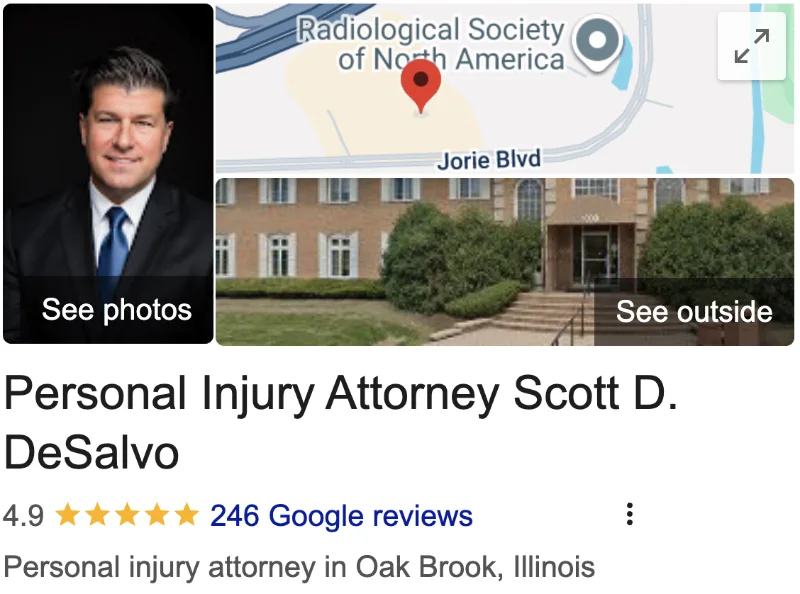
My office is at 1000 Jorie Blvd, Suite 204, Oak Brook, IL 60523. But I come to you. We can meet at your home, at a hospital, at a coffee shop, or over Zoom—whatever works best for your family.
I represent families with injured children throughout every Chicago neighborhood and throughout the suburbs: Cook County, DuPage County, Lake County, Will County, Kane County, and beyond. If your child was injured by medical malpractice anywhere in the greater Chicago area, I can help.
Bilingual services are available in English and Spanish for families who need them. No one should face this process alone, and no one should face it through a language barrier.
When a hospital, a doctor, or a medical institution hurts your child through carelessness, they have entire legal departments and insurance companies working to protect them. They have resources most families can’t imagine. And they are counting on you being too overwhelmed, too heartbroken, and too intimidated to fight back.
I’ve spent 27 years standing up to exactly these kinds of defendants. Hospitals. Medical corporations. Insurance companies with bottomless budgets. I’ve done it over 30 times in front of juries. I’ve done it hundreds of times in depositions and negotiations. And I’ve done it for families who felt exactly the way you feel right now—scared, angry, and unsure where to turn.
Your child can’t advocate for themselves. That’s your job. And my job is to make sure you have the legal firepower to do it.
Call me at (312) 500-4500. Any time. Day or night. The consultation is free. There’s no obligation. And if I take your case, you pay nothing unless we win.
Your fight is my fight. Let’s get started.


Scott DeSalvo founded DeSalvo Law to help injured people throughout Chicago and surrounding suburbs. Licensed to practice law in Illinois since 1998, IARDC #6244452, Scott has represented over 3,000 clients in personal injury, workers compensation, and accident cases.
No Fee Unless You Win | Free Consultation | 24/7 Availability Call or Text: (312) 500-4500
>>Read More
Main Office:
1000 Jorie Blvd Ste 204
Oak Brook, IL 60523
New Cases: 312-500-4500
Office: 312-895-0545
Fax: 866-629-1817
service@desalvolaw.com
Chicago and Other Suburban Offices
By Appointment Only