
Schaumburg is one of the biggest commercial hubs in the Chicago suburbs, and with that comes a high volume of accidents — on the roads, in the parking lots, inside the stores, and on corporate campuses. If you have been injured in Schaumburg, you need a lawyer who will fight the insurance companies, not negotiate your case into the ground. I am Scott DeSalvo, and I have been representing injured people for over 30 years.
I have handled more than 3,000 cases. I am trained at both the Gerry Spence Trial Lawyer’s College and the Keenan Trial Institute — two of the most elite plaintiff trial programs in the country. When insurance companies see my name on a case, they know I am not bluffing when I say I will take it to trial.
Schaumburg’s concentration of retail, corporate offices, and heavy traffic corridors like I-90, Route 53, and Golf Road means injuries happen here constantly. Whether you were hurt in a car crash on the Jane Addams Tollway, slipped on an unmarked wet floor at Woodfield Mall, or suffered a workplace injury at one of the many corporate campuses in the area, I handle these cases personally.
Call 312-500-4500 for a free consultation. You pay nothing unless I recover money for your case.

Woodfield Mall draws over 27 million visitors per year. That number does not include the dozens of restaurants, big-box stores, and entertainment venues that surround it along Golf Road and Higgins Road. When that many people move through commercial spaces, injuries are inevitable — and the businesses responsible for those injuries will fight hard to avoid paying for them.
Premises liability is the legal term for injuries that happen on someone else's property due to dangerous conditions. In Illinois, a business owner has a duty to maintain their property in a reasonably safe condition and to warn customers of known hazards. When they fail to do that, they are liable for your injuries. But proving premises liability is harder than most people think.
The most common premises liability injuries I see from Schaumburg include wet floor slip-and-falls in retail stores and restaurants, parking lot trip hazards from crumbling asphalt and poor lighting, escalator and elevator malfunctions, falling merchandise from improperly stocked shelves, and burns from hot food or beverages at restaurants. Each of these cases requires specific evidence that most people do not think to preserve in the moment.
What to do immediately after a retail injury: Report the incident to the store manager and insist on an incident report. Take photographs of whatever caused your fall or injury — the wet floor, the broken step, the uneven pavement. Get the names and phone numbers of any witnesses. Photograph the area from multiple angles. And go to the doctor, even if you think you are fine. Adrenaline masks pain, and what feels like a minor bump can turn out to be a torn rotator cuff or a herniated disc.
Here is what the store does not want you to know: they have surveillance cameras everywhere, and that footage will show exactly what happened. But they are not required to keep it forever. If you do not notify them of a claim quickly, the footage gets recorded over — usually within 30 to 90 days. I send evidence preservation letters immediately in every premises liability case, demanding that the business preserve all video footage, incident reports, maintenance logs, and inspection records.
Stores and restaurants also fight these cases aggressively because they carry commercial general liability insurance policies with high limits. The insurance companies behind those policies have dedicated teams of lawyers whose only job is to deny premises liability claims. They will argue that the hazard was "open and obvious," that you were not paying attention, or that the condition was created moments before your fall and the store had no time to clean it up. I know these defenses inside and out, and I know how to defeat them.
As your Schaumburg Personal Injury Attorney, I handle all injury claim types:
Schaumburg's location creates constant traffic dangers and collision risks. Golf Road carries massive daily traffic volumes. Woodfield Road sees frequent accidents near shopping areas. I-90 and I-290 bring interstate traffic with associated serious collision risks. Route 53 creates additional hazards.
I represent clients injured in:
Vehicle accident cases require thorough accident reconstruction, complete medical documentation, and aggressive negotiation with insurance adjusters specifically trained to minimize payments. Without experienced representation, injured parties typically accept settlements representing small fractions of their cases' actual values.
Commercial truck accidents present exponentially greater complexity than standard vehicle collisions. These cases involve federal transportation regulations, corporate liability issues, and insurance policies worth millions of dollars.
I've successfully litigated truck cases involving:
The critical distinction in trucking cases is understanding Federal Motor Carrier Safety Regulations and pursuing claims against trucking companies and their corporate structures, not merely individual drivers. Most attorneys lack this specialized expertise. I've developed it through years handling complex truck accident cases.
Motorcyclists and cyclists face unjust prejudice in legal proceedings despite possessing identical road rights as any other vehicle operator. Jurors sometimes harbor biased assumptions about victims who chose two-wheeled transportation.
These biases are both unfair and legally irrelevant under Illinois law. When negligent drivers cause collisions, they bear complete legal responsibility regardless of victim's vehicle choice.
Motorcycle and bicycle accidents typically produce catastrophic injuries—severe fractures, traumatic brain damage, spinal trauma, extensive road rash requiring multiple skin grafts, permanent scarring. These cases demand attorneys willing to aggressively counter defense strategies attempting to blame victims and who will fight relentlessly for full compensation.
Schaumburg's walkable areas, Woodfield Mall, and active commercial districts generate substantial pedestrian activity creating unfortunately frequent pedestrian-vehicle accidents.
If a driver struck you while you were legally using a crosswalk or sidewalk, you possess a valid legal claim. Pedestrian accidents typically result in severe injuries due to complete lack of physical protection. These cases deserve aggressive representation securing adequate compensation.
Schaumburg's diverse employment sectors—major corporate headquarters, retail establishments, healthcare facilities, manufacturing, distribution centers, and service industries—all present significant workplace injury risks. Workplace injuries occur daily across all these sectors.
The Illinois Workers' Compensation Act provides specific benefits following workplace injuries. However, insurance companies systematically challenge these claims unless injured workers retain experienced legal representation.
I handle:
For workers' compensation cases, Illinois law mandates my fee at 20%. I ensure clients receive all entitled benefits—treatment by their chosen physician, wage replacement during recovery, and fair permanent disability compensation.
Premises liability cases require proving property owners knew (or should have known) about dangerous conditions causing injuries. These are legally complex matters requiring immediate evidence preservation.
Schaumburg property owners—whether massive commercial establishments like Woodfield Mall, corporate campuses, smaller businesses, or private property owners—bear legal responsibility for maintaining reasonably safe conditions. When they fail and you sustain injuries from wet floors, defective stairs, inadequate lighting, or un-cleared ice, they should face liability.
Winning premises liability cases demands immediate action. Property owners repair hazardous conditions immediately after accidents, then later deny hazards existed. Rapid evidence preservation is absolutely critical.
Healthcare providers aren't infallible, and when their mistakes fall below accepted care standards, patients suffer preventable harm. Schaumburg and surrounding areas have numerous medical facilities where malpractice unfortunately occurs.
I handle malpractice claims involving:
Medical malpractice litigation requires substantial resources—expert physician testimony, comprehensive medical record analysis, and often years of complex litigation. Many attorneys refuse these cases. I accept them when evidence supports viable claims. My fee for medical malpractice is 33 1/3%, Illinois's standard rate.
Few situations cause more anguish and rage than discovering your loved one suffered abuse or neglect in a facility meant to provide care and dignity.
I've litigated cases involving severe pressure ulcers developing because staff chronically neglected repositioning immobile residents. I've handled dehydration and malnutrition cases where nursing home staff simply ignored residents' basic needs. I've pursued physical abuse cases involving staff members who never should have been employed in elder care.
If your family member has been harmed in a Schaumburg area nursing home, contact me immediately. These cases require both sophisticated legal expertise and genuine compassion. My firm provides both.
Losing a family member due to another party's preventable negligence produces indescribable pain, grief, and often severe financial hardship. Nothing truly compensates for that loss, but Illinois law provides wrongful death claims to help families seek justice.
Illinois wrongful death statutes allow certain family members to pursue compensation and hold negligent parties accountable. These claims arise from:
I handle wrongful death cases with appropriate gravity, respect, and compassion for grieving families. You don't face this alone.
Certain injuries permanently and fundamentally alter life trajectories in ways most people cannot comprehend until experiencing them personally. Traumatic brain injuries affect memory, personality, and cognitive abilities permanently. Spinal cord injuries can cause paralysis. Amputations change how individuals navigate every aspect of daily existence. Severe burns require years of painful reconstructive surgeries and therapy.
These cases require attorneys understanding that proper compensation extends far beyond immediate visible losses. We're calculating:
I've completed elite trial advocacy training at the Gerry Spence Trial Lawyer's College and The Edge program. Fewer than one in 10,000 attorneys complete this advanced training level. I pursued it specifically to handle complex, high-stakes catastrophic injury cases and secure maximum compensation for clients facing permanent life changes.
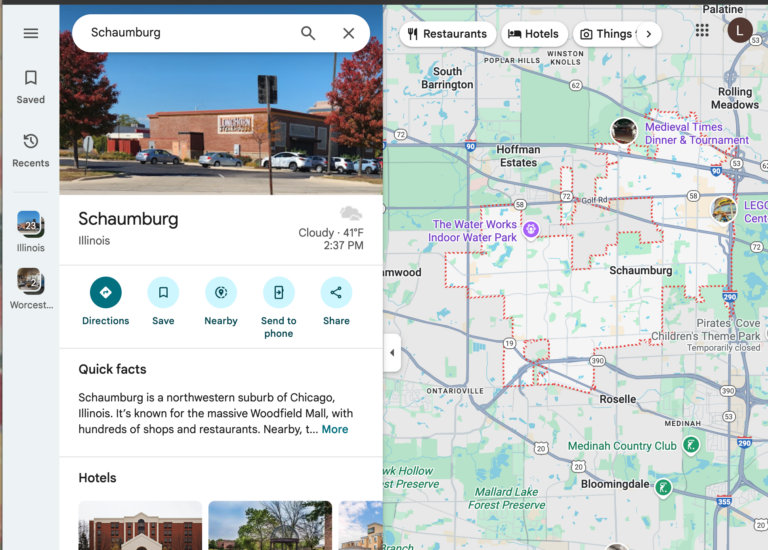
The Jane Addams Memorial Tollway — I-90 — cuts through the northern edge of Schaumburg and carries an enormous volume of commercial and commuter traffic. Route 53, also known as I-290 in its expressway section, runs along the eastern boundary. These two highways, combined with the surface street network of Golf Road, Schaumburg Road, and Higgins Road, create a traffic environment that is as dangerous as anything in the Chicago suburbs.
The I-90 interchanges at Roselle Road, Meacham Road, and Route 53 are merging nightmares during rush hour. Traffic moves at highway speed in the left lanes while drivers in the right lanes are braking hard to exit or accelerating to merge. The result is a constant flow of rear-end collisions and sideswipe accidents. Tollway accidents tend to produce serious injuries because of the speeds involved. Even a rear-end collision at 50 miles per hour can cause cervical disc herniations, shoulder injuries, and traumatic brain injuries.
Route 53 has been under some form of construction or improvement for what feels like decades. Lane shifts, narrowed shoulders, concrete barriers, and uneven pavement create hazards that would not exist on a properly maintained road. Construction zone accidents raise a unique legal question: who is responsible? It could be the construction contractor, the Illinois Department of Transportation, the engineering firm that designed the traffic control plan, or some combination. I have handled multiple construction zone accident cases and know how to identify and pursue every responsible party.
Golf Road from Roselle Road to Meacham Road is one of the busiest commercial corridors in the northwest suburbs. The intersections at Golf and Roselle, Golf and Meacham, and Golf and Higgins see constant traffic from shoppers, commuters, and commercial vehicles. Red-light running is a serious problem at these intersections, and the T-bone collisions that result are among the most dangerous types of car accidents. I have represented numerous clients injured at Golf Road intersections, and in many cases, traffic camera footage or witness testimony from nearby businesses has been critical evidence.
I want to talk about something that most personal injury lawyers gloss over or mention only in passing: insurance company surveillance. If your case has significant value — and in Schaumburg, many cases do because of the severity of tollway accidents and premises liability injuries — there is a real chance that an insurance company will hire a private investigator to follow you.
What surveillance looks like in practice: A private investigator will park outside your home in the morning and follow you throughout your day. They will videotape you carrying groceries, walking your dog, getting in and out of your car, and interacting with your family. They are looking for anything — anything at all — that contradicts your claimed injuries. If you said you cannot lift objects above your head and they catch you reaching for something on a high shelf, they will play that three-second clip for a jury and argue that your entire case is a fraud.
Social media is the new surveillance. Insurance companies do not even need to hire a private investigator anymore in many cases. They simply monitor your social media accounts. A photograph of you at a family barbecue, smiling and holding a plate of food, can be twisted into evidence that you are not really in pain. A check-in at a gym, even if you were just sitting in the lobby waiting for your spouse, becomes "proof" that you are exercising and therefore not injured. I tell every client the same thing: deactivate your social media accounts for the duration of your case, or at minimum, set everything to the strictest privacy settings and post absolutely nothing related to your physical activities or emotional state.
Independent Medical Examinations (IMEs) are another form of surveillance disguised as medicine. The insurance company will require you to be examined by a doctor of their choosing — a doctor who has a financial relationship with the insurance company and who examines plaintiffs for a living. These doctors frequently minimize injuries, claim you have reached "maximum medical improvement" earlier than you actually have, or attribute your symptoms to pre-existing conditions rather than the accident. I prepare my clients thoroughly for IMEs. I review every question the doctor is likely to ask, explain what the doctor is looking for, and make sure my client understands the importance of being honest but not volunteering information that can be taken out of context.


Here's exactly what happens when you contact my firm:
I don't employ high-pressure sales tactics. I don't chase or harass prospective clients. We'll have genuine, respectful conversations with straight answers.
If you retain my services, I begin aggressive work immediately because evidence preservation is time-critical:
My firm uses proprietary case management software I personally developed. This system enables more efficient case progression than competitors' systems, earlier critical information discovery, and ultimately superior client outcomes.
Your physical recovery always takes absolute priority. I'll help you access appropriate medical care and ensure comprehensive treatment documentation.
If you have health insurance, use it. If not, I can connect you with healthcare providers treating on lien bases—they defer payment until case settlement.
Equally important, I ensure thorough documentation of all treatment to maximize claim values and prove complete injury extent.
Once treatment concludes (or you reach maximum medical improvement), I calculate full case value and send comprehensive demands to insurance companies backed by extensive documentation.
I've negotiated thousands of injury cases over twenty-seven years. I understand their true values and don't accept inadequate offers. I don't back down from protracted, difficult negotiations.
Approximately 90% of my cases settle during negotiation. This doesn't mean I capitulate—it means I negotiate strategically and aggressively until reaching truly fair settlements.
If insurance companies refuse reasonable offers, I file lawsuits without hesitation. Unlike many attorneys who avoid courtrooms, I'm fully prepared for litigation and genuinely enjoy trying cases.
I've handled more than 30 jury trials, approximately 100 arbitrations, and hundreds of depositions. One judge stated my courtroom presentation ranked among the finest he'd witnessed. I possess more trial experience than many attorneys with twice my years in practice.
Whether through settlement or verdict, my objective remains constant: secure every dollar you legally deserve under Illinois law.
When we win, I deduct my contingency fee and advanced case costs. Remaining proceeds—typically the vast majority—go directly to you.
If we lose—which happens rarely—you owe me absolutely nothing. That's the contingency fee agreement.

Let me be completely transparent about legal fees.
You pay absolutely nothing out of pocket. Zero. I advance all case expenses—filing fees, medical records, expert witness fees, investigation costs, everything.
I only receive payment if and when you receive compensation first.
For workers' compensation cases, state law mandates my fee at 20%. For standard personal injury cases, it's 33 1/3%, or 40% if litigation becomes necessary. Medical malpractice cases are 33 1/3%.
These represent Illinois's standard contingency rates. If we lose, you owe me nothing. I absorb all advanced costs.
Accidents and injuries don't respect business hours. You might need answers at 3 a.m. from an emergency room. An insurance adjuster might contact you Sunday morning.
Call me anytime. I'm genuinely available 24 hours daily, 7 days weekly, 365 days annually. When you call, you receive actual assistance, not voicemail.
Most attorneys graduate law school, pass bar examinations, and consider their education complete. I took a different path.
I've personally invested over $100,000 traveling nationally to train with America's premier trial lawyers. I'm a Gerry Spence Trial Lawyer's College graduate. I've completed The Edge program, one of the nation's most prestigious trial advocacy training programs.
Statistically, fewer than one in 10,000 attorneys pursue this training level.
Why this investment? To provide clients with absolutely superior representation when facing insurance companies with entire legal departments.
When my father sustained serious workplace injuries, his attorney treated him terribly. I made a personal commitment never to treat any client that way.
Everyone on my team understands that winning your case while treating you with dignity, respect, and honest communication is our primary objective. Calls get returned promptly. You stay informed. Questions get answered thoroughly.
I don't operate a high-volume case mill. I personally handle your case and maintain direct client relationships.
You know those lawyers who repeatedly call after accidents or appear uninvited at hospitals? That's not my practice or character.
I never chase potential clients. I never employ high-pressure tactics. If we work together, it's because you want representation, not because I harassed you.
We'll talk like reasonable adults. I'll provide honest answers. You'll make informed decisions. Even if you don't retain me, I hope we end as friends.
Find Out What YOUR Case Might Be Worth...for free.
Even if you feel acceptable immediately after accidents, see physicians right away. Many serious injuries don't manifest obvious symptoms for days or weeks.
If you delay treatment, insurance companies will argue you weren't actually injured. Don't provide them this weapon.
Insurance adjusters will contact you shortly after accidents requesting recorded statements.
Don't provide them.
These adjusters are trained professionals who know how to elicit case-damaging answers. Politely tell them you need attorney consultation first, then call me.
Insurance companies employ investigators monitoring injured claimants' social media—all platforms. They're searching for content they can weaponize against you.
The safest approach is complete social media silence until case resolution. At minimum, avoid posting anything about your accident, injuries, medical treatment, or activities.
Insurance companies' initial settlement offers are always substantially below fair values.
Before accepting any offer, call me for free consultation. I'll tell you honestly whether it's fair or exploitative.
At-fault parties' insurance companies are not your allies. Their sole objective is paying you as little as possible.
Don't communicate with them directly. Allow me to handle all insurance company interactions.
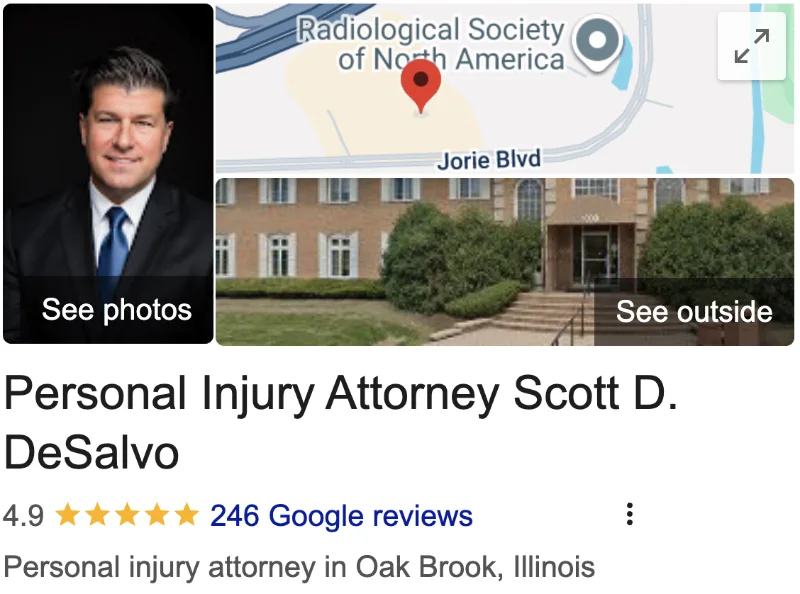
My office is conveniently located at 1000 Jorie Blvd, Ste 204, Oak Brook, IL 60523.
Whether you live in Schaumburg itself or nearby communities including:
I'm here to help you.
I understand that traveling to a law office can be difficult when you're seriously injured. If you can't come to my office, I'll come to you. We can meet at your home, a convenient location, or even the hospital.
The goal is making this process manageable during an already difficult time.

If you've been injured in Schaumburg or anywhere in Cook County, take action now before critical evidence disappears.
Call me right now for your completely free consultation. I'm available 24/7/365.
Here's what happens when you call:
Remember: no money out of pocket, no fee unless we win.
You have everything to gain and nothing to lose.
Don't allow insurance companies to exploit you during vulnerability. Get an experienced Schaumburg injury lawyer who genuinely cares about your outcome fighting for you.
Your fight becomes my fight.
Call me now: (312) 500-4500
I look forward to hearing from you and learning how I can help achieve justice.

First, report the incident to the store or mall management and insist they create a written incident report. Take photos of exactly where you fell and what caused you to fall — wet floor, broken tile, debris, ice, whatever it was. Get the names and phone numbers of any witnesses. Seek medical attention immediately, even if you think you are okay. Then call me. Time is critical in premises liability cases because stores routinely delete surveillance footage within 14 to 30 days. I send a spoliation letter immediately to preserve that video before it disappears. The footage often shows the hazardous condition existed for a significant period before your fall, which proves the store knew or should have known about it.
Unfortunately, yes — there is no law that requires a store to hand you their incident report. That report is considered their internal document, and they know it could be used against them. But here is the thing: that report still exists, and I can get it through the discovery process once a lawsuit is filed. The store is required to preserve it, and if they destroy it, that creates a separate legal problem for them called spoliation of evidence. What you should do at the scene is create your own record — take photos, get witness information, and write down everything you remember about the conditions. That way you are not dependent on the store’s version of events.
Yes, you potentially can. Corporate property owners and occupiers owe a duty of care to people lawfully on their premises, including business visitors. If you were injured because of a hazardous condition on the corporate campus — icy walkways, broken stairs, defective elevators, poor lighting in a parking garage — the property owner or the company occupying the space may be liable. These cases can involve multiple responsible parties: the property owner, the tenant company, and the property management company may all share liability. Large corporations typically have aggressive legal teams and well-funded insurance policies. That does not intimidate me. I have gone up against major corporations before, and their size does not change the law.
Insurance companies regularly hire private investigators to conduct surveillance on people who have filed injury claims. They will follow you, video you from their car, watch your house, and film you doing physical activities. They look for footage that contradicts your claimed injuries — carrying heavy bags, exercising, working in the yard, bending and lifting. They also scour your social media accounts for photos and posts that suggest you are not as injured as you claim. I tell all my clients the same thing from day one: do not post anything on social media about your activities, your case, or your injuries. Do not exaggerate your limitations to me or to your doctors, because if surveillance catches you doing something you said you could not do, it can destroy your credibility. Be honest about what you can and cannot do, and let me build your case on the truth.
Maximum medical improvement, or MMI, is the point at which your condition has stabilized and further treatment is not expected to produce significant improvement. It does not necessarily mean you are back to normal — it means you are as good as you are going to get. This is a critical milestone in your case because it is the point at which we can accurately value your claim. If we settle before MMI, we are guessing about your future medical needs, and we almost always guess wrong — in the insurance company’s favor. Once you reach MMI, your doctor can give opinions about permanent restrictions, future treatment needs, and long-term prognosis. That information directly determines the value of your case. I never pressure clients to settle before MMI, even if the insurance company waves money in front of us.
Your employer is partly right and partly wrong. Workers’ compensation is the exclusive remedy against your employer for a workplace injury in Illinois. You generally cannot sue your own employer. However, if a third party — someone other than your employer or a co-worker — contributed to your injury, you absolutely can file a personal injury lawsuit against that third party. Common examples include injuries caused by defective equipment manufactured by another company, unsafe conditions on property owned by someone other than your employer, or negligence by a subcontractor on a job site. These third-party claims are in addition to your workers’ comp benefits, and they can result in significantly larger recoveries because you can claim pain and suffering, which workers’ comp does not cover.
No. Quick settlement offers from insurance companies after I-90 accidents are almost always lowball offers designed to close your file before you understand the full extent of your injuries. High-speed expressway collisions frequently cause injuries that take weeks or months to fully manifest — herniated discs, ligament tears, traumatic brain injuries. If you accept a settlement and sign a release, you cannot go back for more money later, even if you need surgery you did not anticipate. I have seen insurance companies offer $5,000 for injuries that were ultimately worth $50,000 or more. Let me evaluate the offer before you sign anything. The consultation is free, and it could save you tens of thousands of dollars.
It costs you nothing upfront. I work on a contingency fee basis, which means I only get paid if I recover money for you. My fee is a percentage of the recovery, and we agree on that percentage before I start working on your case. If I do not win, you do not pay me a dime. There are no hidden fees, no hourly charges, and no retainers. This is standard in personal injury law, and it means I am financially invested in getting you the best possible result. It also means there is zero risk to you in hiring me. You can call me at 312-500-4500 and we can discuss the specifics during your free consultation.



Scott DeSalvo founded DeSalvo Law to help injured people throughout Chicago and surrounding suburbs. Licensed to practice law in Illinois since 1998, IARDC #6244452, Scott has represented over 3,000 clients in personal injury, workers compensation, and accident cases.
No Fee Unless You Win | Free Consultation | 24/7 Availability Call or Text: (312) 500-4500
>>Read More
Main Office:
1000 Jorie Blvd Ste 204
Oak Brook, IL 60523
New Cases: 312-500-4500
Office: 312-895-0545
Fax: 866-629-1817
service@desalvolaw.com
Chicago and Other Suburban Offices
By Appointment Only