




You got hurt at work in Aurora. You reported it. You expected the workers comp system to cover your medical bills and pay your wages while you heal. Instead, the insurance company is fighting you - or paying you the minimum, or sending you to a doctor whose paycheck depends on saying you are fine.
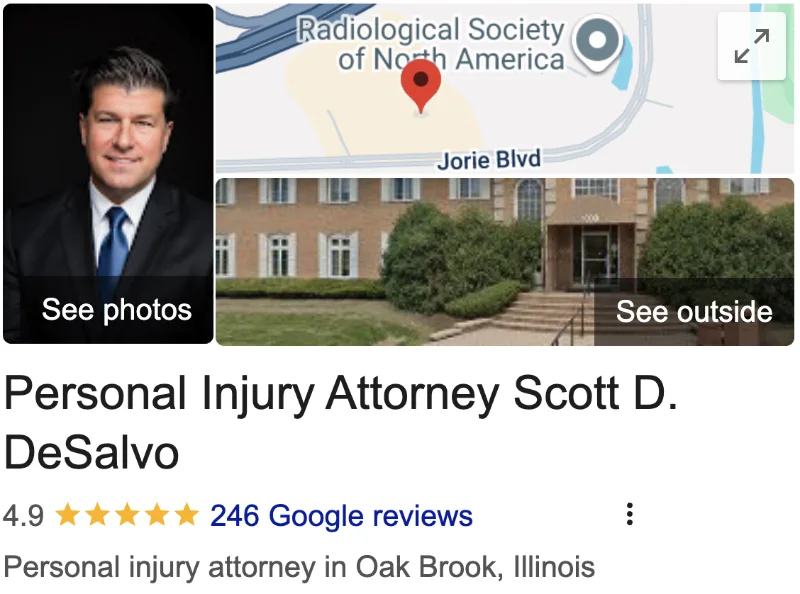
I am Scott DeSalvo. I have spent almost 30 years handling Illinois workers comp cases. My office is in Oak Brook, minutes from Aurora on I-88, and I appear before the Illinois Workers' Compensation Commission in Chicago regularly. Call me at 312-500-4500. The conversation costs nothing, it is confidential, and I will tell you straight where your case stands.
Find Out What YOUR Case Might Be Worth...for free.
The Illinois workers comp system is supposed to pay your medical bills and replace two-thirds of your lost wages while you heal. The insurance companies that fund it are designed to protect their profits. When those two interests collide, here is what I see them do.
They blame a pre-existing condition. You hurt your back at work, and the insurance company pulls your medical records and finds a chiropractor visit from three years ago. They argue your current condition is a pre-existing problem, not a work injury. Under Illinois law, if your work activity aggravated or accelerated a pre-existing condition, that aggravation is compensable. You do not have to have been in perfect health before the injury - you only have to show the work activity made the condition meaningfully worse.
They dispute that the injury happened at work. The employer says no one saw it. There is no witness. You did not report it the same day. They use the delay against you. In reality, you have 45 days under 820 ILCS 305/6(c) to report a workplace injury, and there are valid reasons workers do not report immediately - they think it will get better, they are afraid of losing the job, they do not realize how serious the injury is until weeks later. A delay does not kill the case, but it does mean you need a lawyer who can explain the timeline to the arbitrator.
They send you to their doctor. The insurance company schedules an Independent Medical Examination with a physician who is anything but independent. These doctors make a living performing IMEs for insurance companies, and their reports almost always favor the insurer. Your treating doctor knows your body, has been monitoring your recovery, and has no financial stake in the outcome. At arbitration, the arbitrator weighs both opinions, and the treating physician's testimony typically carries more weight.
They pressure you to come back before you are ready. Retaliatory discharge for filing a workers comp claim is illegal in Illinois and carries significant penalties. But many employers use subtler pressure - calls at home asking when you are coming back, emails about your job being at risk, light-duty assignments that exceed your medical restrictions. Document all of it. Save every email, text, and voicemail.
Hiring Scott was one of the best moves I have made in my life. Scott is a down to earth person and attorney. Scott is a 5 star first class act who really knows his stuff. The Judge said his presentation was one of if not the best he had ever seen. Take my advice, hire Scott I’m sure you’ll be 200% satisfied I was.

Scott not only cares about the case, but he truly cares about his clients and that makes him the best lawyer I have ever met and hired! He won my case! He is thorough in everything he does. I highly recommend Scott, and will always refer him to family and friends.

I hired Scott DeSalvo upon a friend’s recommendation. His office kept me informed of developments as they happened, and I felt the settlement reached was fair considering my injuries. I would highly recommend Scott DeSalvo to represent your personal injury case.
When the workers comp system is working the way it is supposed to work, you receive a specific set of benefits. Make sure you know what they are, because the insurance company will not volunteer to pay anything you do not ask for.
Medical care is paid at one hundred percent, no copays, no deductibles, no out-of-pocket costs. Every doctor visit, every diagnostic test, every physical therapy session, every prescription related to the injury - the insurance company pays. You have the right under Illinois law to choose your own treating physician. The employer cannot force you to see their company doctor for ongoing care, though they can require a one-time IME.
Temporary total disability, paid under 820 ILCS 305/8(b), replaces two-thirds of your average weekly wage tax-free while you cannot work. TTD checks should come every two weeks. If they stop coming, that is a problem that needs a lawyer immediately.
Permanent partial disability is the settlement at the end of your case, based on the percentage of loss of use of the body part you injured. The percentage is multiplied by the statutory value for that body part and your average weekly wage. Insurance companies routinely lowball the percentage. This is where a lawyer who knows how the IWCC evaluates injuries pays for itself many times over.
Vocational rehabilitation is available if your injury prevents you from returning to your old job. The insurance company has to pay to retrain you for work you can actually do. If your injuries prevent you from working at all, you receive permanent total disability.
Mileage reimbursement covers your travel to medical appointments, including parking and tolls. Keep a log of every trip. Most workers never claim this because they do not know it exists.
Two deadlines control every Illinois workers comp case. Miss either one and the case is over.
First is the 45-day notice rule under 820 ILCS 305/6(c). You have 45 days from the date of injury to notify your employer. Notice means telling a supervisor, manager, or someone in the management chain. Telling a coworker does not count. Telling a union rep is helpful but does not substitute for telling management. Get the notice in writing if at all possible - an email, a text, the company's incident report form. If you have to give verbal notice, follow it up with something in writing the same day.
Second is the three-year filing deadline under 820 ILCS 305/6(d). You have three years from the date of injury, or two years from your last TTD payment - whichever is later - to file an Application for Adjustment of Claim with the Illinois Workers' Compensation Commission. Most cases get filed well before three years, but if your employer is paying voluntarily, the deadline can sneak up on you. When in doubt, talk to a lawyer.

Sometimes a worker is on the clock but the injury is caused by someone other than the employer. A delivery driver is rear-ended by another driver. A warehouse worker is hit by a forklift operated by an outside contractor. A maintenance worker is hurt by a defective product. A home health nurse is bitten by a patient's dog.
In those situations, you have two separate claims. The workers comp claim provides the benefits described above. The third-party negligence case is a civil lawsuit against the person or company that caused the injury, and it allows recovery of damages that workers comp does not pay - including pain and suffering, full lost wages instead of just two-thirds, and loss of normal life.
These cases get complicated because the workers comp insurer has a lien against any third-party recovery under 820 ILCS 305/5(b). The lien has to be negotiated, and a good lawyer can usually reduce it significantly. If you have a possible third-party case, do not handle either claim without an attorney - the strategic decisions you make on one affect the other.

Aurora sits along the I-88 manufacturing, warehouse, and distribution corridor and has a major healthcare presence, plus food processing, construction, and retail. The injuries I see most often from the Aurora area:
Manufacturing and assembly-line work produces repetitive motion injuries to the hands, wrists, elbows, and shoulders - carpal tunnel syndrome, rotator cuff tears, lateral epicondylitis. Machine and equipment injuries from unguarded pinch points, conveyor belts, and presses can cause amputations and crush injuries.
Warehouse and distribution work produces back, neck, and shoulder injuries from lifting, pulling, and pushing. Forklift collisions and falls from loading docks are common. Repetitive lifting injuries are especially common in workers who handle the same weight in the same motion thousands of times a shift.
Healthcare workers face their own pattern of injuries: back and shoulder injuries from patient handling, slip-and-falls on wet floors, needle sticks and blood exposure, and assault by patients and visitors. Nursing assistants are among the most frequently injured workers in the country.
Construction injuries include falls from scaffolding and roofs, being struck by tools or materials, electrical injuries, and equipment injuries. Many Aurora-area construction projects involve multiple contractors on a single site, which is where third-party claims often come in.
Other common Aurora-area injuries: traffic crashes in company vehicles, food processing and meatpacking injuries, slip-and-falls in retail, and workplace assault in customer-facing jobs.

Nothing upfront. Nothing out of pocket. Illinois workers comp attorney fees are capped by statute at 20 percent of your recovery under 820 ILCS 305/16a - the lowest cap of any type of injury case in Illinois, and the lowest of any state in the country. The 20 percent fee has to be approved by the IWCC and applies only to your final settlement or award, not to your weekly TTD checks.
If we do not win, you owe nothing. I advance all case costs. There is no retainer, no hourly billing, and no financial risk on your end.

I have been licensed in Illinois since 1998. I have represented over 3,000 injured people in my career. I handle your case personally, from the first phone call to the final settlement check - not a junior associate, not a case manager, not an intake screener.
My office is in Oak Brook, minutes from Aurora on I-88. I appear before the IWCC in Chicago regularly. For Spanish-speaking workers, my office provides full bilingual service. Hablamos espanol.
If you got hurt at work in Aurora and you need to know where you stand, call me at 312-500-4500. The consultation is free and confidential. Any day, any hour.
"Scott is absolutely fantastic. He will always go the extra mile for his clients. They always take the time to return phone calls at all hours and I highly recommend him to all my friends."
-Melissa Brooks
"Great people and Scott's a great lawyer. They helped me make the wisest decision for my case, and that's important in serious legal matters. I trust him completely. He is the one to call."
-Tony Skvarenina
"Beyond satisfied with the services I received from this law firm. Definitely recommend! They got me fully paid and all the doctor bills, too. If you want the best, this is the law firm for your injury case!"
-Cynthia Rodriguez
"Scott represented me and I was really pleased with everything, my car accident paid a lot and quick. If you want a good Lawyer who is responsive, and straight with you, I highly recommend him."
-Greg Garcia
Aurora has a significant manufacturing, warehousing, and distribution sector, particularly along the I-88 corridor. Healthcare workers at Rush Copley and surrounding facilities face significant work injury risks - nurses, aides, and technicians deal with back and shoulder injuries from patient handling, slip-and-falls on wet floors, needle sticks, and patient assault. Construction, food processing, and retail distribution facilities round out the picture.
The location of your attorney matters less than their experience with Illinois workers comp law and the IWCC. My office is in Oak Brook, minutes from Aurora on I-88, and I appear before the IWCC in Chicago regularly. What matters is that your attorney knows how to build a strong case and protect every benefit you are owed. Call me at 312-500-4500 for a free evaluation.
File a petition for hearing with the IWCC immediately. A denial is not the end - it is the beginning of the formal dispute process. Many cases that are initially denied are won at arbitration with proper representation. Insurance companies deny claims hoping the injured worker won't push back. I do push back. Call me at 312-500-4500.
Workers comp cases are filed with the IWCC statewide, so the county your employer is in doesn't determine where your case is heard. County matters if you also have a civil lawsuit alongside a workers comp case, such as a third-party negligence claim. In those situations, the county where the incident occurred affects venue. I handle the workers comp case and related civil claims together.
Under Illinois law, you have the right to choose your own treating physician for ongoing workers comp medical care. The employer cannot force you to keep seeing their company doctor. The only exception is the one-time Independent Medical Examination the insurance company is allowed to schedule. For your day-to-day treatment, find a doctor who regularly treats workers comp patients and understands how to document your injuries for the legal process - that documentation is what wins or loses a permanency rating later.
The Independent Medical Examination is a defense exam paid for by the insurance company. The doctor produces reports favorable to insurers for a living. Be honest - do not exaggerate and do not minimize. Answer only the questions asked. Do not volunteer your medical history or discuss your case or your lawyer. Note the time the exam actually started and ended. Many IME exams take 15 to 20 minutes, which is not enough time for a thorough evaluation. Under Illinois law, you have the right to have a representative present at the IME. Call me at 312-500-4500 before the appointment and we will prepare you for what to expect.
Most Illinois workers comp cases take one to three years from injury to resolution. The timeline depends on how long your treatment lasts, whether the insurance company is fighting any part of the claim, and whether the case goes to arbitration. We cannot settle the permanency portion of your case until you reach maximum medical improvement, because that is when we know the full extent of the injury. While the case is pending, TTD benefits should be paid every two weeks. The pressure to settle early almost always favors the insurance company, not you.
Retaliatory discharge for filing a workers comp claim is illegal in Illinois and carries significant penalties - it is grounds for a separate civil lawsuit. But many employers use subtler pressure: calls at home asking when you are coming back, emails about your job being at risk, light-duty assignments that exceed your medical restrictions. Document everything. Save every email, text, and voicemail. Do not return to work until your treating physician releases you, and do not perform any task that violates your medical restrictions. If your employer is pressuring you to violate restrictions, call me at 312-500-4500.
Would you like to know more about workers' comp lawyer chicago?
If you or a loved one is dealing with a situation like this, give us a call any time, day or night. We are here to help. 312-500-4500


Scott DeSalvo founded DeSalvo Law to help injured people throughout Chicago and surrounding suburbs. Licensed to practice law in Illinois since 1998, IARDC #6244452, Scott has represented over 3,000 clients in personal injury, workers compensation, and accident cases.
No Fee Unless You Win | Free Consultation | 24/7 Availability Call or Text: (312) 500-4500
>>Read More
Main Office:
1000 Jorie Blvd Ste 204
Oak Brook, IL 60523
New Cases: 312-500-4500
Office: 312-895-0545
Fax: 866-629-1817
service@desalvolaw.com
Chicago and Other Suburban Offices
By Appointment Only