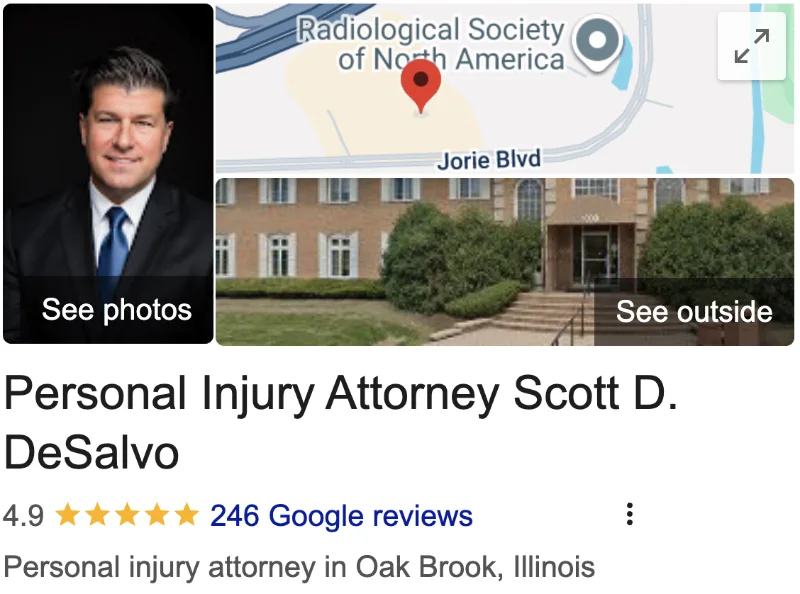



I'll never forget when I was nine years old and my father, a truck driver and Teamster, was seriously injured at work. He was still a young man. But that injury took everything from him—his ability to work, his livelihood, everything. His case dragged on for 17 years. Seventeen years! And at the end of it all, his own lawyer sued him for more fees. That's when I knew exactly what I wanted to do with my life.
That's why I became an auto accident lawyer in Chicago. I've spent almost 30 years making sure what happened to my father NEVER happens to you or your family. Whether you've been hurt in a car crash on Lake Shore Drive, injured at a construction site in Bridgeport, or suffered because of a doctor's mistake at one of our hospitals, I'm here to fight for you.
Here's my promise: no money out of pocket. Zero. You don't pay me a penny unless I win your case. And I'm available 24 hours a day, 7 days a week, 365 days a year—because injuries don't wait for business hours, and neither should your lawyer.
I've spent over $100,000 on advanced trial training that most lawyers never even consider. I'm a graduate of the world-renowned Gerry Spence Trial Lawyer's College and the prestigious "The Edge" program. Not one in 100,000 lawyers has completed the training I have.
And I did it for one reason: so YOU get the very best representation possible. Your fight is my fight.

The streets of Chicago are dangerous. The numbers don't lie. According to the Illinois Department of Transportation (IDOT), Chicago experienced over 153,000 total crashes in 2023 alone—nearly all of which were auto accidents. These crashes resulted in approximately 385 fatalities and 29,100 injuries right here in our city.
Here's what the data shows:
Statewide Illinois Statistics (2022-2023):
What This Means for You: These aren't just numbers. Each statistic represents a real person, a real family devastated by an auto accident. Insurance companies know these numbers too, and they use them to minimize what they pay you. They'll claim your injuries aren't serious, or that you were partially at fault, or that your medical treatment was excessive.
That's why you need an experienced Chicago auto accident lawyer who knows how to fight back. Someone who's handled thousands of cases and recovered millions of dollars for injury victims across Chicago and Cook County.
Types of Auto Accidents We Handle in Chicago
Chicago's roads are some of the most dangerous in the country. Between our brutal winters, aggressive drivers, and congested expressways, auto accidents happen every single day. I've spent almost 30 years representing victims of every type of vehicle crash you can imagine.
Car crashes are the most common type of auto accident I handle. Rear-end collisions on the Eisenhower. T-bone crashes at busy intersections. Head-on collisions. Multi-vehicle pileups during rush hour on the Kennedy or Dan Ryan. Whether you were hit by a distracted driver texting on their phone or a drunk driver who ran a red light, you deserve compensation for your injuries, lost wages, and medical bills.
Common car accident scenarios:
When an 18-wheeler or commercial truck hits a regular passenger vehicle, the results are often catastrophic. These crashes involve different laws, federal regulations, and multiple insurance policies. Trucking companies have teams of lawyers working to minimize what they pay you. You need a Chicago auto accident lawyer who knows how to fight back.
Commercial truck accidents require specialized knowledge of:
Motorcyclists get a bad rap, but most riders are careful, safe drivers who know their lives are on the line every time they hit the road. Unfortunately, car drivers often fail to see motorcycles or misjudge their speed. Even a minor crash can cause life-changing injuries when you're on two wheels.
Motorcycle accident cases involve unique challenges:
Chicago has more bicycles on the road than ever before, and pedestrians fill our sidewalks and crosswalks daily. But drivers aren't paying attention. I've represented too many cyclists hit in bike lanes and pedestrians struck in crosswalks by drivers who were distracted, speeding, or just careless.
These vulnerable road users face:
Uber and Lyft crashes involve complicated insurance questions. Was the driver on the app? Did they have a passenger? Was the app on but no ride accepted? These questions determine which insurance policy applies—and insurance companies for rideshare drivers will do everything possible to deny your claim.
Rideshare accident complexity includes:
CTA bus accidents and Metra train crashes require specific legal knowledge. These cases involve government entities with special rules, shorter filing deadlines, and complex liability issues. You can't treat these cases like regular car accidents—they require an attorney who understands Illinois public transit law.
Special considerations:
Illinois is a fault-based state when it comes to auto accidents. That's actually good news for you, but only if you know how to use it. Let me explain what this means and why it matters.
In Illinois, the driver who caused the accident is responsible for paying damages. That means their insurance company should cover your medical bills, lost wages, pain and suffering, and property damage. Sounds simple, right? It's not.
Insurance companies will do everything possible to avoid paying what you deserve. They'll claim you were partially at fault. They'll argue your injuries aren't as serious as you say. They'll pressure you to settle fast before you know the full extent of your damages.
That's where I come in.


The Modified Comparative Negligence Rule
Here's something most people don't know: even if you were partially at fault for the accident, you can still recover damages in Illinois—as long as you were less than 51% responsible. For example, if you were 20% at fault and the other driver was 80% at fault, you can still recover 80% of your damages.
How it works:
But insurance companies will twist this rule to screw you over. They'll try to inflate your percentage of fault to reduce what they have to pay. I've fought these battles thousands of times, and I know how to protect you.

In Illinois, you have 2 years from the date of your auto accident to file a lawsuit (735 ILCS 5/13-202). Miss that deadline, and your case is gone forever. That's why you need to call me NOW, not later. The sooner I get involved, the better I can protect your rights and build your case.
Critical deadlines:
Find Out What YOUR Case Might Be Worth...for free.
Minimum Insurance Requirements (And Why They're Not Enough)
Illinois requires drivers to carry minimum insurance of:
That might sound like a lot, but it's not. A serious auto accident can easily result in medical bills, lost wages, and damages far exceeding $25,000. If the driver who hit you only has minimum coverage, we'll explore every option to get you the compensation you deserve—including your own uninsured/underinsured motorist coverage.
Illinois law requires all auto insurance policies to include uninsured motorist (UM) and underinsured motorist (UIM) coverage at the same minimum limits as liability coverage. This protection is crucial because roughly 12% of Illinois drivers are uninsured.
What UM/UIM coverage does:

The minutes and hours after an auto accident can determine the outcome of your case. I've seen too many good cases ruined because people didn't know what to do—or because they trusted the insurance company when they shouldn't have. Here's what you need to do.
Get medical attention immediately. Even if you feel fine, get checked out. Adrenaline masks pain, and some injuries don't show symptoms for hours or days. Plus, if you don't seek medical treatment right away, the insurance company will claim you weren't really hurt.
Call the police. Always get a police report, even for "minor" accidents. The report documents what happened and who was at fault. Without it, the insurance company will try to twist the facts. Illinois law requires reporting any accident with injuries, deaths, or property damage over $1,500.
Take photos and videos. Use your phone to photograph everything—vehicle damage, the accident scene, road conditions, traffic signals, skid marks, your injuries, everything. Take videos too. This evidence disappears quickly once cars are towed and roads are cleared.
Get witness information. If anyone saw the accident, get their names and phone numbers. Witnesses can be crucial if the other driver lies about what happened or if liability is disputed.
Exchange information. Get the other driver's:
DO NOT talk to the other driver's insurance company. This is critical. They'll call you fast, acting friendly, asking for a recorded statement. DO NOT give them one. Everything you say will be used against you. Tell them to contact your lawyer—me.
DO NOT admit fault. Don't apologize or say things like "I didn't see you" or "I'm sorry." These statements can be used against you, even if you weren't at fault. Stick to the facts when talking to police.

See a doctor within 24-48 hours. Go to your doctor, an urgent care, or the ER. Don't wait. Delayed treatment gives insurance companies ammunition to deny your claim. Soft tissue injuries, whiplash, concussions, and internal injuries may not be obvious immediately.
Keep records of everything. Medical bills. Prescriptions. Time off work. Pain levels. How your injuries affect your daily life. Document it all. Keep a journal of your recovery, symptoms, doctor visits, and how the injuries impact your ability to work and enjoy life.
Follow your doctor's treatment plan. Insurance companies look for gaps in treatment. If you miss appointments or don't follow medical advice, they'll claim you weren't really injured or that you made your injuries worse by not following treatment.
Don't post on social media. Insurance companies are watching. That photo of you smiling at a family gathering? They'll use it to claim you're not really injured. Stay off Facebook, Instagram, Twitter, all of it until your case is resolved. Insurance adjusters will scour your profiles looking for anything to use against you.
Don't sign anything from the insurance company. Medical release forms, settlement offers, recorded statement authorizations—don't sign ANYTHING without talking to me first. These documents can waive your rights and give insurance companies access to your entire medical history to find unrelated conditions to blame for your injuries.
Call me before you do anything else. The insurance company will pressure you to give a statement, sign a release, or accept a settlement. Don't do any of it without talking to me first. My consultation is free, and I'm available 24/7 at (312)-500-4500.


To win your auto accident case and recover compensation, we need to prove four elements of negligence. I've done this thousands of times, and I know exactly what evidence to gather and how to build a compelling case.
1. Duty of Care Every driver on Chicago's roads owes a duty of care to others—other drivers, passengers, pedestrians, bicyclists, motorcyclists. This duty includes obeying traffic laws, maintaining control of the vehicle, and operating the vehicle safely. Establishing duty is straightforward in auto accident cases.
2. Breach of Duty The at-fault driver breached their duty of care through negligent behavior. Common breaches include:
3. Causation We must prove that the breach of duty directly caused your injuries. This requires showing a clear link between the negligent behavior and the accident, and between the accident and your specific injuries. Medical records, expert testimony, and accident reconstruction may be necessary.
4. Damages Finally, we must prove you suffered actual damages—medical expenses, lost wages, property damage, pain and suffering, permanent disability, etc. We document everything with medical bills, wage statements, repair estimates, and expert testimony about future costs.
Hiring Scott was one of the best moves I have made in my life. Scott is a down to earth person and attorney. Scott is a 5 star first class act who really knows his stuff. The Judge said his presentation was one of if not the best he had ever seen. Take my advice, hire Scott I’m sure you’ll be 200% satisfied I was.

Scott not only cares about the case, but he truly cares about his clients and that makes him the best lawyer I have ever met and hired! He won my case! He is thorough in everything he does. I highly recommend Scott, and will always refer him to family and friends.

I hired Scott DeSalvo upon a friend’s recommendation. His office kept me informed of developments as they happened, and I felt the settlement reached was fair considering my injuries. I would highly recommend Scott DeSalvo to represent your personal injury case.
Police Reports: The official accident report from Chicago Police or Illinois State Police contains crucial information about the crash, including the officer's determination of fault, witness statements, and whether any citations were issued.
Witness Statements: Eyewitnesses provide independent accounts of how the accident occurred. I interview witnesses promptly before memories fade and obtain written or recorded statements.
Photographs and Videos: Visual evidence from the scene, traffic cameras, surveillance footage from nearby businesses, dashcam footage, and photos of vehicle damage and injuries.
Medical Records: Complete documentation of all injuries, treatments, diagnoses, and prognoses from emergency rooms, hospitals, doctors, physical therapists, and specialists.
Accident Reconstruction: For complex cases, I work with accident reconstruction experts who use physics, engineering, and computer modeling to recreate the accident and prove how it happened.
Electronic Data: Black box data from vehicles, cell phone records showing texting or calls at the time of the crash, GPS data, and electronic logging device data from commercial trucks.
Expert Testimony: Medical experts, economic experts to calculate lost earning capacity, life care planners for catastrophic injuries, and vocational rehabilitation experts.

Over almost 30 years, I've helped hundreds of Chicago families recover millions of dollars in compensation after auto accidents. Every case is different, but here are examples of results I've achieved for clients:
These results are not guarantees of future outcomes, but they show what's possible when you have an experienced Chicago auto accident attorney fighting for you. Insurance companies know I'm willing to take cases to trial, and they take my clients' claims seriously.

When I was nine years old, my father was catastrophically injured. His case dragged on for 17 years, and at the end, his own lawyer sued him for more fees. That experience shaped everything about how I practice law. I promised myself that what happened to my father would NEVER happen to anyone I represent.
I've been a licensed attorney since 1998, and I've dedicated my entire career to representing injured people—never insurance companies, never big corporations. Just regular people like you who got hurt and need someone to fight for them.
I've had dozens of jury trials and probably 100 arbitrations. I've taken on every major insurance company operating in Illinois—State Farm, Allstate, Geico, Progressive, Farmers, Liberty Mutual, all of them. And they know I'm not afraid to go to trial when they refuse to offer a fair settlement.
Most lawyers retire without ever having HALF the trials I've had. Why does that matter to you? Because insurance companies settle cases for more money when they know your lawyer will actually take them to court. They can smell a bluff from a mile away. I don't bluff.
My trial record includes:
Find out if you have a good case, or a tough one...for free!
I've spent over $100,000 on advanced trial training that most lawyers never even consider:
Not one in 10,000 lawyers has completed the training I have. I did it for one reason: so YOU get the very best representation possible.
My Chicago office is on "Lawyer's Row." I'm right down the street from the Daley Center courthouse and the Workers Compensation Commission. I know the judges. I know how Cook County juries think. I've been practicing in these courts for almost 30 years.
But I also come to you. I meet clients at their homes, at hospitals, at coffee shops in their neighborhoods—wherever you're comfortable. I've represented auto accident victims from every part of Chicago and throughout Cook County.
I Treat Every Client Like Family My father was treated like garbage by his lawyers. That will NEVER happen with me. When you call my office, you get personal attention. Your calls get answered. Your questions get answered. You're not just a case number to me.
Proprietary Case Processing Systems I've developed systems and software that help me discover more about your case, earlier than other lawyers. I beat the insurance company to the punch. That means better results and faster settlements.
Only Paid When You Win I've handled thousands of auto accident cases on a contingency fee basis. That means no money out of pocket for you. Zero. I advance all costs—medical records, police reports, filing fees, expert witnesses, court costs, everything. If we don't win, you don't pay me a penny.
Available 24/7/365 Auto accidents don't happen on a schedule. That middle-of-the-night car wreck. The weekend intersection collision. The holiday drunk driving accident. That's why I offer free consultations 24 hours a day, 7 days a week, 365 days a year. Call me at (312)-500-4500 anytime.

Richard Lange - Cab Driver, Car Accident on Lake Shore Drive "Hiring Scott was one of the best moves I have made in my life. Scott is a down to earth person and attorney. Scott is a 5 star first class act who really knows his stuff. The Judge said his presentation was one of if not the best he had ever seen. Take my advice, hire Scott I'm sure you'll be 200% satisfied I was."
Geannine Rowe - Hair Stylist, Rear-End Car Crash "Scott not only cares about the case, but he truly cares about his clients and that makes him the best lawyer I have ever met and hired! He won my case! He is thorough in everything he does. I highly recommend Scott, and will always refer him to family and friends."
Lisa Hibbard - Pedestrian Struck by Car "I hired Scott DeSalvo upon a friend's recommendation. His office kept me informed of developments as they happened, and I felt the settlement reached was fair considering my injuries. I would highly recommend Scott DeSalvo to represent your auto accident case."
Michael Torres - Motorcycle Accident Victim "After my motorcycle was hit by a car that turned left in front of me, I didn't know where to turn. Scott fought for me every step of the way. The insurance company didn't want to pay anything at first, but Scott took them on and got me a settlement that covered all my medical bills and then some."
Jennifer Martinez - T-Bone Accident at Intersection "The other driver ran a red light and hit me broadside. I had back surgery and couldn't work for months. Scott handled everything while I focused on recovery. He kept me updated throughout and got me more than I ever expected. I'm grateful I found him."
These are real testimonials, written in my clients' own words, on file at my office for anyone to see. I like to have a good relationship with my clients. I want a relationship of mutual respect and cooperation. My clients always send me referrals of their family and friends. That, in my book, is the true test of the job I am doing for people.
Many people have never dealt with an insurance claim or lawsuit before. Let me walk you through exactly what happens from start to finish, so you know what to expect.
You call me at (312)-500-4500, and we talk. I listen to what happened. I ask questions. I explain your rights under Illinois law. I tell you honestly whether you have a case and what I think it's worth. There's no pressure, no obligation, and no cost for this consultation.
If you decide to hire me, we sign a written agreement. I start working on your case immediately.
I immediately begin investigating your case:
Your health is the priority. I help you:
I track your treatment from start to finish. Once you reach maximum medical improvement (MMI)—meaning you've recovered as much as you're going to—we can fully evaluate your case.
Once your treatment is complete, I prepare a comprehensive settlement demand letter to the insurance company. This letter includes:
Insurance companies rarely accept the first demand. They counter with a lower offer. I negotiate back and forth, fighting for every dollar you deserve. This can take weeks or months.
Most cases settle during this phase. If we reach a fair settlement, you receive your money, usually within 30-60 days after signing the settlement agreement.
If the insurance company won't offer fair compensation, I file a lawsuit in Cook County Circuit Court. Filing a lawsuit doesn't mean we're going to trial—it means we're forcing the insurance company to take your claim seriously.
The lawsuit process includes:
Many cases settle during the lawsuit phase once the insurance company realizes we're serious.
If we can't reach a settlement, we go to trial. I prepare your case thoroughly:
I've tried dozens of cases to verdict. I'm not afraid of trial, and insurance companies know it.
I always push cases forward as quickly as possible because you don't get paid waiting, and neither do I. But I never rush you to settle for less than you deserve.
Illinois law allows auto accident victims to recover both economic and non-economic damages. Let me break down what you're entitled to.
Economic Damages (Tangible Financial Losses)
Medical Expenses:
Lost Wages:
Property Damage:
Other Economic Losses:
Non-Economic Damages (Intangible Losses)
Pain and Suffering: Physical pain from your injuries, both past and future. This includes:
Emotional Distress:
Loss of Consortium: If you're married, your spouse may have a claim for loss of consortium—the loss of companionship, affection, and intimacy due to your injuries.
Permanent Disability or Disfigurement:
The value depends on many factors:
I've recovered settlements ranging from tens of thousands to over a million dollars for auto accident victims. Every case is different. During your free consultation, I'll give you an honest assessment of what your case is worth—not inflated promises, just the truth based on almost 30 years of experience.
Find Out What YOUR Case Might Be Worth...for free.
1. How much does it cost to hire you as my auto accident lawyer?
Zero out of pocket. Nothing. I work on a contingency fee—no fee unless I win your case. For auto accident cases, my fee is 33 1/3%, or 40% if we have to file a lawsuit and go to trial. These are standard industry rates.
If we don't win your case, you don't pay me any attorney fee at all. Period. I also advance all case costs—police reports, medical records, court filing fees, expert witnesses, all of it. If we lose, I eat those costs. You don't pay me back.
2. What's the difference between an auto accident lawyer and a car accident lawyer?
There's no legal difference. "Auto accident lawyer" and "car accident lawyer" are different terms for the same thing. I handle all types of motor vehicle accidents—cars, trucks, motorcycles, bicycles, pedestrians, buses, rideshare vehicles, everything. The important thing is finding an experienced lawyer who knows Illinois auto accident law and how to fight insurance companies.
3. How long do I have to file a claim after my auto accident?
In Illinois, the statute of limitations for personal injury claims is 2 years from the date of the accident (735 ILCS 5/13-202). For property damage claims, it's 5 years. BUT—if the at-fault driver is a government employee (like a CTA bus driver), you may have as little as 1 year to file and you must provide notice within a shorter time frame.
Don't wait. Evidence disappears, witnesses forget, and insurance companies use delays against you. Call me today at (312)-500-4500.
4. What if I was partially at fault for the accident?
You can still recover damages in Illinois as long as you were less than 51% at fault. Illinois follows a modified comparative negligence rule (735 ILCS 5/2-1116). Your compensation is reduced by your percentage of fault.
For example: If your damages are $100,000 and you were 20% at fault, you recover $80,000.
Insurance companies will try to inflate your fault percentage to reduce what they pay. That's why you need an experienced lawyer to fight for you.
5. How long does an auto accident case take?
It varies. Simple cases with clear liability and minor injuries can settle in 6-12 months. Complex cases with serious injuries or disputed liability can take 18-36 months, especially if we file a lawsuit.
I always push cases forward as fast as possible because you don't get paid waiting, and neither do I. But I never rush you to settle for less than you deserve.
6. Should I accept the insurance company's first settlement offer?
Almost never. Insurance companies always lowball the first offer, hoping you'll take quick money before you know the full extent of your injuries and damages. They count on people being desperate for money.
DO NOT accept any settlement without talking to me first. My consultation is free. Let me review the offer and tell you if it's fair. Most first offers are 10-30% of what cases are actually worth.
7. What if the at-fault driver doesn't have insurance?
You're not out of luck. Illinois law requires all auto insurance policies to include uninsured motorist (UM) coverage at the same minimum limits as liability coverage. You file a claim against your own insurance company under your UM coverage.
I handle uninsured motorist claims all the time. Your own insurance company will fight you just like the at-fault driver's insurer would. You need a lawyer.
8. What if the at-fault driver's insurance isn't enough to cover my damages?
This is called an underinsured motorist claim. You file a claim under your own underinsured motorist (UIM) coverage for the difference between the at-fault driver's policy limits and your actual damages.
Example: Your damages are $150,000. The at-fault driver only has $25,000 in coverage. If you have $100,000 in UIM coverage, you can recover $25,000 from their policy plus $75,000 from your UIM coverage (for a total of $100,000).
9. Will my insurance rates go up if I file a claim?
Generally not if you were not at fault. Illinois law prohibits insurance companies from raising your rates or canceling your policy solely because you filed an uninsured motorist or underinsured motorist claim when you were not at fault.
However, if you were partially at fault, your rates may increase. But don't let fear of higher rates stop you from getting the compensation you deserve. The settlement will far exceed any rate increase.
10. Do I have to use the insurance company's recommended repair shop?
No. You have the right to take your vehicle to any repair shop you choose. Don't let the insurance company pressure you to use their "preferred" shops. These shops often cut corners to save the insurance company money.
11. What if my injuries didn't show up until days or weeks after the accident?
This is common. Soft tissue injuries, whiplash, concussions, and even some internal injuries may not produce symptoms immediately. Adrenaline masks pain. That's why you should ALWAYS see a doctor within 24-48 hours after an accident, even if you feel fine.
If symptoms appear later, document them immediately. See a doctor right away. Tell the doctor about the accident. Late diagnosis doesn't mean you don't have a case—but delayed treatment gives insurance companies ammunition to deny your claim.
12. Should I give a recorded statement to the insurance company?
You may need to cooperate with your own insurance company to some extent (check your policy). But you should NEVER give a recorded statement to the at-fault driver's insurance company without talking to a lawyer first.
Insurance adjusters are trained to ask questions designed to get you to say things they can use against you. They'll twist your words, take statements out of context, and use your own words to deny or minimize your claim.
Call me at (312)-500-4500 BEFORE talking to any insurance company.
13. Can I handle my auto accident claim myself without a lawyer?
You can, but you shouldn't. Studies show that auto accident victims who hire lawyers recover 3-4 times more compensation than those who try to handle claims themselves—even after paying attorney fees.
Insurance companies take claims more seriously when you have a lawyer. They know I understand the law, know the value of cases, and am willing to go to trial. Without a lawyer, they'll push you around.
My consultation is free. What do you have to lose by at least talking to me?
14. What if the insurance company denies my claim?
This happens all the time, especially with legitimate claims. Insurance companies routinely deny valid claims hoping you'll give up. Don't.
When an insurance company denies your claim, I can:
Many cases that start with a denial end with six-figure settlements after I get involved.
15. How is pain and suffering calculated?
There's no exact formula. Factors include:
Generally, pain and suffering is calculated as a multiple of your medical expenses (2x to 5x depending on severity), but every case is different. I've recovered substantial pain and suffering damages for my clients based on decades of experience knowing what cases are worth.
16. What if I was injured while working—is this a workers' comp case or an auto accident case?
It might be both. If you were injured in an auto accident while working (for example, driving a delivery truck), you may have:
These are called "third-party claims," and they can result in substantially more compensation than workers' comp alone. I handle both types of cases and can maximize your recovery.
17. Can I sue if a family member was killed in an auto accident?
Yes. Under Illinois' Wrongful Death Act (740 ILCS 180/1), certain family members can file a wrongful death lawsuit when someone is killed due to another's negligence. Eligible plaintiffs include:
Wrongful death damages include funeral expenses, lost financial support, loss of companionship, and pain and suffering the deceased experienced before death.
18. What if the at-fault driver was drunk?
Drunk driving cases often result in higher settlements because:
I've handled many drunk driving accident cases and know how to pursue all available sources of compensation.
19. How do I pay my medical bills while my case is pending?
Several options:
I help coordinate payment for medical treatment so you can focus on recovery, not bills.
20. What happens if the insurance company makes a settlement offer during my treatment?
DO NOT accept it. Any settlement you accept while still treating closes your case permanently. You can never reopen it if you discover additional injuries or need more treatment.
Wait until you reach maximum medical improvement (MMI)—when your doctor says you've recovered as much as you're going to. Only then can we properly value your case including all future medical expenses and permanent limitations.

I proudly represent auto accident victims throughout Chicago and the greater Chicagoland area. No matter where in the area your accident occurred, I'm here to help.
Chicago Neighborhoods:
Chicago Expressways and Major Roads:
Cook County Suburbs:
Other Counties:
I also represent clients in DuPage County, Lake County, Will County, Kane County, and throughout Northern Illinois.
Illinois law gives you only 2 years to file a lawsuit after an auto accident (sometimes even less...). Miss that deadline, and your case is gone forever. Plus:
The sooner you call me, the sooner I can start fighting for you.
Remember My Promise:
No money out of pocket. No fee until we win. Available 24/7/365.
Contact Auto Accident Attorney Scott DeSalvo today at (312)-500-4500.
I look forward to hearing from you and learning about your accident and what I can do to help.

Scott DeSalvo founded DeSalvo Law to help injured people throughout Chicago and surrounding suburbs. Licensed to practice law in Illinois since 1998, IARDC #6244452, Scott has represented over 3,000 clients in personal injury, workers compensation, and accident cases.
No Fee Unless You Win | Free Consultation | 24/7 Availability Call or Text: (312) 500-4500
>>Read More
Main Office:
1000 Jorie Blvd Ste 204
Oak Brook, IL 60523
New Cases: 312-500-4500
Office: 312-895-0545
Fax: 866-629-1817
service@desalvolaw.com
Chicago and Other Suburban Offices
By Appointment Only