

I need to tell you something that most lawyers will never admit: lawyers make mistakes. Serious mistakes. Mistakes that can destroy your case, cost you hundreds of thousands of dollars, and leave you with absolutely nothing to show for years of litigation.
Maybe your attorney missed a filing deadline and your case was thrown out. Maybe they settled your case without asking you first, for a fraction of what it was worth. Maybe they had a conflict of interest they never told you about. Maybe they just stopped returning your calls and let your case die on the vine.
Whatever happened, you trusted someone with one of the most important situations of your life, and they let you down. That is a terrible feeling. And if you are reading this, you are probably wondering whether you have any legal recourse against the lawyer who failed you.
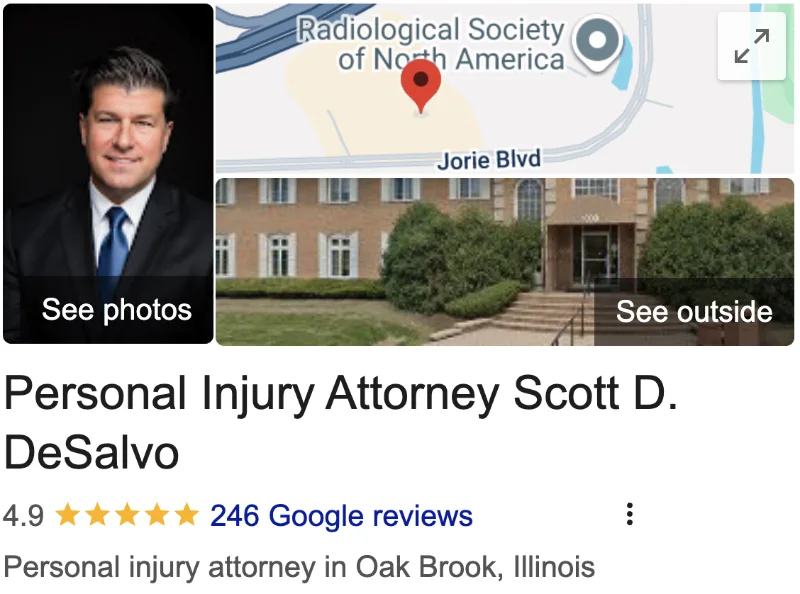
My name is Scott DeSalvo, and I’ve been practicing law in Chicago and throughout Illinois for over 27 years. I’ve seen what happens when attorneys drop the ball on their clients’ cases, and I’ve helped people fight back. Let me walk you through how legal malpractice cases work in Illinois, what you need to prove, and what I look for when people call me about suing their former lawyer.

Legal malpractice is, in simple terms, when a lawyer’s negligence or misconduct causes harm to their client. It’s no different in concept from medical malpractice. Just as a doctor who makes a careless surgical error can be held accountable, a lawyer who makes a careless legal error that damages your case can be held accountable too.
Under Illinois law, to prove a legal malpractice claim, you need to establish four things. First, that an attorney-client relationship existed, meaning the lawyer owed you a duty of care. Second, that the lawyer breached that duty by failing to act with the skill, care, and diligence that a reasonably competent attorney would have exercised in the same situation. Third, that the breach was the proximate cause of your damages. And fourth, that you suffered actual, quantifiable damages as a result.
Now here is where legal malpractice gets tricky, and where a lot of people get confused. It is not enough to show that your lawyer made a mistake. You also have to show that the mistake actually cost you something. If your lawyer botched a case that you were going to lose anyway, there is no malpractice claim, because the outcome would have been the same regardless of the error. This is what lawyers and courts call the “case within a case” requirement, and it is the single most important concept in legal malpractice law.
This concept trips people up more than anything else in legal malpractice. So let me explain it plainly.
When you sue your former lawyer for malpractice, you essentially have to prove two cases at once. First, you have to prove that your lawyer was negligent. Second, you have to prove that you would have won your original case if your lawyer had not been negligent. Courts call this the “case within a case” or the “trial within a trial.”
Here is a concrete example. Let’s say you had a personal injury case from a car accident. You hired a lawyer, and that lawyer forgot to file your lawsuit before the two-year statute of limitations expired. Your case got dismissed. That is clearly a mistake by your lawyer. But to win a legal malpractice claim, you now have to prove that if your lawyer had filed on time, you would have won the underlying car accident case. You have to prove liability, causation, and damages in the original case all over again, inside the malpractice case.
This is why legal malpractice cases are among the most complex cases in the legal system. You are essentially trying two lawsuits at once. It takes a lawyer who understands both the malpractice claim and the underlying area of law to handle these cases effectively.
There is an important exception to the case within a case rule in Illinois. The Illinois Appellate Court has held that in transaction-based malpractice, where the attorney’s error occurred outside of litigation, such as drafting a faulty contract, botching a real estate closing, or giving bad business advice, the plaintiff may not need to prove a case within a case. Instead, they may only need to show that the lawyer’s negligence directly caused financial harm. This was established in Union Planters Bank v. Thompson Coburn, and it is an important distinction that many lawyers miss.
After 27 years of practicing law in Illinois, I have seen the full range of attorney negligence. Here are the most common types of legal malpractice that lead people to call my office:
This is the single most common form of legal malpractice, and in many ways, it is the most inexcusable. Every type of legal case in Illinois has a deadline for filing. For personal injury cases, it is two years. For medical malpractice, it is two years from discovery but no more than four years from the act. For workers’ compensation, it is three years. For claims against government entities, it can be as short as one year.
When your lawyer forgets to calendar a deadline, misreads the statute, or simply procrastinates until it is too late, and your case gets dismissed because the statute of limitations has run, that is textbook legal malpractice. You had a valid claim. Your lawyer killed it through carelessness. And now the only way to recover the money you were owed is to sue the lawyer who let you down.
I have seen this happen with personal injury cases, divorce proceedings, business disputes, real estate transactions, and workers’ compensation claims. It happens more often than people realize, and it happens at big firms and small firms alike.
This one makes my blood boil. Under Illinois law and the Illinois Rules of Professional Conduct, an attorney must obtain their client’s informed consent before settling any case. Period. The decision to accept or reject a settlement belongs to the client, not the lawyer.
But I have seen cases where attorneys settled personal injury claims for a fraction of their value without telling their client. Sometimes the lawyer needs quick cash. Sometimes they are lazy and want to close the file. Sometimes they are overwhelmed and just want the case off their desk. Whatever the reason, if your lawyer settled your case without your approval, especially for less than it was worth, you may have a legal malpractice claim.
Lawyers are required to avoid conflicts of interest. That means they cannot represent you if they have a financial stake in the outcome that conflicts with yours, if they are representing the opposing party, or if their representation of another client would compromise their loyalty to you.
When a lawyer takes your case despite a conflict of interest and that conflict leads to a worse outcome for you, that is legal malpractice. This is particularly common in business litigation, divorce cases, and real estate transactions where multiple parties may be involved and the lawyer’s loyalties are divided.
Lawyers have a duty to thoroughly investigate their clients’ cases and adequately prepare for depositions, hearings, and trial. Failing to gather critical evidence, failing to depose key witnesses, failing to retain necessary expert witnesses, or showing up to trial unprepared can all constitute legal malpractice if it results in a worse outcome for the client.
I have reviewed cases where lawyers never obtained the medical records that would have proven their client’s injuries. Cases where they failed to name all the responsible defendants. Cases where they did not take a single deposition in a case that screamed for discovery. When a lawyer phones it in and you pay the price, that is not acceptable.
When you hire a lawyer, you are paying for their legal knowledge and judgment. If they give you advice that is flat-out wrong, and you suffer financial harm because you relied on that advice, you may have a malpractice claim. This can include advising you to reject a fair settlement offer, misadvising you about your legal rights in a business transaction, or failing to warn you about legal risks that a competent attorney would have identified.
Attorneys are fiduciaries. That means they have a legal obligation to handle your money with the highest standard of care. Settlement funds must be deposited into a client trust account and distributed properly. Retainer fees must be managed in accordance with the retainer agreement.
When a lawyer commingles your money with their own, uses your settlement funds to pay their personal bills, inflates their billing, or outright steals from you, that is not just malpractice. It is theft. And beyond the civil malpractice claim, that lawyer may face criminal charges and disciplinary action from the Illinois Attorney Registration and Disciplinary Commission.
Clients have a right to be kept informed about the status of their case. When a lawyer stops returning phone calls, fails to respond to emails for weeks or months at a time, misses court dates without notice, or effectively abandons the case altogether, that can constitute legal malpractice if the client suffers harm as a result.
This is more common than you would think. I hear from people all the time who tell me their lawyer has not called them back in months, and when they finally get an update, they learn their case has been sitting untouched on a shelf. That kind of neglect can cause real damage, especially if deadlines pass or evidence is lost while the lawyer does nothing.



This is critical, so pay attention. Under Illinois law, specifically 735 ILCS 5/13-214.3, you have two years from the date you knew or reasonably should have known of the attorney’s malpractice to file a lawsuit. This is the statute of limitations.
Illinois also has a six-year statute of repose for legal malpractice claims. That means that no matter when you discover the malpractice, you cannot file a lawsuit more than six years after the date of the attorney’s negligent act or omission. The statute of repose is a hard cutoff.
Here is where it gets complicated. Figuring out when you “knew or should have known” about the malpractice is not always straightforward. Illinois courts have held that the statute of limitations generally does not begin to run until there has been an adverse judgment, settlement, or dismissal in the underlying case. The logic is simple: until you lose your case, you may not know that your lawyer’s mistake caused you harm.
For example, if your lawyer gave bad legal advice in 2022 but you did not suffer a financial loss from that advice until a judgment was entered against you in 2025, the two-year clock would likely start running in 2025, not 2022. But the six-year repose period would still run from 2022.
The Illinois Supreme Court addressed this issue and reaffirmed that a client is not “injured” for purposes of the statute of limitations until they have suffered an actual loss for which monetary damages can be sought. Hiring new counsel and incurring additional legal fees does not, by itself, trigger the statute of limitations.
My advice: if you even suspect that your lawyer committed malpractice, talk to another attorney immediately. Do not wait to see how things play out. These deadlines are unforgiving, and missing them means losing your right to recover anything, no matter how strong your case might have been.

If you can prove that your lawyer’s malpractice caused you harm, you may be entitled to recover the full value of what you lost. In Illinois, legal malpractice damages can include:
The money you would have recovered in your original case if your lawyer had handled it competently. This is the big one. If your personal injury case was worth $500,000 and your lawyer’s negligence caused you to get nothing, your malpractice damages are $500,000.
Additional legal fees you had to pay as a result of the malpractice. If you had to hire a new lawyer to fix the mess your first lawyer created, those fees are recoverable.
Lost business profits or financial losses caused by negligent legal advice. If your lawyer botched a business transaction and you lost money as a direct result, those losses are damages.
In certain cases involving intentional misconduct, fraud, or outright theft, punitive damages may also be available. Punitive damages are designed to punish particularly egregious behavior and deter others from similar conduct.
One important note: Illinois does not cap damages in legal malpractice cases. The Illinois Supreme Court struck down damage caps in the medical malpractice context in Lebron v. Gottlieb Memorial Hospital in 2010, and there are no statutory caps on legal malpractice damages either. That means if your case is worth seven figures, you can pursue seven figures.
Find Out What YOUR Case Might Be Worth...for free.
Many people ask me whether a violation of the Illinois Rules of Professional Conduct automatically means there is a malpractice case. The answer is no, but it matters.
A violation of the Rules of Professional Conduct, such as Rule 1.5 prohibiting excessive fees, Rule 1.6 requiring confidentiality, or Rule 1.7 addressing conflicts of interest, is not by itself grounds for a malpractice lawsuit. However, Illinois courts have consistently held that violations of these rules are relevant evidence that the lawyer breached their duty of care. The Illinois Appellate Court addressed this directly in Rogers v. Robson, holding that professional conduct violations can be used to demonstrate that the attorney fell below the standard of care.
In practice, if your lawyer violated the Rules of Professional Conduct and that violation caused you harm, it strengthens your malpractice claim significantly. And separately from any malpractice lawsuit, you can also file a complaint with the Illinois Attorney Registration and Disciplinary Commission, which can investigate and discipline the attorney. Discipline can include a reprimand, suspension, or even disbarment. Filing an ARDC complaint does not get you money, but it can protect other clients from the same lawyer’s misconduct.
Legal malpractice can happen in any type of legal representation. But certain areas of law generate more malpractice claims than others. Here are the areas where I most commonly see it:
This is the most common context for legal malpractice claims that I encounter. A lawyer misses the two-year statute of limitations on a car accident case. A lawyer fails to name all liable defendants. A lawyer settles a case for a lowball amount without properly investigating the client’s injuries. A lawyer fails to retain the medical experts needed to prove the case. Because personal injury cases involve significant money and strict deadlines, the consequences of attorney negligence can be devastating.
Workers’ comp cases have their own set of deadlines and procedural requirements. Failing to file within three years of the injury, failing to give proper notice to the employer within 45 days, or mishandling the claim before the Illinois Workers’ Compensation Commission can all give rise to malpractice claims. I see these frequently because workers’ comp law is a specialty, and general practitioners sometimes take these cases without fully understanding the rules.
Botched real estate closings, failure to identify title defects, failure to perform adequate due diligence, and mishandling of escrow funds are all common sources of legal malpractice claims. In real estate malpractice, you may not need to prove the traditional case within a case because the harm is typically a direct financial loss from the transaction itself.
Failure to properly value marital assets, failure to pursue all available remedies, and failure to protect a client’s parental rights can all constitute malpractice in family law cases. These cases are emotionally charged to begin with, and attorney negligence compounds the harm.
Drafting errors in wills and trusts, failing to update estate plans after major life changes, failing to file estate tax returns on time, and mismanaging trust assets are common malpractice issues in this area. Illinois has a special rule for estate planning malpractice: the six-year statute of repose was specifically extended to apply to estate planning matters by Senate Bill 2179, and in some cases the statute may not begin to run until the client’s death, when the harm from a defective estate plan actually becomes apparent.
Bad advice on business formation, botched mergers and acquisitions, failure to conduct due diligence, and negligent contract drafting all generate malpractice claims. Business malpractice cases often involve large sums and complex transactions, making them among the highest-value legal malpractice claims.

I am selective about the cases I take. I say that not to discourage you from calling, but because being selective means that when I do take your case, I believe in it and I will fight for it.
Here is what I evaluate:
First, I look at whether the attorney’s error is clear. Was there an obvious mistake, like a missed deadline, a conflict of interest, or settling without consent? The more clear-cut the negligence, the stronger the case. If the alleged malpractice involves a judgment call or a strategic decision, it becomes much harder to prove, because lawyers are given some latitude in making strategic choices.
Second, I look at the underlying case. Can we prove you would have won, or won more, if your lawyer had done their job? This is the case within a case analysis. If your underlying case was weak, even perfect lawyering might not have changed the outcome, and there may not be a viable malpractice claim.
Third, I look at damages. What did the lawyer’s mistake actually cost you? Legal malpractice cases are expensive to litigate. They require expert witnesses, extensive discovery, and often a trial. The damages need to be significant enough to justify that investment. Cases where the potential recovery is modest, even if the malpractice is clear, may not be practical to pursue.
Fourth, I look at collectability. Does the lawyer have malpractice insurance? Illinois does not require attorneys to carry malpractice insurance, and a surprising number of Illinois lawyers practice without it. If the attorney is uninsured and does not have significant personal assets, winning a judgment may not result in any actual recovery. I always investigate insurance coverage early.


If your former attorney engaged in misconduct, you have the right to file a complaint with the Illinois Attorney Registration and Disciplinary Commission. The ARDC investigates complaints about attorney misconduct and can impose discipline ranging from a private reprimand to disbarment.
Filing an ARDC complaint is separate from filing a legal malpractice lawsuit. The ARDC does not award you money. But an ARDC investigation can produce evidence that supports your malpractice claim, and a finding of misconduct strengthens your case. It also protects future clients from the same attorney’s negligence.
You can file a complaint with the ARDC at iardc.org or by calling their office. It costs nothing to file, and you do not need a lawyer to do it.

I became a personal injury lawyer because of something that happened in my own family. When I was nine years old, my father was seriously injured on the job. I watched that injury consume 17 years of my family’s life. Endless doctor visits. Lost income. The stress of dealing with insurance companies and lawyers who didn’t seem to care.
That experience taught me what it feels like when the system fails you. And when a lawyer’s negligence causes a client to lose a case they should have won, that is the system failing at the most fundamental level. The person who was supposed to be fighting for you is the one who let you down.
I’ve tried over 30 cases to a jury. I trained at Gerry Spence’s Trial Lawyer’s College in Wyoming, one of the most selective trial advocacy programs in the country. I’ve completed “The Edge,” an advanced program for experienced trial lawyers. I understand what good lawyering looks like because I practice it every single day. When I evaluate a malpractice case, I know exactly what the attorney should have done, because it is what I would have done.
No. Losing a case is not by itself legal malpractice. Litigation is unpredictable, and even excellent lawyers lose cases. To have a malpractice claim, you need to show that your lawyer made a specific mistake, that the mistake fell below the standard of care expected of a competent attorney, and that you would have had a better outcome if the mistake had not been made.
You have two years from the date you knew or reasonably should have known about the malpractice, under 735 ILCS 5/13-214.3. There is also a six-year statute of repose, meaning you cannot file more than six years after the attorney’s negligent act, regardless of when you discovered it. Illinois courts generally hold that the two-year clock starts when an adverse judgment, settlement, or dismissal occurs in the underlying case. But do not rely on these outer limits. Contact a lawyer as soon as you suspect a problem.
Illinois does not require attorneys to carry malpractice insurance. Many do, but some do not. This is something I investigate immediately when evaluating a potential case, because it affects whether a judgment can actually be collected. If the attorney is uninsured and has no assets, even a winning malpractice case may not result in a recovery.
I work on a contingency fee basis. That means you pay nothing upfront and nothing out of pocket. My fee is a percentage of what we recover. If we recover nothing, you owe me nothing. There is zero financial risk to you in calling me for a free consultation.
Yes, absolutely. An ARDC complaint and a malpractice lawsuit are separate proceedings. The ARDC addresses attorney discipline, which can include suspension or disbarment. A malpractice lawsuit seeks monetary compensation for your losses. You can and often should pursue both.
This is a common defense in legal malpractice cases. Lawyers are given latitude to make strategic choices, and a strategy that does not work out is not automatically malpractice. However, there is a line between a reasonable strategic decision and a fundamentally careless one. If no competent attorney would have made the same choice, it is not strategy. It is negligence. An experienced legal malpractice attorney can evaluate whether the “strategic decision” defense holds up.
If your attorney misappropriated settlement funds, you have both a malpractice claim and potentially a criminal complaint. You should immediately file an ARDC complaint, contact law enforcement, and consult with a legal malpractice attorney about recovering your money. Misappropriation of client funds is one of the most serious forms of attorney misconduct and often leads to disbarment.
When you call my office, you talk to me. Not a paralegal. Not a case manager. Not a call center. Me. I personally evaluate every case, and if I take yours, I am your lawyer from start to finish. I’ve been doing this for over 27 years, I’ve tried over 30 cases to a jury, and I trained at the nation’s top trial advocacy programs. I also speak Spanish, and my office can assist bilingual families throughout the process. Your fight is my fight.
Find out if you have a good case, or a tough one...for free!
If you believe your lawyer’s negligence cost you a case, cost you money, or caused you harm in any way, I want to hear from you. Call me at 312-500-4500 for a free, no-obligation consultation. I’m available 24 hours a day, 7 days a week, 365 days a year. You can also text me or reach out through our website at desalvolaw.com.
There is no fee unless we win your case. And I will be honest with you from the very first phone call about whether I think you have a case and what I think it could be worth.
You trusted your lawyer to fight for you. They didn’t. Now it’s time to find someone who will. That’s what I do.
>> Main Topic Page <<


Scott DeSalvo founded DeSalvo Law to help injured people throughout Chicago and surrounding suburbs. Licensed to practice law in Illinois since 1998, IARDC #6244452, Scott has represented over 3,000 clients in personal injury, workers compensation, and accident cases.
No Fee Unless You Win | Free Consultation | 24/7 Availability Call or Text: (312) 500-4500
>>Read More
Main Office:
1000 Jorie Blvd Ste 204
Oak Brook, IL 60523
New Cases: 312-500-4500
Office: 312-895-0545
Fax: 866-629-1817
service@desalvolaw.com
Chicago and Other Suburban Offices
By Appointment Only