


Your mom fell in her nursing home. Or she has a pressure sore that never should have happened. Or she's dehydrated. Or she died — and the timeline the facility gave you doesn't add up.
You already know something is wrong. What you don't know is whether the law will actually do anything about it. Because when you called the facility, they told you falls happen at that age. When you called the state, they said file a complaint and wait months. When you looked online, everyone was talking about "nursing home abuse" — and this wasn't abuse. Nobody hit her. Nobody screamed at her. It's just that nobody was WATCHING her when the fall risk plan said someone should have been.
Here's the truth almost nobody tells families: most nursing home injuries in Illinois aren't caused by bad people. They're caused by understaffing, corner-cutting, and facilities that took your mom's money and then didn't spend it on the care she was paying for. That's not "just old age." That's negligence. And in Illinois, it's a case.
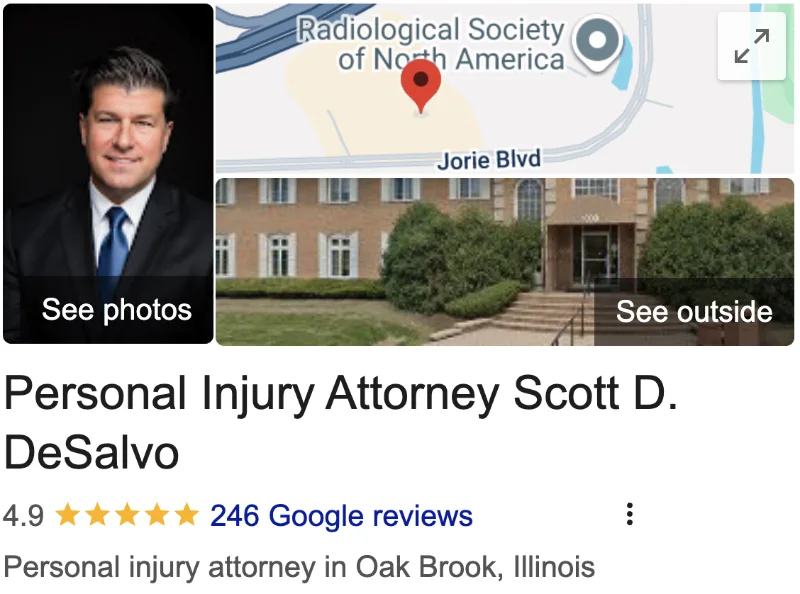
I've been an injury attorney for almost 30 years. My name is Scott DeSalvo. Call me any time — 24 hours a day, 7 days a week, 365 days a year — at 312-500-4500. Free consultation. No money out of pocket. Zero. You pay me nothing unless we win.

Look — the reason these cases feel impossible when you first start looking into them is because the facility knows exactly which buttons to push to make you doubt yourself.
"She was 84." "He had dementia." "She had osteoporosis." The facility's first move — every single time — is to argue the injury was inevitable given the resident's baseline health. It's not. If it were, the fall risk assessment wouldn't have existed. If it were, the pressure ulcer prevention protocol wouldn't be in the chart. If it were, the two-person transfer order wouldn't have been written. The care plan itself proves the injury was foreseeable. Which means it was preventable. Which means somebody didn't do their job.
Almost every serious nursing home injury I've seen traces back to one thing: not enough staff on the floor. The federal minimum staffing standards are already low. Many Illinois facilities operate below them. When one aide is responsible for 15 residents on a night shift, nobody is getting checked every two hours. Nobody is getting turned every two hours. Nobody is getting helped to the bathroom. Falls happen. Bedsores form. Residents wander. And the facility's records — the ones YOU don't have yet — often show it.
Here's the Illinois legal wrinkle almost no other state has: the Illinois Nursing Home Care Act (210 ILCS 45) gives residents specific statutory rights, and — critically — allows a prevailing plaintiff to recover attorney's fees on top of damages. That's rare in personal injury law. It means the facility can't just wait you out and hope you can't afford the fight. It also means many facilities try harder than you'd expect to settle these cases before they get filed. Not because they care. Because the fee-shift exposure scares their insurer.
More people than you think.
The nursing home itself, obviously. But also the parent corporation that owns it (many Illinois facilities are owned by out-of-state chains that pull cash out and leave the local operation understaffed). The staffing agency, if the aide who missed the check was contract. The physician who failed to order fall precautions. The pharmacy that filled the wrong medication. In wrongful death cases, sometimes the hospital that discharged your loved one BACK to the facility without warning them about a change in condition.
Here's the surprising one: sometimes the insurance company itself becomes a defendant if they act in bad faith to delay or deny a valid claim. Illinois has real remedies for that.
Concrete scenario. Your father was on a documented fall risk. Chart says "assist with all transfers, two-person minimum." Night shift is stretched thin. He tries to get to the bathroom alone. Nobody's there. He falls, hits his head, dies eight days later. Facility calls it "an unfortunate accident consistent with his age and dementia." The chart says one thing. The staffing sheets say another. That's a case.
Here's what most lawyers won't tell you: nursing home defense is one of the most sophisticated, well-funded corners of insurance defense in the country. These aren't small-town claims adjusters. These are national law firms whose entire business is defending nursing home chains.
Their playbook, and I've seen it a thousand times:
Buried arbitration clauses. Somewhere in the admission paperwork your family signed — often in the middle of a crisis, sometimes signed by a family member without legal authority — is an arbitration agreement. They will try to enforce it to get your case out of court and in front of an industry arbitrator. Illinois courts have thrown many of these out. You need a lawyer who knows why.
The "chart says otherwise" move. They will produce records showing checks were done, turns were performed, meals were consumed. Sometimes those records were charted after the fact. Sometimes they were charted for shifts nobody worked. Cross-referencing charting against actual staffing records is where these cases get won.
Discrediting the resident. If your mom had dementia, they'll say she couldn't reliably report what happened. If she reported abuse or neglect, they'll say she was confused. This is the ugliest part of the defense playbook, and it's routine.
Waiting you out. They know grieving families run out of energy. They know the statute of limitations is running. They stall records requests, drag depositions, and hope you settle for something that doesn't reflect what happened.
None of it works if your lawyer is genuinely prepared to try the case. And that's exactly the point.



Insurance companies settle faster and for more when they know your lawyer is genuinely prepared. That's the whole game.
I've been licensed in Illinois since 1998 — almost 30 years. Over 3,000 clients. I'm a graduate of the Gerry Spence Trial Lawyer's College and the exclusive Keenan Trial Institute. Over $100,000 of my own money invested in advanced trial training. Not one lawyer in 100,000 has this specific stack of training. I did it for one reason: so when the insurance defense side runs my name, they see somebody who will actually try the case. When they know that, they pay more, faster, with less fighting.
Why? Because their whole business model depends on beating unprepared lawyers. When they see one they can't beat cheaply, they stop trying to.
Most cases settle. That's the goal. Almost every family I've represented in a nursing home injury case has resolved it without a trial. Trial capability is what MAKES that possible — not what you should hope for.

Medical bills — hospital, rehab, hospice. Cost of alternative placement if the resident had to be moved. Pain and suffering, which in these cases is real and substantial. Emotional distress. In wrongful death cases, funeral costs, loss of society, and grief damages under the Illinois Wrongful Death Act.
And here's the Illinois-specific piece again: under the Nursing Home Care Act, we can also seek statutory damages, injunctive relief to protect other residents, and — critically — our attorney's fees paid by the facility. That fee-shift dramatically changes settlement math and is one of the biggest reasons nursing home defendants take Illinois cases more seriously than they used to.
In cases involving willful misconduct or a pattern of neglect, punitive damages may be available. That's rare in Illinois PI, but nursing home cases are one of the places it happens.
Find Out What YOUR Case Might Be Worth...for free.
Some falls are unavoidable. Most nursing home falls are not. Every Illinois nursing home is required to do a fall risk assessment on every resident and put a fall prevention plan in place. If your loved one was on a documented fall risk and the facility failed to follow the plan — no check-ins, no bed alarm, no assistance with transfers — that's negligence. Falls that result in a broken hip, a head injury, or death after a documented fall risk are one of the most common nursing home cases we see. If you're asking the question, call me. It costs you nothing to find out.
Maybe not. Illinois courts have thrown out many of these agreements — especially when they were signed by a family member without proper power of attorney, signed under duress during an admission crisis, or written in a way that violates the Illinois Nursing Home Care Act. Do not accept the facility's word that arbitration is required. Bring the paperwork. Let me look at it.
Nothing out of pocket. Zero. I work on contingency — meaning I only get paid if I win your case, and only out of the settlement. You never pay me anything up front. And under the Illinois Nursing Home Care Act, if we prevail, the FACILITY often pays my fees on top of your recovery. Which is one of the reasons these cases can be worth pursuing even when the family thinks they can't afford a lawyer.
Generally two years from the date of injury or the date you knew or should have known about it. Wrongful death cases have their own two-year clock. But there are exceptions — some Nursing Home Care Act claims have different rules, and cases involving cognitive impairment or delayed discovery can extend the deadline. Do not guess on this. Call. Every week that passes, records get harder to get and witnesses forget more.
Yes. Most cases resolve in settlement, not trial. Settlements can — and often do — include commitments to change staffing, policies, or procedures at the facility. Under the Nursing Home Care Act we can even seek injunctive relief that protects other residents. If your goal is accountability more than money, tell me that on the first call. It changes how I approach the case, and there's more we can do than most families realize.
Illinois law gives you only 2 years to file a lawsuit after an auto accident (sometimes even less...). Miss that deadline, and your case is gone forever. Plus:
The sooner you call me, the sooner I can start fighting for you.
Remember My Promise:
No money out of pocket. No fee until we win. Available 24/7/365.
Contact Auto Accident Attorney Scott DeSalvo today at (312)-500-4500.
I look forward to hearing from you and learning about your accident and what I can do to help.

Scott DeSalvo founded DeSalvo Law to help injured people throughout Chicago and surrounding suburbs. Licensed to practice law in Illinois since 1998, IARDC #6244452, Scott has represented over 3,000 clients in personal injury, workers compensation, and accident cases.
No Fee Unless You Win | Free Consultation | 24/7 Availability Call or Text: (312) 500-4500
>>Read More
Main Office:
1000 Jorie Blvd Ste 204
Oak Brook, IL 60523
New Cases: 312-500-4500
Office: 312-895-0545
Fax: 866-629-1817
service@desalvolaw.com
Chicago and Other Suburban Offices
By Appointment Only