
Glendale Heights Car Accident Lawyer
The other driver's insurance company will call you within a day or two of your crash. They'll sound friendly. They'll say they just need a quick recorded statement to "process things." That call is not there to help you — it's the first move in a game designed to pay you as little as possible, and if you don't know the rules, you lose before you start.
I'm Scott DeSalvo. I've spent almost 30 years taking those calls off my clients' hands so they can heal instead of getting cross-examined from a hospital bed. If you were hurt on North Avenue, at the Bloomingdale Road lights, coming off an I-355 ramp, or anywhere else in Glendale Heights, here's what you actually need to know — and none of it costs you a dime to find out.

Here's what most people don't realize: adrenaline hides injuries. You walk away from a crash at North Avenue and Bloomingdale Road feeling shaken but "okay," so you tell everyone you're fine. Two days later your neck won't turn and your lower back is on fire. Now the insurance company has your own words on tape saying you weren't hurt — and they'll wave that recording around for the next year.
Soft-tissue injuries, concussions, and disc problems rarely announce themselves at the scene. That gap between the crash and the symptoms is the exact space insurers exploit. So see a doctor right away, even if you feel alright, and let the medical records — not an adjuster's recording — tell the story of your injuries.
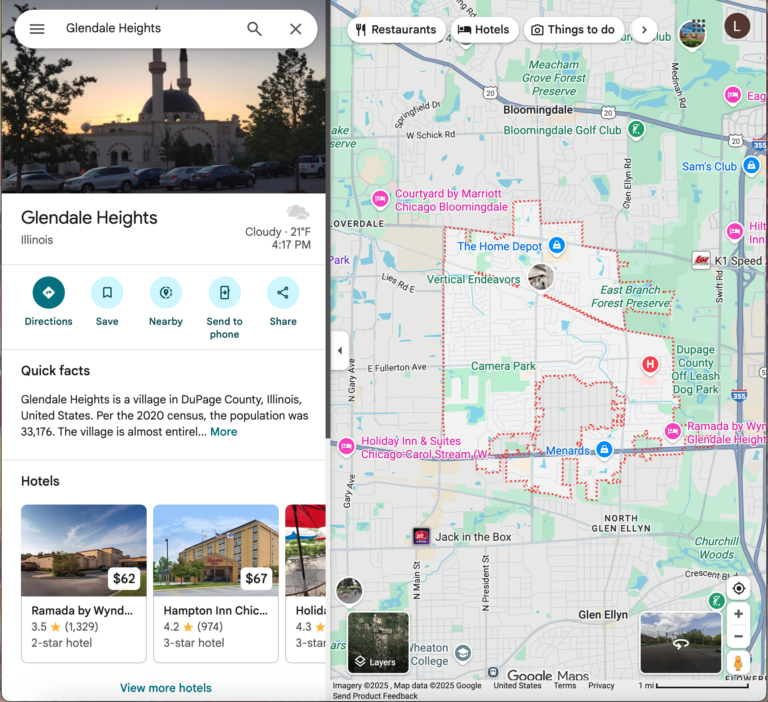
This isn't abstract to me. I know the roads. North Avenue moves heavy, fast traffic and produces hard rear-end and intersection collisions. The commercial stretch along Bloomingdale Road generates parking-lot and turning crashes near the shopping centers. Army Trail Road adds its own mix. And the I-355 access points funnel expressway-speed drivers onto surface streets before they've slowed down.
Knowing where and how crashes happen here matters, because reconstructing what actually occurred is half the battle. The at-fault driver almost always remembers it differently than you do.
Here's something that catches almost everyone off guard: the at-fault driver's insurance company does NOT pay your medical bills as you go. They pay once, at the end, in a lump settlement — if they pay fairly at all. In the meantime, those bills are yours.
That's where your own coverage comes in. Illinois drivers often carry Medical Payments ("MedPay") coverage that pays your treatment regardless of fault, and your health insurance can carry the rest. Part of my job is finding every source of coverage you didn't know you had and making sure the at-fault insurer eventually reimburses what it should.
Illinois uses "modified comparative negligence." Translation: as long as you're not more than 50% at fault for the crash, you can still recover — your compensation just gets reduced by your share of the blame. Cross that 51% line, though, and you get nothing.
That single rule is why adjusters work so hard to pin part of the blame on you. "You were speeding." "You could have avoided it." Every percentage of fault they hang on you is money out of your pocket. Fighting that fault allocation, hard, is one of the most valuable things a lawyer does on a car case — and it starts the day you hire me.
Look, you don't want a trial. You want a fair check, fast, with as little stress as possible. So do I. But here's the counterintuitive truth: the fastest, biggest settlements go to the lawyers the insurance company knows will actually take them to court if they lowball.
Why? Because an insurer runs the numbers on every file. If your lawyer never tries cases, the safe move is to offer pennies and wait. If your lawyer trained at Gerry Spence's Trial Lawyers College and the Keenan Trial Institute and has spent almost 30 years in DuPage County courtrooms, the math changes — and the offer comes up. Trial readiness is a settlement accelerator, not a threat you have to carry out.
A real claim is a lot more than a body-shop estimate. Depending on your case, you may be able to recover the cost of all your medical care past and future, the wages you lost while you couldn't work, your reduced ability to earn going forward, the physical pain, and the toll on your normal daily life. If a crash left permanent effects, those matter too.
Bottom Line: the property damage to your car is the smallest part of what a serious crash costs you — don't let anyone settle it like it's the whole thing.

Call me and we'll just talk. I'll listen to what happened, answer every question straight, and tell you honestly whether you've got a case worth pursuing. No pressure, no sales pitch, and no bill — I don't get paid unless you do. You pay nothing out of pocket, ever.
I'm available 24/7/365, because crashes don't wait for business hours and neither do I. Call 312-500-4500.
In most cases you have two years from the date of the crash to file a personal injury lawsuit in Illinois. It sounds like a lot, but it isn't — evidence disappears, cameras get overwritten, and witnesses forget. There are situations that shorten that window, especially if a government vehicle or a municipality is involved, so the safe move is to call early. Once the deadline passes, your claim is gone for good, no matter how badly you were hurt.
No — not before you talk to a lawyer. The adjuster is trained to ask questions that lock in answers they can use against you later. You're not required to give the at-fault driver's insurer a recorded statement, and you generally shouldn't. Politely tell them your attorney will be in touch, then call me. I'll handle every conversation with them from that point on.
Nothing up front, and nothing unless we win. I work on contingency, so my fee — 33⅓% on a standard personal injury case, or 40% if we have to file suit and litigate — only comes out of money I recover for you. I also advance the case costs. If we don't win, you owe me nothing.
Possibly, yes. Insurers love to argue that a minor-looking impact can't cause a real injury, but that's not how the human body works — low-speed crashes routinely cause neck, back, and disc injuries. What matters is your medical evidence, not the size of the dent. Don't let an adjuster talk you out of a legitimate injury because your bumper held up.
You may still be covered through your own uninsured or underinsured motorist coverage, which Illinois insurers are required to offer. A lot of people don't realize they have it. I'll review your policy line by line and go after every source of recovery available to you.
Almost certainly not. The large majority of car accident cases settle without a trial. If we do file suit, you might attend a deposition or two, and I'll prepare you for every step. A case only reaches a courtroom when the insurer refuses to be reasonable — and being ready for that is exactly what gets them to be reasonable.

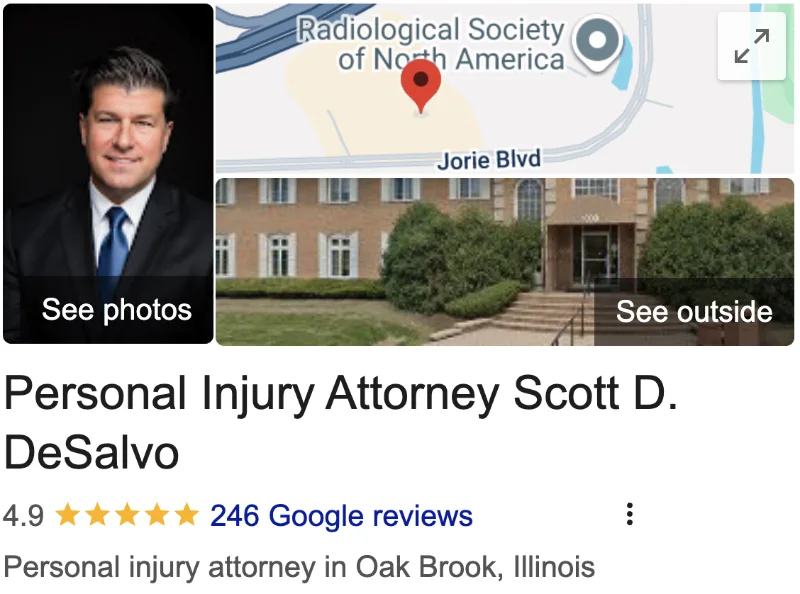
Scott DeSalvo founded DeSalvo Law to help injured people throughout Chicago and surrounding suburbs. Licensed to practice law in Illinois since 1998, IARDC #6244452, Scott has represented over 3,000 clients in personal injury, workers compensation, and accident cases.
No Fee Unless You Win | Free Consultation | 24/7 Availability Call or Text: (312) 500-4500
>>Read More
Main Office:
1000 Jorie Blvd Ste 204
Oak Brook, IL 60523
New Cases: 312-500-4500
Office: 312-895-0545
Fax: 866-629-1817
service@desalvolaw.com
Chicago and Other Suburban Offices
By Appointment Only