

An office job doesn't mean a safe one, and a warehouse job doesn't mean an obvious claim. Lisle runs on a mix of corporate offices, labs, restaurants, and distribution work, and every one of those settings produces real injuries — from a warehouse back injury to the repetitive strain that builds up over years at a desk. What they share is this: the moment you report it, your employer's insurance carrier starts working to pay you as little as possible.
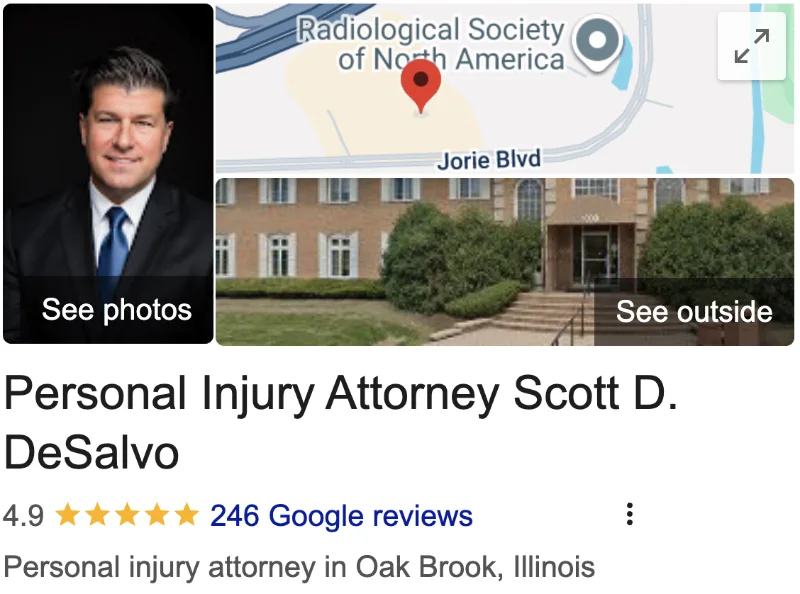
I'm Scott DeSalvo. For almost 30 years I've fought for hurt workers all over DuPage County, and this work matters to me personally — my father was a Teamster who was badly hurt on the job when I was a kid and got run through the wringer for it. Here's what you need to know about your rights in Illinois, and it's free to find out.
Not every workplace injury is a dramatic accident. Two get overlooked constantly:
Illinois covers repetitive-trauma injuries — carpal tunnel from years of keyboard or line work, back and shoulder problems from repeated lifting, joint damage from doing the same motion thousands of times. You don't need one dramatic moment to have a valid claim.
People downplay a hurt back or a bad knee, keep working, and only file when it becomes unbearable — by which point the insurer argues it must not have been work-related. Report it when it happens, in writing, even if you think you'll be fine.

Workers' compensation is a no-fault system — you get benefits whether or not the injury was anyone's fault. In exchange, it doesn't pay for pain and suffering. What it does cover: your medical treatment, part of your lost wages while you recover (temporary total disability, paid at two-thirds of your average weekly wage, tax-free), and a payment for any permanent effects. And a right people don't realize they have — in Illinois, you get to choose your own treating doctor. You are not stuck with the company clinic.
Here's something most injured workers never hear: a job injury can sometimes be two cases. Workers' comp is your remedy against your employer, but if someone else caused your injury — a defective machine, a careless subcontractor, a driver who hit you while you were working — you may also have a separate "third-party" claim against them. And unlike comp, that claim can include full pain and suffering. Spotting it is one of the first things I look for, because missing it leaves a large part of your recovery on the table.
The company can be perfectly nice to your face and still be fighting your claim, because the decisions aren't made by your boss — they're made by an adjuster you'll never meet. That adjuster's playbook is predictable: send you to a doctor who clears you early, schedule an "independent" exam with a physician who mostly works for insurers, stop your wage checks at the first excuse, and argue the injury was pre-existing. What most lawyers won't tell you is how often these tactics work simply because the worker didn't know they could push back. You can.

Two worries stop injured workers from calling a lawyer, and both are misplaced. First, the cost: in Illinois, a workers' comp attorney's fee is capped by law at 20% of the recovery — you pay nothing up front, and studies consistently show represented workers net more even after the fee. Second, the fear of getting fired: it's illegal in Illinois to fire or retaliate against you for filing a legitimate claim, and if it happens, you have a separate case for it.
Bottom line: comp is a right you earned, not a favor — and the deadline to protect it (three years, with that 45-day notice) starts running the day you're hurt.
Call me and tell me what happened at work. I'll explain exactly what you're owed, flag whether there's a second claim hiding in your case, and tell you what to do next. It's free, and you pay nothing unless I recover for you — capped at 20% by Illinois law.
I answer the phone 24/7. Call 312-500-4500.
"Scott is absolutely fantastic. He will always go the extra mile for his clients. They always take the time to return phone calls at all hours and I highly recommend him to all my friends."
-Melissa Brooks
"Great people and Scott's a great lawyer. They helped me make the wisest decision for my case, and that's important in serious legal matters. I trust him completely. He is the one to call."
-Tony Skvarenina
"Beyond satisfied with the services I received from this law firm. Definitely recommend! They got me fully paid and all the doctor bills, too. If you want the best, this is the law firm for your injury case!"
-Cynthia Rodriguez
"Scott represented me and I was really pleased with everything, my car accident paid a lot and quick. If you want a good Lawyer who is responsive, and straight with you, I highly recommend him."
-Greg Garcia
No. Under Illinois law, you get to pick your own treating physician. The company clinic and the insurer's "independent" examiner work for them, not you, and often have reason to say you're fine before you are. You're entitled to real care from a doctor you trust.
The fee is set by state law at 20% of your recovery — that's the ceiling, and it's the same everywhere. You pay nothing up front and nothing unless I recover benefits for you. Given how routinely insurers underpay workers who don't have representation, most people come out ahead even after the fee.
No. Firing or punishing you for filing a legitimate claim is illegal retaliatory discharge under Illinois law, and it gives you a separate case against your employer. It can be hard to prove because employers rarely admit the real reason, but these cases are absolutely winnable.
Illinois recognizes repetitive-trauma injuries — conditions like carpal tunnel, back problems, and joint damage that build up from doing the same task over time. You don't need a single accident to have a valid claim. These cases turn on solid medical evidence linking the condition to your work.
Often they shouldn't have. Stopping temporary total disability benefits is a common pressure tactic, and it's frequently improper — a bet that you'll get desperate and settle cheap. There are ways to challenge a wrongful cutoff and get your benefits reinstated, so call me right away if it happens.

Scott DeSalvo founded DeSalvo Law to help injured people throughout Chicago and surrounding suburbs. Licensed to practice law in Illinois since 1998, IARDC #6244452, Scott has represented over 3,000 clients in personal injury, workers compensation, and accident cases.
No Fee Unless You Win | Free Consultation | 24/7 Availability Call or Text: (312) 500-4500
>>Read More
Main Office:
1000 Jorie Blvd Ste 204
Oak Brook, IL 60523
New Cases: 312-500-4500
Office: 312-895-0545
Fax: 866-629-1817
service@desalvolaw.com
Chicago and Other Suburban Offices
By Appointment Only