

At some point the insurance company will send you to its own doctor, and that appointment can quietly decide your whole claim. They call it an "independent medical examination." There is nothing independent about it — the physician is chosen and paid by the insurer, often sees a stream of their referrals, and tends to reach the conclusion that helps the company: that you're fine, that your injury is old, that you can go back to work. If you walk in unprepared, that report can cut off your benefits.
I'm Scott DeSalvo, and I've represented injured workers throughout DuPage County for almost 30 years. Itasca runs on warehouses, offices, and hotels, and every one of them produces real injuries. Here's how to protect your Illinois workers' compensation claim from the moves designed to shrink it — and it's free to learn.
Understand what that exam is for. It isn't treatment; it's evidence-gathering by the other side. The insurer uses the report to argue your injury isn't as bad as you say, isn't work-related, or has already healed — so it can stop paying. Knowing that going in changes everything about how you handle it, from what you say to making sure your own treating doctor's opinion is fully documented to stand against it.
You are not powerless here. A worker with a lawyer walks into that exam with the record built to counter it, not exposed to it.

A few rights get overlooked constantly, and each one matters:
In Illinois you get to pick your treating physician. You are not stuck with the company clinic, whose incentive is to clear you fast.
If your injury keeps you off work, you're owed temporary total disability — two-thirds of your average weekly wage, tax-free. Those checks aren't a favor, and cutting them off is often improper.
Illinois covers repetitive-trauma injuries — the back, shoulder, wrist, and joint damage that builds up over months of the same task. You don't need one dramatic accident.
Most injured workers never hear this: a job injury can sometimes be two claims. Workers' comp is your no-fault remedy against your employer, but it doesn't pay for pain and suffering. If someone other than your employer caused the injury — a defective machine, an outside contractor, a driver who hit you while you were working — you may also have a separate claim against them that can include full pain and suffering. Missing it leaves real money behind, so it's one of the first things I look for.
Two worries stop people from getting help, and both are misplaced. The cost isn't what you fear — an Illinois workers' comp fee is capped by law at 20% of the recovery, with nothing up front, and represented workers consistently net more even after the fee. And you can't be punished for filing: it's illegal in Illinois to fire or retaliate against you for a legitimate claim, and if it happens, you have a separate case for it.
Bottom line: comp is a right you earned, and the deadline to protect it — three years, with a 45-day notice to your employer — starts the day you're hurt.

Call me and tell me what happened at work. I'll explain what you're owed, prepare you for what the insurer will try, flag any second claim hiding in your case, and tell you what to do next. It's free, and you pay nothing unless I recover for you — capped at 20% by Illinois law.
I answer the phone 24/7. Call 312-500-4500.
A job injury is sometimes only part of the story. To see the full range of what I do for injured people, visit my Itasca Personal Injury Attorney page.
It's an examination by a doctor the insurance company chooses and pays, used to build evidence against your claim — not to treat you. The report often concludes you're fine or that your injury isn't work-related, so the insurer can reduce or stop your benefits. It's manageable, but you want to be prepared for it and have your own doctor's findings fully documented first.
No. Illinois law lets you choose your own treating physician. The company clinic and the insurer's examiner work for them, not you, and often have reason to say you're fine before you are. Real care from a doctor you trust is your right.
It's capped by state law at 20% of your recovery — the same everywhere, with nothing up front and nothing unless I recover for you. Because insurers so routinely underpay workers without representation, most people come out ahead even after the fee.
No. Retaliating against you for a legitimate claim is illegal in Illinois and gives you a separate case. Employers rarely admit the real reason, which makes these cases harder to prove — but they are absolutely winnable.
Yes. Illinois recognizes repetitive-trauma injuries like carpal tunnel and chronic back and joint conditions that develop from repeated work over time. You don't need a single accident — you need solid medical evidence connecting the condition to your job, and these claims are well worth bringing.

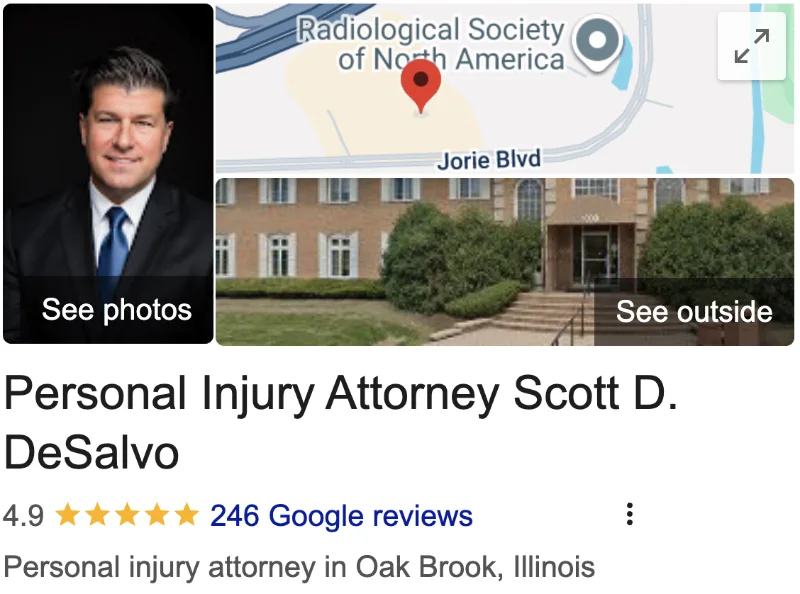
Scott DeSalvo founded DeSalvo Law to help injured people throughout Chicago and surrounding suburbs. Licensed to practice law in Illinois since 1998, IARDC #6244452, Scott has represented over 3,000 clients in personal injury, workers compensation, and accident cases.
No Fee Unless You Win | Free Consultation | 24/7 Availability Call or Text: (312) 500-4500
>>Read More
Main Office:
1000 Jorie Blvd Ste 204
Oak Brook, IL 60523
New Cases: 312-500-4500
Office: 312-895-0545
Fax: 866-629-1817
service@desalvolaw.com
Chicago and Other Suburban Offices
By Appointment Only