
If you suspect a loved one is being neglected in a care facility, the most important thing you can do in the first days is start protecting the evidence — and speed genuinely matters. The case against a negligent facility lives almost entirely in its own records: the care plans, the charting, the incident reports, the staffing logs. Those documents are in the facility's hands, and once a family raises concerns, the window in which everything is still intact and untouched begins to close. What you do right now, before you have even spoken to a lawyer, can preserve or lose the proof that a case depends on.
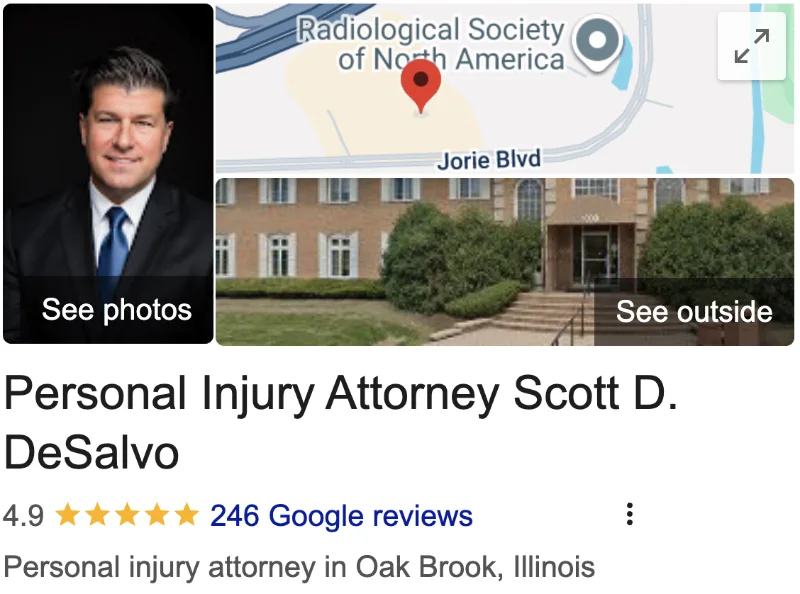
I am Scott DeSalvo, and for almost 30 years I have held facilities accountable when they failed the people entrusted to them. Families near Darien place vulnerable parents and grandparents in facilities around DuPage County trusting they will be safe, and when that trust is betrayed, the law gives you real power to respond. This page walks through what to do first and why moving quickly is so important. If you suspect neglect, call me at 312-500-4500, any time.
Before anything else, begin documenting what you see, because your own record is evidence the facility cannot alter. Photograph any injuries — bedsores, bruises, unexplained wounds — and take those pictures with dates. Write down what you observed and when: the condition of your loved one, what staff said, who was present, what was missing. Keep everything the facility gives you, from care summaries to billing statements, and do not return the originals.
At the same time, your loved one's immediate safety and medical needs come first, always. If someone is at immediate risk, handle their care and safety before anything else — get them the medical attention they need. Once they are safe, the evidence-protection work continues, because the two go together: a family that both protects the resident and preserves the record is in the strongest possible position to hold the facility accountable.

The urgency in these cases is not about panic; it is about the simple fact that records can change. A facility that senses a claim coming has every incentive to make sure its charting looks complete and its story holds together. Care plans can be updated after the fact, entries can be added, and documents can go missing. The sooner a lawyer can formally demand that everything be preserved, the less room there is for the record to be cleaned up.
Beyond the records, the physical and testimonial evidence fades quickly too. Bedsores heal or worsen and change in appearance, staff who witnessed the neglect move on to other jobs, and memories blur. Acting quickly lets me capture the condition of your loved one, identify and reach witnesses, and lock down the documents while they still tell the true story. Delay almost always helps the facility, never the family.
Certain injuries are recognized warning signs precisely because the care standards exist to prevent them. Advanced bedsores, repeated falls, dehydration and malnutrition, unexplained infections, sudden weight loss, and a decline in hygiene or alertness are all red flags. Aging explains a great deal, but it does not explain a resident who was not repositioned, not fed, not hydrated, or not watched the way their care plan required.
Distinguishing genuine neglect from the ordinary course of aging is often something only the records can settle. A facility will frequently insist that a decline was simply the natural progression of illness or age. The honest answer usually comes from reviewing the care plans and the charting against what actually happened, and comparing both to the standard of care the facility was required to meet. That review is where a suspicion becomes a provable case.
Illinois gives families a powerful tool in these situations: the Nursing Home Care Act, a statute written specifically to protect residents. It spells out residents' rights in detail and gives residents and their families a private right of action — the ability to sue when a facility violates those rights. It is not a vague promise; it is a concrete law with teeth, designed for exactly the situations where a facility has failed the people in its care.
One of its most important features is that it can shift the facility's attorney's fees and costs onto the facility once a violation is proven. That fee-shifting provision is a major reason these cases are realistic to bring even against a large, well-funded operator. It changes the economics so that accountability is achievable, and it is a big part of why a family should never assume a big facility is simply too powerful to challenge.

The facility's standard response, in nearly every case, is that the injury simply could not have been prevented — and that claim has to be tested, not taken at its word. Sometimes an outcome genuinely is unavoidable; sickness and age are real. But "unavoidable" is also the defense a facility raises whether it is true or not, because it deflects responsibility. The way to know which it is comes from the evidence, not the facility's assurances.
Testing that defense means putting the medical records, the care plans, and an expert's judgment up against the standard of care. Did the facility do what its own care plan required? Did it have enough staff? Did it follow the protocols meant to prevent exactly this injury? When the answer is no, the "unavoidable" defense falls apart, and the facility's failure is exposed for what it was.
No family should have to weigh the cost of a lawyer against seeking accountability for a loved one, and with me they do not have to. I take nursing home cases on contingency and advance the investigation and expert costs myself, so you pay only if I recover for your family. There is nothing out of pocket and nothing owed unless I win.
The structure of the law reinforces that, because the Nursing Home Care Act can make the facility responsible for attorney's fees when a violation is proven. That is by design — the statute is built to make accountability reachable for ordinary families against large operators. As a graduate of Gerry Spence's Trial Lawyers College and the Keenan Trial Institute, I bring a trial-ready posture to these cases, and I take a limited number of them so each family gets the attention this kind of loss demands.
Protecting nursing home residents is part of the broader work I do for injured people and families across this community. For the complete view of how I can help and how these cases connect, start at the Darien Personal Injury Attorney page.
"Scott is absolutely fantastic. He will always go the extra mile for his clients. They always take the time to return phone calls at all hours and I highly recommend him to all my friends."
-Melissa Brooks
"Great people and Scott's a great lawyer. They helped me make the wisest decision for my case, and that's important in serious legal matters. I trust him completely. He is the one to call."
-Tony Skvarenina
"Beyond satisfied with the services I received from this law firm. Definitely recommend! They got me fully paid and all the doctor bills, too. If you want the best, this is the law firm for your injury case!"
-Cynthia Rodriguez
"Scott represented me and I was really pleased with everything, my car accident paid a lot and quick. If you want a good Lawyer who is responsive, and straight with you, I highly recommend him."
-Greg Garcia
Often the honest answer only comes from reviewing the records. Injuries like advanced bedsores, repeated falls, dehydration, and untreated infections are recognized red flags because the care standards exist specifically to prevent them. Aging explains much, but not a resident who wasn't repositioned, fed, hydrated, or watched the way their care plan required.
It's an Illinois statute written specifically to protect nursing home residents. It spells out their rights and lets residents and families sue when a facility violates them, and it can shift the facility's attorney's fees and costs onto them once a violation is proven — a major reason these cases are realistic to bring against a large operator.
Begin protecting the evidence. Photograph any injuries, note dates, names, and what you observed, and keep everything the facility gives you. If your loved one is at immediate risk, handle their safety and medical care first. Then contact a lawyer quickly, because the facility's records are central to the case and must be preserved before they can be altered.
The facility says the injury couldn't be prevented. Is that true?
Sometimes an outcome genuinely is unavoidable, but that's the facility's standard defense in nearly every case, accurate or not. The way to test it is with the medical records, the care plans, and an expert's judgment about whether the facility met the standards it was required to meet — not the facility's own word.
Nothing out of pocket. I take these on contingency and advance the investigation and expert costs myself, so you pay only if I recover for your family. And because the Nursing Home Care Act can make the facility responsible for attorney's fees when a violation is proven, the structure is built to make accountability achievable.

Scott DeSalvo founded DeSalvo Law to help injured people throughout Chicago and surrounding suburbs. Licensed to practice law in Illinois since 1998, IARDC #6244452, Scott has represented over 3,000 clients in personal injury, workers compensation, and accident cases.
No Fee Unless You Win | Free Consultation | 24/7 Availability Call or Text: (312) 500-4500
>>Read More
Main Office:
1000 Jorie Blvd Ste 204
Oak Brook, IL 60523
New Cases: 312-500-4500
Office: 312-895-0545
Fax: 866-629-1817
service@desalvolaw.com
Chicago and Other Suburban Offices
By Appointment Only