
When people picture medical malpractice, they imagine a dramatic surgical error — but the single most common form of it is quieter: the diagnosis that was missed or delayed. A cancer read as nothing on an early scan. An infection sent home as a virus. A heart attack mistaken for indigestion. Chest imaging or a mammogram interpreted wrong at an outpatient clinic, so the real problem is not caught until it has grown far harder to treat. These failures rarely look like negligence in the moment — the patient goes home reassured — and that is exactly why they are so dangerous. By the time the truth surfaces, months have passed and a treatable condition has become a crisis.
My name is Scott DeSalvo, and for nearly 30 years I have handled serious injury cases, including medical negligence, when the evidence supports them. Missed and delayed diagnosis cases are difficult and expensive, and I take them seriously and honestly. If you believe a diagnosis was missed or delayed for you or someone you love in the Glen Ellyn area, call me at 312-500-4500, any time, for a free and confidential conversation.
A missed or delayed diagnosis is dangerous precisely because nothing appears to go wrong at the time. With a surgical mistake there is an obvious event; with a diagnostic failure the harm is the passage of time — the window in which the disease could have been treated closes silently. A radiologist overlooks a small density on a scan. A primary care visit attributes a warning sign to something benign. A specialist referral that should have happened never does. The patient trusts the reassurance, and only later, when the condition presents in a much worse form, does the question arise: should this have been caught?
Not every missed diagnosis is malpractice, and that honesty matters. Medicine is uncertain, and a bad outcome alone is not negligence. The legal question is whether the care fell below the accepted standard — whether a reasonably careful provider, with the same information, would have caught it — and whether that failure caused real harm. Answering that takes records and expert review, not a gut feeling.

Diagnostic errors cluster in the outpatient world where most of us actually get our care. Primary care offices, urgent care clinics, imaging centers, and specialist practices around Glen Ellyn and the surrounding DuPage County corridor handle enormous volume, and volume is where things slip. A scan queued among dozens of others, a follow-up that falls through the cracks between offices, a symptom logged but never pursued — these are the fault lines. Facilities like Northwestern Medicine Central DuPage and Marianjoy sit nearby, and the outpatient network feeding into and around them is exactly where imaging is read and diagnoses are made or missed.
The outpatient setting also makes these cases harder to spot, because no single hospital admission ties it together. The records are scattered across offices, and reconstructing what was known and when — and where the standard of care broke down — is painstaking work that most patients cannot do on their own.
Illinois does not let anyone file a medical malpractice case on suspicion alone — the law requires an expert's review first. Under 735 ILCS 5/2-622, a qualified health professional must examine the records and certify that there is a reasonable and meritorious basis for the case before it can even be filed. This certificate of merit is a real gatekeeper, and it is one reason these cases take work and money to bring. It also means that when a malpractice case does move forward, it has already cleared a serious professional review — it is not a shot in the dark.
What I can do is examine what happened and, where it looks serious, get the records in front of a qualified expert. If the review supports a case, we proceed on solid footing. If it does not, I will tell you that honestly, so you are not chasing a claim the evidence will not support.
Medical malpractice has some of the trickiest deadlines in Illinois law, and missing them ends the case no matter how strong it is. The general rule is two years from when you discovered — or reasonably should have discovered — that the harm came from malpractice. But there is also a hard outer limit: a four-year ceiling from the date the negligence occurred, regardless of when you found out. With a missed diagnosis, where the discovery may come long after the error, those two limits can interact in ways that are easy to miscalculate, and children are governed by separate rules.
Because the clock in a delayed-diagnosis case is so easy to get wrong, the safe move is to ask early. Assuming there is still time is how families lose the right to a case they did not even know they had.
Most law firms will not take a medical malpractice case, and it is worth understanding why. These cases are expensive and hard. Each one needs paid medical experts, can take years to resolve, and pits you against a well-funded, aggressive defense with no incentive to settle cheaply. Many firms are simply not built to carry that financial risk or that fight. So a patient with a legitimate claim can get turned away not because the case is weak but because the firm cannot afford to pursue it.
I take these cases on when the evidence supports them and give a straight answer when it does not. I advance the heavy cost of expert review myself, and you are never personally on the hook for those bills if the case does not succeed.

Some missed and delayed diagnoses are not caught in time at all, and a family is left grieving a death that should not have happened. When a medical error causes a death, Illinois allows the family to pursue a wrongful death claim for their loss and a survival claim for what the patient endured beforehand, both brought through the estate's representative. These are among the most serious matters I handle, and I treat them with the gravity they deserve. Nothing brings the person back, but accountability and support for the family are real, and they matter.
If you are facing that kind of loss, you do not have to sort out the legal path alone. A single conversation can tell you whether what happened warrants a closer look.
If you suspect a diagnosis was missed or delayed, a Glen Ellyn Personal Injury Attorney can review what happened and tell you plainly whether it is worth pursuing. The call is free, it is confidential, and it costs nothing to learn where you stand.
Call me and tell me what happened at work. I'll explain exactly what you're owed, flag whether there's a second claim hiding in your case, and tell you what to do next. It's free, and you pay nothing unless I recover for you — capped at 20% by Illinois law.
I answer the phone 24/7. Call 312-500-4500.
"Scott is absolutely fantastic. He will always go the extra mile for his clients. They always take the time to return phone calls at all hours and I highly recommend him to all my friends."
-Melissa Brooks
"Great people and Scott's a great lawyer. They helped me make the wisest decision for my case, and that's important in serious legal matters. I trust him completely. He is the one to call."
-Tony Skvarenina
"Beyond satisfied with the services I received from this law firm. Definitely recommend! They got me fully paid and all the doctor bills, too. If you want the best, this is the law firm for your injury case!"
-Cynthia Rodriguez
"Scott represented me and I was really pleased with everything, my car accident paid a lot and quick. If you want a good Lawyer who is responsive, and straight with you, I highly recommend him."
-Greg Garcia
Usually only a qualified physician reviewing the records can say for sure, and I can't tell from your account alone. A bad outcome isn't enough — the care has to have fallen below the accepted standard and caused your injury. What I can do is examine what happened and, where it looks serious, have the records reviewed by an expert, which Illinois requires before a case can even be filed.
Generally two years from when you discovered the harm came from malpractice, with a hard four-year ceiling from the date it occurred and separate rules for children. Those two limits interact in ways that are easy to miscalculate, and missing either one ends the case. That's why it's worth asking a lawyer early rather than assuming there's still time.
Because they're expensive and hard. Each needs paid medical experts, can take years, and pits you against a well-funded defense. Many firms aren't set up to carry that risk. I take these on when the evidence supports it and give you a straight answer when it doesn't.
Nothing out of pocket. I work on contingency at the standard Illinois malpractice fee of 33 1/3%, and I advance the heavy expert-review costs myself. If we don't win, you owe nothing and are never personally responsible for those expert bills.
Yes. When a medical mistake causes a death, Illinois lets the family pursue a wrongful death claim for their loss and a survival claim for what the person endured beforehand, both through the estate's representative. These are among the most serious cases I take, and I handle them with the care such a loss demands.

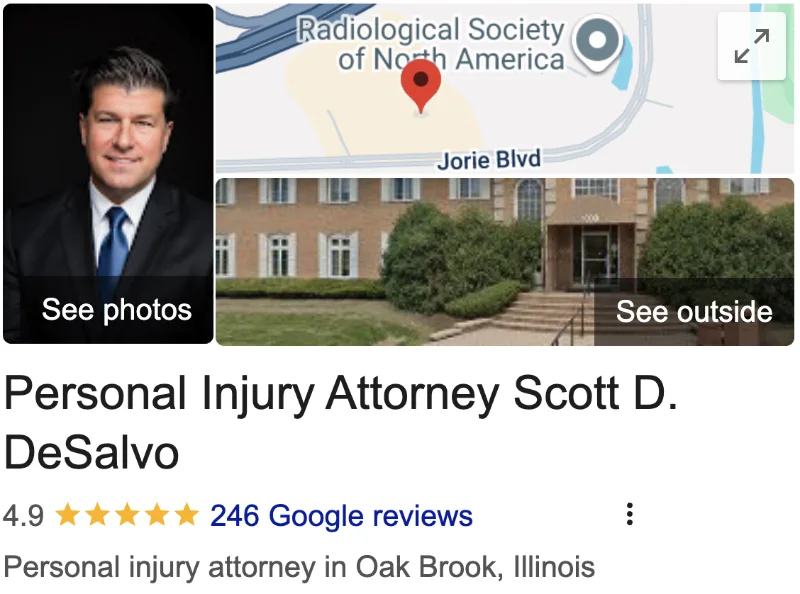
Scott DeSalvo founded DeSalvo Law to help injured people throughout Chicago and surrounding suburbs. Licensed to practice law in Illinois since 1998, IARDC #6244452, Scott has represented over 3,000 clients in personal injury, workers compensation, and accident cases.
No Fee Unless You Win | Free Consultation | 24/7 Availability Call or Text: (312) 500-4500
>>Read More
Main Office:
1000 Jorie Blvd Ste 204
Oak Brook, IL 60523
New Cases: 312-500-4500
Office: 312-895-0545
Fax: 866-629-1817
service@desalvolaw.com
Chicago and Other Suburban Offices
By Appointment Only