

The reason a good malpractice case is worth pursuing is the same reason most lawyers won't take one: it's expensive, slow, and hard to win. That difficulty scares off the field — which means when you bring a serious case with the resources to see it through, you're facing far less competition than the insurer expects. The hard part is also the leverage.
I'm Scott DeSalvo. For almost 30 years I've handled serious injury cases in DuPage County, and I take medical negligence cases when the evidence supports them. If you or someone you love was harmed by a medical mistake near Itasca, here's a straight look at what these cases require and why the right lawyer changes the outcome. The conversation is free.
A malpractice case isn't "the doctor was careless" in the abstract. It has a specific shape: there was a provider-patient relationship, the provider deviated from the standard of care a competent provider would have met, that deviation caused your injury, and you suffered real harm because of it. A bad outcome without that deviation isn't malpractice, however painful the result.
And you can't prove the deviation by telling a jury the care felt wrong. It has to come from another qualified physician who reviews the records and testifies that the care fell below accepted practice. No credible expert, no case — which is why the strength of the medical experts usually matters more than anything else.

Illinois takes these claims seriously enough to build a filter into the law itself. Under 735 ILCS 5/2-622, you generally can't file a medical malpractice suit without attaching a certificate of merit — a written report from a qualified health professional who reviewed the case and found a reasonable basis to believe malpractice occurred.
So before your case ever reaches a judge, a physician has to stand behind it. That keeps meritless suits out, and it means real money has to go into expert review before anything is filed. A lawyer who can't fund that can't bring the case properly.
Most Illinois injury claims run two years and stop. Malpractice doesn't. You generally have two years from when you discovered, or should have discovered, that malpractice caused your injury — and behind that sits a hard four-year limit from the date of the malpractice itself, with narrow exceptions and separate rules for children. Because a late discovery can still run into that four-year wall, people lose otherwise strong cases by waiting. If you're unsure, ask early.
When negligence causes real harm, Illinois law allows recovery for your medical costs past and future, lost income and lost earning capacity, physical pain, disability and disfigurement, and the loss of a normal life. The Illinois attorney's fee on a malpractice case is 33 1/3% of the recovery, and as always, you pay nothing up front and nothing unless we win. The significant costs of expert review I advance myself.
Bottom line: these are the hardest injury cases to win, so the lawyer you choose matters here more than anywhere else.
If something about your care doesn't add up, don't wait — the deadlines are strict and the records need an expert's eye. Call me, tell me what happened, and I'll give you an honest read on whether it's worth pursuing. No cost, no pressure, no fee unless I recover for you.
I'm available around the clock. Call 312-500-4500.

Medical negligence is one of many injury cases I take on. For the full picture, visit my Itasca Personal Injury Attorney page.
Honestly, not without a qualified physician reviewing the records — and I can't tell from your story alone either. A bad result isn't malpractice by itself; there has to be a departure from the standard of care that caused your injury. What I can do is examine what happened and, where it looks serious, have the records reviewed by an expert, which Illinois law requires before filing anyway.
Generally two years from when you discovered the harm came from malpractice, with a hard four-year ceiling from the date it occurred, plus separate rules for children. Those two limits interact in ways that are easy to get wrong, and missing either one ends the case — so it's worth asking a lawyer early rather than assuming there's time.
Because they're costly and difficult. Each requires paid medical experts, can take years, and pits you against a well-funded defense. Many firms aren't equipped for that. I take them when the evidence supports it and give you a straight answer when it doesn't.
Nothing out of pocket. I work on contingency at the standard Illinois malpractice fee of 33 1/3%, and I advance the heavy costs of expert review myself. If we don't win, you owe nothing and aren't personally responsible for those expert bills.
Yes. When a medical mistake causes death, Illinois lets the family pursue a wrongful death claim for their loss and a survival claim for what the person endured beforehand, brought through the estate's representative. These are among the most serious cases I handle, and I treat them with the care they deserve.


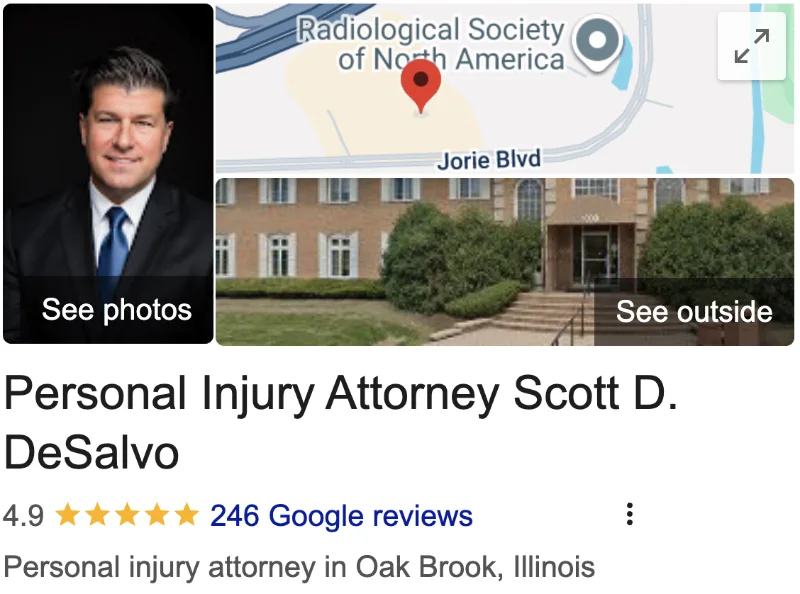
Scott DeSalvo founded DeSalvo Law to help injured people throughout Chicago and surrounding suburbs. Licensed to practice law in Illinois since 1998, IARDC #6244452, Scott has represented over 3,000 clients in personal injury, workers compensation, and accident cases.
No Fee Unless You Win | Free Consultation | 24/7 Availability Call or Text: (312) 500-4500
>>Read More
Main Office:
1000 Jorie Blvd Ste 204
Oak Brook, IL 60523
New Cases: 312-500-4500
Office: 312-895-0545
Fax: 866-629-1817
service@desalvolaw.com
Chicago and Other Suburban Offices
By Appointment Only