

A fall sounds minor until it isn't — a broken hip, a torn shoulder, a head injury that changes everything. And here's the cruel part: by the time you've left urgent care, the hazard that hurt you is usually gone. The spill is mopped, the ice is salted, the broken step is quietly repaired, and the property owner is already telling itself nothing was wrong. Fall cases are won or lost in those first days.
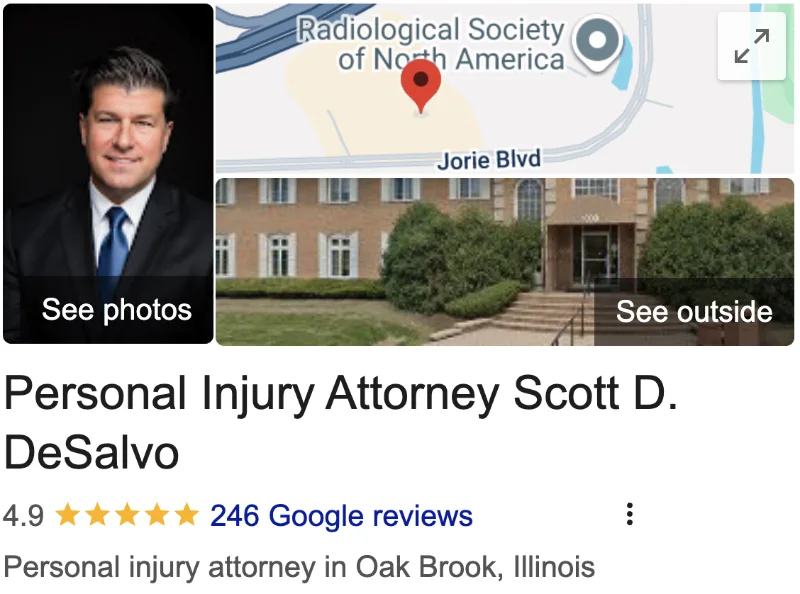
I'm Scott DeSalvo, and I've handled premises cases across DuPage County for almost 30 years. If you fell in a Lisle store, restaurant, parking lot, or apartment complex, the most important thing you can do is move before the evidence disappears — and calling for a free consultation costs you nothing.
Property owners aren't automatically responsible just because you got hurt on their property. In Illinois, you have to show the owner knew, or reasonably should have known, about the danger and failed to fix it or warn you. Lawyers call it "notice," and it's the heart of every case.
That's why speed matters so much. Had that spill been sitting long enough that an employee should have caught it? Is there a history of the same hazard? Did a security camera record how long it was there? The answers live in evidence that gets erased, discarded, or "lost" within days. Move fast and it's still there. Wait, and it becomes your word against an owner who's had time to clean up and prepare.

Given our winters, a lot of Lisle falls happen on ice — and Illinois has a rule about that most people find surprising. Under the "natural accumulation" doctrine, a property owner generally isn't liable for a fall on ice or snow that piled up naturally from the weather. It snowed, it got slick, you fell — by itself, that's often not a case.
But if the owner created an unnatural accumulation, the picture changes completely: snow plowed into a pile that melted and refroze across a walkway, a downspout draining onto a sidewalk, or a low spot in the pavement that traps water and ices over. Now you may well have a claim. Most people assume any icy fall is automatically the owner's fault — it isn't, and that exact distinction is what a property insurer will use to deny you if you don't know to fight on it.
The party at fault isn't always the obvious one. Depending on where you fell, responsibility might rest with the store or restaurant, the company that owns the building, a separate property-management firm, a janitorial contractor hired to keep floors safe, or a snow-removal company that did a careless job. In a Lisle strip mall or office plaza, those can be different businesses with different insurers — and each will happily point at the others while all of them point at you.
Sorting out who's truly on the hook, and making sure someone is, is the work.
Premises insurers run two plays on nearly every case. First, they blame you: in Illinois, if they can pin more than half the fault on you for not watching where you were going, you recover nothing — so they'll insist the hazard was "open and obvious." Second, they minimize the injury, combing your history for any old ache to claim your fall changed nothing.
What most lawyers won't tell you is that fall cases are genuinely harder than car cases, precisely because of that open-and-obvious defense and the notice requirement. None of that means a real injury isn't worth pursuing — it means you want a lawyer who knows how to beat those defenses.
A serious fall can mean surgery, months of physical therapy, and time you can't work — and Illinois law lets you pursue all of it: your medical bills past and future, your lost income and reduced earning ability, your physical pain, and the loss of your normal daily life. For older residents especially, a single fall can be life-altering, and the law takes that seriously.
Bottom line: "I just slipped" often turns into the most disruptive injury of someone's life — treat it, document it, and don't let an insurer wave it off.

The evidence is disappearing as we speak, so please don't wait. Call me, tell me where and how you fell, and I'll tell you honestly whether the notice and fault picture supports a case. If it does, we start preserving proof immediately. It's free, and you pay nothing unless I win for you.
I'm available any time, day or night. Call 312-500-4500.
Generally two years from the date of your fall against a private property owner. But if you fell on public or government property — a village sidewalk, a park district lot, a public building — special notice rules and much shorter deadlines can apply, sometimes as little as a year. Because those government deadlines are so easy to miss, call as soon as you can.
Maybe — it depends on whether the ice was natural or man-made. Illinois generally doesn't hold owners liable for ice that accumulated naturally from the weather, but if the owner created the problem — refrozen plowed snow, a draining downspout, or defective pavement that trapped water — you may have a strong claim. The distinction is technical, and it's exactly what the insurer will lean on, so it helps to have someone who can prove an unnatural accumulation.
Not necessarily. Illinois follows modified comparative negligence — being partly to blame doesn't sink your claim, as long as you're not more than half at fault, and your recovery is simply trimmed by your share. The insurer will always try to push that number past the line. Fighting it is a big part of what I do.
If you're able, tell the store or property manager right away and ask them to put an incident report in writing. Photograph exactly what caused the fall, and the area around it, before anyone cleans it up. Get the names of any witnesses, and see a doctor promptly even if you feel only sore. Then call me quickly, so I can preserve the surveillance video before it's gone.
Nothing out of pocket. I handle these on contingency — my fee comes only from money I recover for you, and if there's no recovery, you owe nothing. I also front the costs of investigating the case, like obtaining camera footage and expert analysis. You never write me a check to get started.

Scott DeSalvo founded DeSalvo Law to help injured people throughout Chicago and surrounding suburbs. Licensed to practice law in Illinois since 1998, IARDC #6244452, Scott has represented over 3,000 clients in personal injury, workers compensation, and accident cases.
No Fee Unless You Win | Free Consultation | 24/7 Availability Call or Text: (312) 500-4500
>>Read More
Main Office:
1000 Jorie Blvd Ste 204
Oak Brook, IL 60523
New Cases: 312-500-4500
Office: 312-895-0545
Fax: 866-629-1817
service@desalvolaw.com
Chicago and Other Suburban Offices
By Appointment Only