One of the hardest facts about car crashes in Maywood is that the driver who hits you may have almost nothing behind them. A minimum policy, an expired policy, or no insurance at all. You do everything right — you get medical care, you follow up, you build a real injury claim — and then you learn the at-fault driver carries the Illinois minimum or is uninsured entirely, and there is not enough coverage to pay for what happened to you. In a dense, working-class town where money is tight and a lot of traffic pours off I-290 and up 1st Avenue, this is not a rare problem. It is one of the most common reasons a good case turns into a fight, and it is one of the most important things to get right.
When the at-fault driver cannot pay, the case often shifts to your own insurance — and most people have no idea how that works. Illinois requires uninsured motorist (UM) coverage and offers underinsured motorist (UIM) coverage, and these are the parts of your own policy that step in when the other driver has little or nothing. The catch is that once you make a claim under your own UM/UIM coverage, your own insurance company starts behaving like an adversary. I am Scott DeSalvo, I have handled these claims for nearly 30 years, and this page explains how to protect yourself when the other driver's coverage runs out.
When the at-fault driver has little or no coverage, your own UM/UIM policy can become the entire case. Say you are hurt in a crash where I-290 traffic backs up onto 1st Avenue, and the driver who rear-ends you carries a small minimum-limits policy — or no policy at all. Their coverage might not even pay for your emergency room visit at a nearby hospital, let alone your future care, your lost wages, and everything else the law entitles you to. That gap is exactly what UM and UIM coverage exist to fill, and it is why the details of your own policy suddenly matter enormously.
Underinsured coverage is the piece people understand least, and it is often the difference-maker. UIM applies when the at-fault driver has some insurance, but not enough to cover your losses; your own UIM coverage can make up part of the difference, up to your limits. The rules on how these coverages stack, how much you can recover, and what notice your insurer requires are technical and unforgiving. Handling them wrong can forfeit money you are owed, which is why this is not a claim to navigate alone.

The moment your case becomes a UM/UIM claim, the company you have paid premiums to for years starts acting like the opposition. This surprises people, and understandably so. But in a UM/UIM claim, your insurer is the one who pays, which means it has every incentive to minimize your injuries, question your treatment, and offer as little as possible — the same tactics the other driver's carrier would have used. Being a loyal customer does not change how the claim is evaluated.
This is where having a lawyer who is not intimidated by an insurance company matters most. I know the adjusters' playbook, I know what evidence forces a fair number, and I know that these disputes often go to arbitration under the policy's own terms. Being prepared to push a UM/UIM claim all the way is what makes an insurer treat it seriously — and it is why I treat your own carrier with exactly the same firmness I would treat anyone else's.
Maywood's roads produce their own patterns of serious crashes, and knowing them shapes how a case is built. The Eisenhower Expressway (I-290) runs just south of town, and its on- and off-ramps funnel fast-moving traffic onto surface streets like 1st Avenue and Roosevelt Road that were never built for it. Add the Des Plaines River crossings, the Metra grade crossings, and heavy hospital-area traffic near Loyola and Hines, and you have a lot of places where high speeds meet local congestion. These are the intersections and corridors where the crashes I see tend to happen.
Local knowledge helps because it tells me where the evidence is and how the crash likely occurred. Nearby businesses and public cameras may have recorded it. The geometry of a particular ramp or intersection may explain why the other driver is at fault. Knowing the ground is not a marketing line — it is part of proving the case.
The steps you take in the first days after a crash can decide the strength of your claim. Get medical attention promptly, even if you feel only sore — adrenaline masks real injuries, and a gap in treatment is the first thing an insurer uses against you. Photograph the vehicles, the scene, and your injuries. Get the other driver's insurance information and the names of any witnesses. And report the crash, because you will need the documentation.
Just as important is what not to do, and this is where people accidentally hurt their own cases. Do not give the other driver's insurer a recorded statement, do not accept a fast settlement before you know the extent of your injuries, and do not assume that because you were not badly injured on the scene, you were not injured at all. Call a lawyer before you talk to any adjuster, so those conversations are handled correctly from the start.
Not every crash involves an underinsured individual — some involve a commercial truck or a company vehicle, and those cases are different. Trucks carry higher coverage but also come with federal safety regulations, driver logs, and maintenance records, and the trucking company often moves to secure and control that evidence immediately. When the defendant is a company rather than a person, the coverage problem flips: now there is money to fight over, and the fight is harder. I know what to demand and how fast to demand it.
These larger cases reward early, aggressive action. A preservation demand sent quickly can keep logs and data from disappearing, and the difference between a case built on solid records and one built on guesses often comes down to how fast the right steps were taken.
Whether your case is against an uninsured driver, your own UM/UIM carrier, or a trucking company, the result depends on being taken seriously. Insurers evaluate claims partly on who is representing you and whether that lawyer is prepared to go the distance. My trial background — including training at Gerry Spence's Trial Lawyers College and the Keenan Trial Institute — is what tells a carrier that a lowball number will not end the matter. That posture is what produces fair settlements, most of the time without a trial at all.
If a crash in Maywood left you hurt, start by talking with a Maywood Personal Injury Attorney who handles these cases every day and will tell you honestly where you stand. The first call is free, it costs nothing to learn your options, and you owe nothing unless I win.
"Scott is absolutely fantastic. He will always go the extra mile for his clients. They always take the time to return phone calls at all hours and I highly recommend him to all my friends."
-Melissa Brooks
"Great people and Scott's a great lawyer. They helped me make the wisest decision for my case, and that's important in serious legal matters. I trust him completely. He is the one to call."
-Tony Skvarenina
"Beyond satisfied with the services I received from this law firm. Definitely recommend! They got me fully paid and all the doctor bills, too. If you want the best, this is the law firm for your injury case!"
-Cynthia Rodriguez
"Scott represented me and I was really pleased with everything, my car accident paid a lot and quick. If you want a good Lawyer who is responsive, and straight with you, I highly recommend him."
-Greg Garcia
Yes, significantly. Truck cases involve federal safety regulations, company logs and maintenance records, and corporate liability beyond the driver — and the trucking company often moves to secure evidence right away. That makes fast action and knowing what to demand especially important, and it's the kind of case I'm built to handle.
Generally two years from the date of the crash under Illinois law. But evidence disappears long before then — camera footage is overwritten, vehicles are repaired, and truck records can be lost — and if a government vehicle was involved, the deadline can be much shorter. Calling early protects both the proof and your claim.
No. You're not required to give the at-fault driver's insurer a recorded statement, and it usually helps them more than you. Their adjusters ask questions designed to lock in answers they can later use to cut your claim. Decline politely, tell them your lawyer will follow up, and let me handle those calls.
Possibly. Insurers argue that minor damage rules out injury, but that's not how the body works — real neck and back injuries happen at low speeds. Your medical evidence decides the claim, not the condition of your bumper. Don't let an adjuster talk you out of a genuine injury.
Nothing unless we win. I work on contingency — my fee, 33 1/3% (or 40% if the case goes into litigation), comes only from what I recover for you, and I advance the costs. If we don't win, you owe nothing.

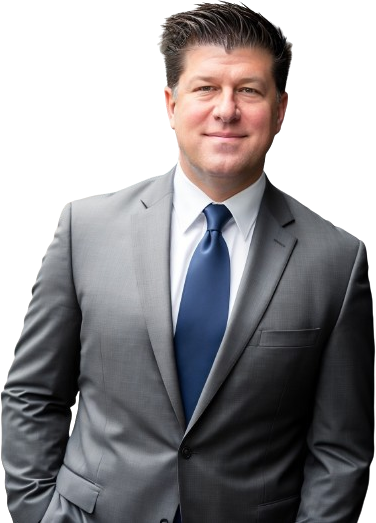
Scott DeSalvo founded DeSalvo Law to help injured people throughout Chicago and surrounding suburbs. Licensed to practice law in Illinois since 1998, IARDC #6244452, Scott has represented over 3,000 clients in personal injury, workers compensation, and accident cases.
No Fee Unless You Win | Free Consultation | 24/7 Availability Call or Text: (312) 500-4500
>>Read More
Main Office:
1000 Jorie Blvd Ste 204
Oak Brook, IL 60523
New Cases: 312-500-4500
Office: 312-895-0545
Fax: 866-629-1817
service@desalvolaw.com
Chicago and Other Suburban Offices
By Appointment Only