
The honest first sentence I tell people who call me from Streamwood: most of you don't need a lawyer. If you got a fender bump in a parking lot, were sore for three days, and the other driver's insurance paid to fix your car — call them, save the legal fee, and move on. I'd rather lose your business than take a case that won't put more in your pocket than the contingency fee would cost you.
You're not on this page because of a fender bump. You're on this page because something happened that did NOT sort itself out. A crash on Irving Park Road that left you with surgeries on the calendar. A work injury at one of the distribution centers off Sutton Road that your employer is suddenly very interested in calling “pre-existing.” A loved one in a nursing facility nearby where the visits have started to scare you. Something real. Something that is already costing you money you don't have, time you can't make back, and sleep you need.
My name is Scott DeSalvo. Licensed in Illinois since 1998. Twenty-eight years of nothing but injury and workers' comp work, by choice. The first call is free, the consultation is free, and I do not earn a dime unless you do. 312-500-4500. Anytime — including right now.

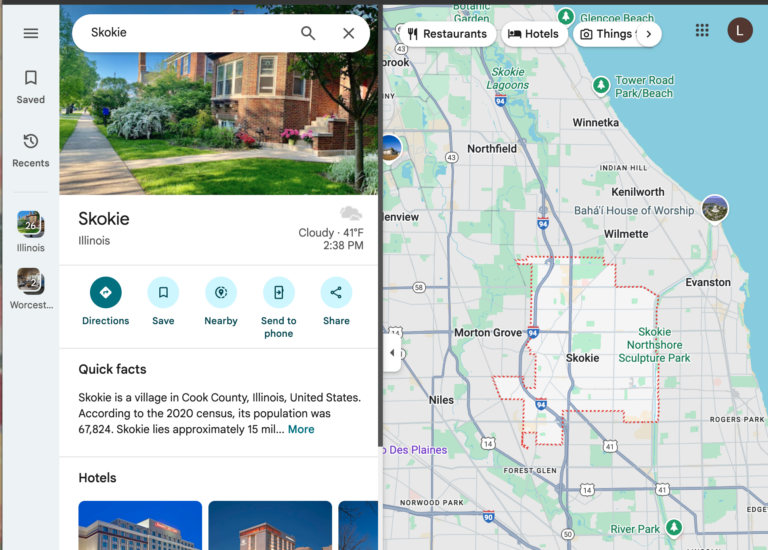
Streamwood, Hanover Park, Bartlett, Hoffman Estates — this whole northwest corner of Cook County sits far enough from the Daley Center that insurance defense firms behave differently on cases out of these zip codes. They drag depositions out longer. They lowball harder on opening offers. They count on suburban plaintiffs not having the appetite for a downtown courthouse forty minutes away. I have spent almost three decades showing them that the math behind that assumption does not work on my files.
The Third Municipal District courthouse in Rolling Meadows handles a lot of Cook County civil matters out of this part of the county. The judges, the case-call procedures, the way settlement conferences get scheduled — none of that runs the way it does at 50 West Washington. Attorneys who only ever practice downtown get out of rhythm fast in Rolling Meadows. I do not.
In 2025, most insurance disputes are not about who hit whom. The other side has the police report and the photos. The fight is about whether you were really hurt and whether your treatment was reasonable. That fight is decided by your medical records. If you went to urgent care after the crash and told them you were “just a little sore,” that line is going to be in front of you two years later. If you skipped PT because work got busy, that gap will be Exhibit B at deposition. I will tell you exactly how to handle treatment on the first call so the record protects you instead of working against you.
I take crashes — cars, trucks, motorcycles, bicycles, pedestrians, rideshare, scooters. I take work injuries, both the comp side and any third-party claim that runs alongside it. I take falls in stores, restaurants, apartment buildings, and parking lots. I take dog bites. I take medical malpractice and nursing-home neglect when the medicine supports it. I take wrongful-death cases when a family has lost someone to somebody else's negligence.
I do not take small soft-tissue cases that are not going to put more in your pocket than my fee would cost you. I will tell you that on the phone in the first five minutes instead of stringing you along. Honesty up front is part of the deal.
Illinois law allows an injured person to recover seven categories of damages. Most people only know about the first one. The adjuster who calls you is happy to keep it that way.
A typical opening offer from a carrier covers maybe the first category and a sliver of the second. They are betting that you do not know about the other five. I do. Once you sign with my office, the adjuster who was leaning on you to settle by the end of the month suddenly stops calling.
Bottom line: don't sign anything from the insurance company before you talk to me. The conversation is free and it takes five minutes. 312-500-4500.
This area runs on logistics and light manufacturing. Distribution centers, parcel hubs, warehouses, fabrication shops. The injury patterns I see weekly out of those workplaces: repetitive-lift back injuries, lacerations from machinery, falls from loading docks, forklift incidents, shoulder and rotator-cuff tears from overhead work. Illinois workers' comp covers medical treatment, partial wage replacement during recovery, and a permanent partial disability award when you finish treating. But here is the part most lawyers miss: when a third party — a subcontractor on site, a building owner, the manufacturer of defective equipment — contributed to your injury, there is often a second case to be filed alongside the workers' comp claim. I look for that second case on every work-injury file.
This stretch mixes high-speed commuter traffic with delivery vehicles and signal phasing that changes block to block. A lot of the crashes I take from this corridor involve commercial vehicles — box trucks, delivery vans, semis. Commercial defendants carry commercial policies. Commercial policies are written at a million dollars and up. That changes the valuation of a case entirely. Two cars on a residential street is a different conversation than a delivery van on Irving Park Road. I push for the commercial-policy ceiling on every one of those files.
If you visit a parent or grandparent at a facility nearby and you have noticed sudden weight loss, unexplained bruises, bedsores that should never have developed, or staff who cannot answer basic questions about your loved one's care — those are red flags. The Illinois Nursing Home Care Act gives families real legal teeth. Call me. We document and investigate quickly because facilities are very good at making problems disappear once a complaint is on file.


The adjuster will sound friendly. The adjuster is not your friend. You are not required to give a recorded anything to the other side's insurer. Tell them your attorney will be in touch and hang up. Then call me.
Carriers screenshot Instagram and Facebook. A photo of you smiling at your niece's birthday becomes Exhibit A at deposition, with opposing counsel asking the jury to wonder how injured you really are. Lock your profiles down until the case closes. Post nothing about the accident, the injuries, the treatment, or the lawsuit. Nothing.
Soft-tissue injuries typically get worse for two to three weeks, then plateau, then sometimes become permanent. Every day between the crash and the first medical visit is a gift to the defense. Get evaluated. If you are fine, you are fine. If you are not, the record now exists to prove it.
Plenty of firms run heavy TV and billboard advertising, then hand cases off to a paralegal you will never speak with directly. The name on the sign is not always the attorney who is actually working your file. Ask. Before you sign a retainer with anyone — including me — ask who is going to be the lawyer responsible for your case.

The phone is answered by me or by someone on my team. No press-one-for-this. No phone tree. You tell me what happened in your own words. I ask follow-up questions. I tell you in plain language whether I think you have a case, what kind of settlement range it is likely to fall in, and what the road ahead looks like.
If we both decide it is a fit, we sign by phone or email. You do not have to come downtown. From there, my team starts the work — records ordered, witnesses tracked down, scene photographs taken before conditions change, spoliation letters out to anyone who might have video or telematics data, and a treatment plan coordinated if you do not have health insurance.
About nine in ten cases settle before any courtroom is involved. The cases that do not settle, I file. I have tried more than thirty jury cases and handled around a hundred arbitrations. That trial-ready posture is one of the main reasons settlements come in at full value on the cases that never have to be tried.
Find Out What YOUR Case Might Be Worth...for free.
Nothing comes out of your pocket up front. Ever.
I advance every cost the case needs along the way — filing fees, deposition transcripts, expert retainers, records charges, the whole list. If we do not recover for you, I absorb those costs. You walk away owing zero either way.
I was nine years old when my father, a Teamster truck driver, was catastrophically hurt at work. His case lasted seventeen years. At the end of those seventeen years, his own attorney sued him for additional fees. Seventeen years of fighting, and then a betrayal from the man who was supposed to be on his side.
Three of those seventeen years overlapped with my time in law school, deciding what kind of lawyer I would become. The kind I would become was the kind my father never got. Every Streamwood family who calls my office gets the representation I wish my father had been given. That commitment is older than my law license and it sits behind every file in this office.
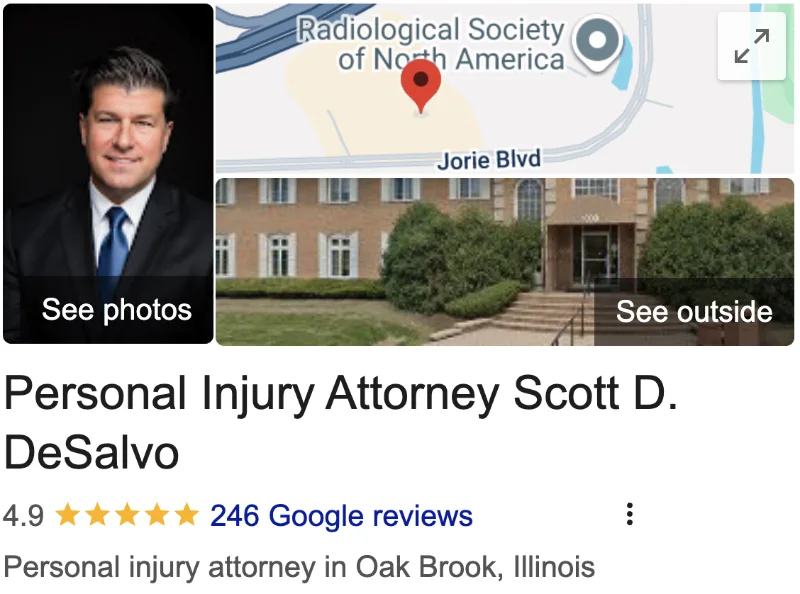
My office is at 1000 Jorie Boulevard, Suite 204, in Oak Brook. If you cannot come to me, I will come to you — your home, the hospital, a coffee shop on Schaumburg Road, wherever makes sense. I work with clients across:
The longer the wait, the more physical evidence disappears, the more witness memories fade, and the more leverage the carrier collects. Calling costs you nothing. The conversation is private and protected by attorney-client privilege from the first hello. If I am not the right fit for your case, I will tell you that — and I will point you toward someone who is.
312-500-4500. Twenty-four hours a day. Every day of the year.

Probably, yes. Illinois follows modified comparative negligence. If a jury decides you were 50% or less at fault, you still recover, with your share of the damages reduced by your fault percentage. People dismiss their own cases all the time because they assume any fault on their side wipes the case out. It usually doesn't.
Maybe not. Bring me what you remember saying and we'll evaluate whether it actually hurts your case. A lot of recorded statements turn out to be harmless or even helpful. Some create problems we can work around. Either way, stop talking to that adjuster and call me before saying anything else.
It ranges. Cleanest cases — clear liability, finite treatment, a reasonable carrier — can wrap in three to six months. Mid-range cases run six months to a year. Larger or contested-liability cases run a year and up. Cases that have to go to trial take longer than that. I push every file as fast as the facts allow but I will never rush you to settle before we know how badly you're actually hurt.
Checking in is allowed. Retaliation is not. Illinois law prohibits an employer from firing, demoting, or harassing you for filing a legitimate workers' comp claim. If the “checking in” has started to feel like pressure to drop the claim or to come back to work before your doctor clears you, write down every conversation and call me immediately.
There are providers around Streamwood who treat on a lien basis — they get paid out of the eventual settlement when the case resolves. I keep a working list of them and can connect you. Do not put off care because of money. Untreated injuries hurt you more than the bill ever would.
I will not promise you a number on the first call. Anyone who does is lying to you. After we talk through the facts, I can give you a realistic settlement range. The range depends on injury severity, treatment, lost income, the fault picture, and the policy limits in play. Once we know those, we can talk in honest dollars.
Probably not. About nine in ten cases settle without trial. Filing a lawsuit doesn't mean you're going to a courtroom — most filed cases still settle before trial. The fact that I am genuinely prepared to try the case if necessary is one of the reasons settlements come in higher in the first place.
It doesn't kill your case. Illinois law specifically recognizes aggravation claims — meaning the new accident made an old condition worse. What kills cases is hiding the prior history. The defense will subpoena every medical record you've ever generated. Tell me about the prior injury up front and I will know how to handle it.
Yes. I take cases across Illinois — Cook, DuPage, Lake, Kane, Will, and McHenry counties. Wherever the case is, I drive. Wherever you are, I'll come to you if you can't travel.
Yes. That is exactly what the first call should be. No commitment, no pressure. Tell me what happened, I'll tell you whether you actually need a lawyer, and if you don't, I'll say so directly. 312-500-4500.


Scott DeSalvo founded DeSalvo Law to help injured people throughout Chicago and surrounding suburbs. Licensed to practice law in Illinois since 1998, IARDC #6244452, Scott has represented over 3,000 clients in personal injury, workers compensation, and accident cases.
No Fee Unless You Win | Free Consultation | 24/7 Availability Call or Text: (312) 500-4500
>>Read More
Main Office:
1000 Jorie Blvd Ste 204
Oak Brook, IL 60523
New Cases: 312-500-4500
Office: 312-895-0545
Fax: 866-629-1817
service@desalvolaw.com
Chicago and Other Suburban Offices
By Appointment Only