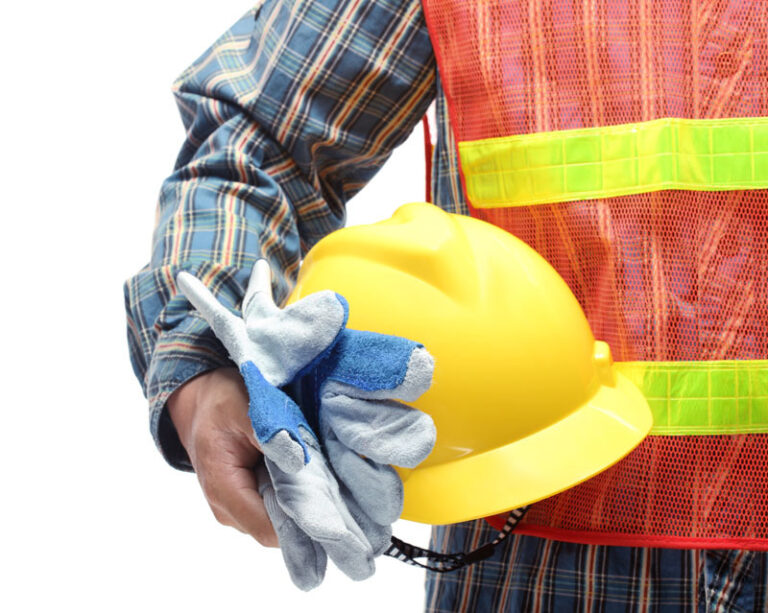
In 2017, there were 971 construction worker fatalities. And literally tens of thousands of construction injuries on top of that.
Falls, being struck by an object, electrocutions, and being caught in between or under equipment accounted for the “Fatal Four” of that year.
Despite these harrowing incidents, OSHA (Occupational Safety and Health Administration) has made great strides in creating safer environments for workers. In 1970, the fatality rate for all worker deaths was 38 per day compared to 14 per day in 2017.
Even still, many, if not all, construction worker deaths could be avoided. Stricter rules, regulations, and technology all aid in minimizing injuries and fatalities.
So, how can we learn from others so that we don’t make the same mistakes ourselves?
Read on to find out what the 10 most common injuries are so that you can learn to avoid them on the job.


Objects and potential debris lying around, combined with the many different movements required of a construction worker, make slips and falls a common occurrence on construction sites.
A slip and fall that causes a worker to hit the ground or the floor they’re working on is typically less serious of an injury than a slip and fall that results in a worker falling down a level or even down multiple floors.
Injuries from falls can cause anything from a bruise to serious head trauma, and sometimes even death.
Wearing proper footwear, removing potential fall hazards, and establishing a no-running policy are just 3 of the many precautions that should be taken to avoid falls on a work site.
If you have suffered from a slip and fall, you might want to check out our guide to slip and fall settlement amounts.
Construction workers who were hit by an object accounted for 804 construction worker deaths from 2011-2015.
Power line installers, highway workers, and loading machine operators were among those making up the majority of the fatalities. Over half of them were vehicle accidents. That being said, workers may be struck by swinging, falling, flying, or rolling objects.
When it comes to heavy equipment, workers should always be aware of the location of all equipment at any given time on the construction site. Hard hats should be checked regularly for any signs of deterioration and should be replaced accordingly.


Some of the most common construction injuries are due to electrocution. In fact, 61% of all work-related electrocution fatalities were construction workers.
In order to avoid electrocution, electrical wires and units should be properly insulated. Furthermore, the equipment, environment, and work practices should be OSHA compliant.
In addition, there should be extensive health, safety, and hazard prevention training. Electrical power installers, repairers, and earth drillers are the most responsible for the electrical shock of construction workers.
Electrocution often happens for something as simple as improper use of an extension cord.
Find Out What YOUR Case Might Be Worth...for free.
Getting caught in or under or in between equipment or machinery can result in one’s body or body part being pinched, compressed, or squeezed. A construction worker injured in this fashion can result in the most awful type of injury.
Death or disfiguration is often a result of a worker getting caught in or between something. It is essential to take certain precautions to avoid such an awful injury.
Some of the precautions you can take to avoid any potential for pain are:
Want to be prepared if you witness or sustain an injury? Find out exactly what steps to take immediately after an injury.
Eye injuries are one of the most common construction injuries. And construction has a higher eye injury rate than any other industry, causing workers to miss work, and sometimes lose their eyesight.
If your eye is punctured, DO NOT try to wash out or remove the object. If your eye is irritated from fumes or chemicals, immediately and gently rinse it out with water.
Some of the components that could damage your eye on a construction site are:
It takes a mere 2 seconds to wear safety goggles and protect your eyes. Some construction sites have a “rinse aid” which may also be used to flush out your eyes.

Construction workers can be in danger of steam burns, electrical burns, chemical burns, fire, and explosions.
Any worker who deals with certain chemicals should go through hazard training. Employers have to provide a safe workspace for their employees.
Know your rights so you can better keep both yourself and your coworkers safe while on the job. From 1st-degree to 4th-degree burns, burns can and should be avoided on the construction site.
Common burn injuries are caused by live electrical wires, unsafe wielding, and defective fuel lines or tanks.

Ladders get their own category entirely because of the high construction worker accident rate for ladder falls.
Every year, more than 4,000 construction workers are injured because of ladder falls. Of those 4,000, 70 construction workers die. Of the 3,930 who are injured, ALL have to miss work because the injury was bad enough to interfere with work.
A ladder should be inspected before EACH use. Ladder safety is essential, and no one should even begin to climb a ladder without a coworker holding it steady.
Materials should never be carried up a ladder. They should be hoisted, or sent up on an elevator, or pulled up with a rope.
When working on or near power lines, a ladder should always be positioned at least 10 feet from any power line. Opt for a fiberglass ladder when working near power lines, as aluminum ladders are natural electricity conductors.

Many construction workers perform the same movements day in and day out. Standing or sitting for hours on end can cause major back injuries.
Other movements, such as repetitive motions while working on a line or repeated actions that are performed each day, can cause a worker’s body to stress out.
Often minor to start, these stress injuries can develop into life-changing conditions quickly. Tendonitis and carpal tunnel syndrome are two of the more common injuries that occur due to repetitive motion. These common injuries can be so painful that workers are not able to continue performing their jobs.
Not being able to work because of a work-related stress injury can then lead to financial stress and strain.
Traumatic brain injuries accounted for one-fourth of construction fatalities during an 8-year test period. Most of these were a result of falls from ladders, roofs, and scaffolding.
Hemorrhages, penetrating wounds, and concussions can all happen from objects hitting or falling on the head, or from a worker falling onto something.
Wearing a hard hat, using a safety harness, and staying aware can all help dramatically lower the potential for head trauma.
Vehicle accidents, falls, assaults and violent acts, and contact with objects or equipment are all causes of traumatic brain injuries.
Yes, and this is one of the most important things construction workers need to understand. Workers' comp covers you regardless of fault, but it only pays a fraction of what your case might be worth. If a third party caused your injury — a general contractor, equipment manufacturer, subcontractor, or property owner — you can file a separate personal injury lawsuit against them while still collecting workers' comp benefits. That third-party case is where the real money is. I've handled hundreds of construction injury cases where the workers' comp case was worth $50,000 but the third-party case was worth ten times that.
In Illinois, almost every employer is required to carry workers' compensation insurance. If your employer doesn't have it, they lose their legal protections — meaning you can sue them directly in civil court for the full value of your injuries, including pain and suffering, which workers' comp doesn't cover. The Illinois Workers' Compensation Commission can also impose penalties on uninsured employers. Don't assume you're out of luck. Call us at 312-500-4500.
For workers' comp, you have 3 years from the date of the accident or 2 years from the last payment of compensation, whichever is later. For a third-party personal injury lawsuit, the statute of limitations is 2 years from the date of injury (735 ILCS 5/13-202). But don't wait. Evidence from construction sites disappears fast — scaffolding gets taken down, equipment gets moved, witnesses leave the job. The sooner you call, the more we can preserve.
Falls from height are by far the most common serious construction injury — off scaffolding, ladders, roofs, and open floors. After that, struck-by injuries from falling objects or swinging equipment. Electrocution. Trench collapses. Crush injuries from heavy machinery. And repetitive stress injuries that build up over years. The severity ranges from broken bones to traumatic brain injuries to death. Every one of these injuries is preventable when contractors follow OSHA safety standards.
Your employer is required to report any workplace fatality within 8 hours and any amputation, loss of an eye, or hospitalization within 24 hours. You can also file a complaint with OSHA yourself if you believe safety violations contributed to your injury. An OSHA investigation and any resulting citations can become powerful evidence in your personal injury lawsuit. We regularly use OSHA reports to prove negligence in construction injury cases.
Find out if you have a good case, or a tough one...for free!
Would you like to know more about the most common construction site injuries?
If you or a loved one is dealing with a situation like this, give us a call any time, day or night. We are here to help. 312-500-4500.

Scott DeSalvo founded DeSalvo Law to help injured people throughout Chicago and surrounding suburbs. Licensed to practice law in Illinois since 1998, IARDC #6244452, Scott has represented over 3,000 clients in personal injury, workers compensation, and accident cases.
No Fee Unless You Win | Free Consultation | 24/7 Availability Call or Text: (312) 500-4500
>>Read More
Main Office:
1000 Jorie Blvd Ste 204
Oak Brook, IL 60523
New Cases: 312-500-4500
Office: 312-895-0545
Fax: 866-629-1817
service@desalvolaw.com
Chicago and Other Suburban Offices
By Appointment Only