

The fastest way to lose a workers' comp claim is to stay quiet at the start. Workers do it constantly — they tweak a back lifting something, figure it'll pass, keep working, and only speak up weeks later when it hasn't healed. By then the insurance company has the argument it wants: if it was really a work injury, why didn't you report it right away? A claim that should have been simple becomes a fight over whether it even happened.
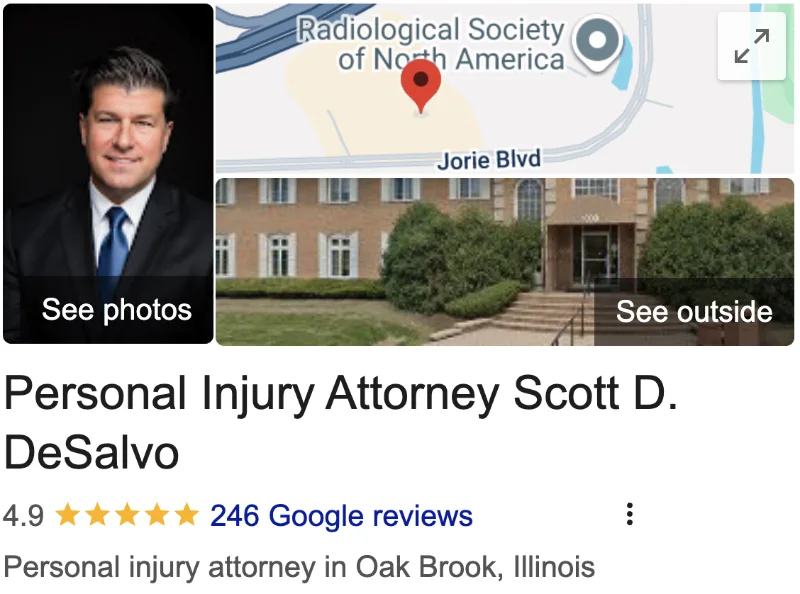
I'm Scott DeSalvo, and for almost 30 years injured workers across DuPage County have been my clients. Here's how to protect an Illinois workers' compensation claim from the start — and it costs nothing to find out what you're owed.
Illinois gives you three years to file a workers' comp claim, which sounds generous. But there's a shorter trap in front of it: you generally have to notify your employer of the injury within 45 days. Blow that notice window and you can lose the entire claim before the three years ever matters.
So report it when it happens, in writing, and keep a copy — even if you think you'll be fine in a few days. That simple step closes the door on the insurer's favorite defense and protects everything that follows.

Once a claim is open, Illinois gives you specific protections the insurance company would rather you didn't know:
You're entitled to choose your treating physician. You don't have to accept the company clinic, whose incentive is to return you to work quickly.
If the injury keeps you off the job, you're owed temporary total disability — two-thirds of your average weekly wage, and it's tax-free.
If the injury leaves permanent effects, you're owed a separate payment based on the body part and severity — the figure insurers most like to underpay.
Most workers never hear this: a job injury can sometimes support two cases. Workers' comp is your no-fault remedy against your employer, and it doesn't pay for pain and suffering. But if someone other than your employer caused the injury — a defective machine, an outside contractor, a driver who hit you while you were working — you may have a separate claim against them that can include full pain and suffering. That second claim is easy to miss and can be worth as much as the first, so I look for it early.
Two fears keep injured workers from calling, and neither survives a closer look. The cost is capped: an Illinois workers' comp attorney's fee is limited by law to 20% of the recovery, with nothing up front, and represented workers routinely net more even after the fee. And you can't be punished for filing — firing or retaliating against you for a legitimate claim is illegal in Illinois and creates a separate case.
Bottom line: comp is a right you earned, and the clock on protecting it starts the day you're hurt — beginning with that 45-day notice.

Call me and tell me what happened at work. I'll explain what you're owed, make sure your notice and paperwork are protected, flag any second claim in your case, and tell you what to do next. It's free, and you pay nothing unless I recover for you — capped at 20% by Illinois law.
I answer the phone 24/7. Call 312-500-4500.
A job injury is sometimes only part of the story. To see the full range of what I do for injured people, visit my Willowbrook Personal Injury Attorney page.
Not necessarily, but report it now, in writing. Illinois generally requires notice to your employer within 45 days, so the sooner you do it, the better. A late report gives the insurer an argument, not an automatic win — and there are often ways to explain a delay. Call me and we'll protect what we can right away.
No. In Illinois the choice of treating physician is yours. The company clinic and the insurer's examiner answer to them, not you, and often have reason to clear you before you're ready. You're entitled to care from a doctor you trust.
The fee is capped by state law at 20% of your recovery, the same everywhere, with nothing up front and nothing unless I recover for you. Because insurers so often underpay workers without a lawyer, most people come out ahead even after the fee.
No. Retaliating against you for a legitimate workers' comp claim is illegal in Illinois and gives you a separate case against your employer. It can be hard to prove, since employers rarely admit the real reason, but these cases can absolutely be won.
Yes. Illinois recognizes repetitive-trauma injuries — the carpal tunnel, back, and joint conditions that build up from repeated work over time. You don't need one dramatic accident; you need solid medical evidence tying the condition to your job.


Scott DeSalvo founded DeSalvo Law to help injured people throughout Chicago and surrounding suburbs. Licensed to practice law in Illinois since 1998, IARDC #6244452, Scott has represented over 3,000 clients in personal injury, workers compensation, and accident cases.
No Fee Unless You Win | Free Consultation | 24/7 Availability Call or Text: (312) 500-4500
>>Read More
Main Office:
1000 Jorie Blvd Ste 204
Oak Brook, IL 60523
New Cases: 312-500-4500
Office: 312-895-0545
Fax: 866-629-1817
service@desalvolaw.com
Chicago and Other Suburban Offices
By Appointment Only