
Look — the lawyer you choose after an injury changes everything. It's the difference between full, fair compensation and whatever lowball number an insurance company throws at you hoping you'll go away.
I'm Scott DeSalvo. For almost 30 years I've done one thing: fight insurance companies that undervalue injury claims, drag out payments to wear people down, and deny liability they know is real. Whether you were hit in a crash on North Avenue, hurt on the job at one of the commercial sites off Army Trail Road, or injured on someone's poorly maintained property anywhere in DuPage County, who you hire shapes whether you get justice or become another line item in an insurer's profits.
Here's the deal: the insurance company already has a team working against you. You should have someone working just as hard for you.
In Illinois you generally have two years from the date you were hurt to file an injury lawsuit (735 ILCS 5/13-202) - one year if a city, village or park district is involved (745 ILCS 10/8-101). You can still recover if the accident was partly your fault, as long as you were 50% or less to blame (735 ILCS 5/2-1116).
A phone call eight years ago changed how I approach every case I take.
Carlos was a construction worker on a commercial project in Glendale Heights, near Army Trail Road. Thirty-eight years old, four young kids, the only income his family had. One April morning, faulty scaffolding gave way and he fell two stories onto concrete.
The injuries were catastrophic — multiple spinal fractures, both ankles shattered, internal bleeding that needed emergency surgery, and a traumatic brain injury from the impact. The trauma team at Central DuPage Hospital saved his life. But the prognosis was brutal: partial paralysis, chronic pain, and no way he'd ever return to construction work.
Within three weeks, the contractor's insurance company offered him a settlement. It wouldn't have covered his existing medical bills, let alone the years of treatment ahead, the income he'd never earn again, or a lifetime of disability. And the adjuster had the nerve to blame Carlos — claiming he failed to secure his own safety equipment, even though the scaffolding was defective.
Carlos's cousin, who runs a restaurant in town, told him to call me before he signed anything. He reached my office from his hospital bed.
I went through everything — the medical records, the treating physicians, the accident photos, the equipment manufacturer's history of safety violations. The offer wasn't just low. It was insulting. So I turned it down flat and got ready to fight both the general contractor and the equipment manufacturer.
I brought in construction-safety experts who documented OSHA violations. I brought in biomechanical engineers who proved the scaffolding failed because it was defective, not because of anything Carlos did. I worked with economists to calculate a lifetime of lost earnings, and with life-care planners to price out the medical treatment and equipment he'd need for the rest of his life.
Thirty-one months later — after discovery, expert depositions, and preparation right up to the eve of trial — the case settled for an amount that secured his family's future. It covered his past and future medical care, compensated him for permanent disability and daily pain, and made sure his kids could still go to college even though their dad would never work construction again.
Carlos broke down when I called with the news. That's the job. I don't take lowball offers, I don't back off when an insurer denies liability, and I don't stop until a client gets every dollar Illinois law says they're owed.

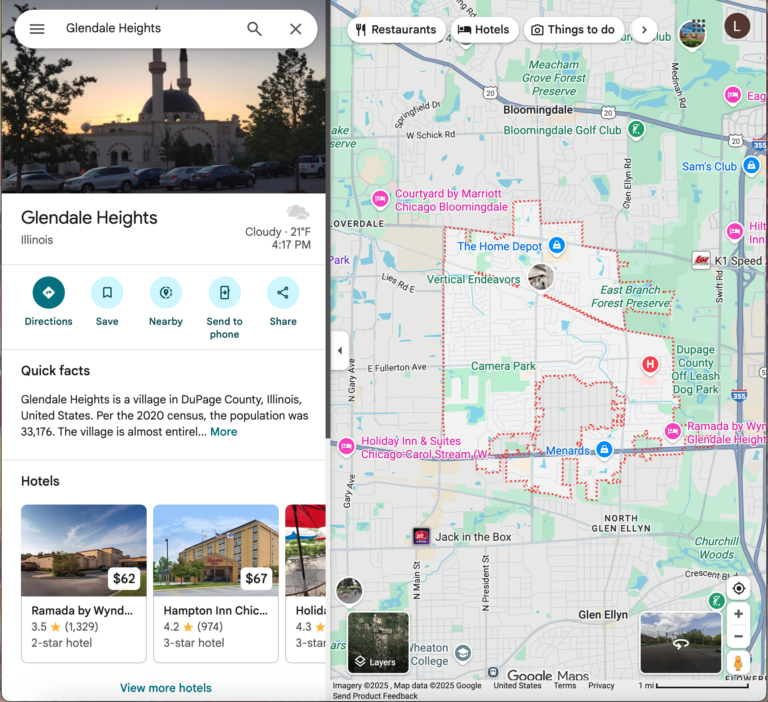
Glendale Heights isn't a generic suburb, and cases here aren't generic either. North Avenue carries heavy daily traffic and produces serious collisions. Commercial development along Bloomingdale Road and Army Trail Road brings its own crashes and premises hazards. The mix of retail, manufacturing, and distribution work creates a wide range of on-the-job injuries. And I-355 sits close enough that expressway wrecks land here regularly.
I know these patterns because I work here. I know the intersections where crashes cluster, the stretches of North Avenue where drivers speed, and the commercial lots where slip-and-falls happen. That local knowledge isn't decoration — it's how you build a stronger case and anticipate how the defense will try to knock it down.
DuPage County has its own local rules, its own scheduling quirks, and judges who each run their courtrooms a little differently. That's knowledge you only get by practicing here, in the DuPage County Circuit Court in Wheaton, year after year.
I've been in these courtrooms since 1998. I know how these judges tend to think, what the county's procedural requirements actually demand, and which defense attorneys I'm likely to face and how they operate. An out-of-town firm running a city-swap template page can't replicate that, and it shows when a case gets hard.
Most injury lawyers have never sat on the other side of the table. I have.
Early in my career I represented insurance carriers at a major defense firm. I sat in the internal meetings where they discussed how to hold payments down. I watched them set "reserves" — the ceiling they'd pay on a claim — at numbers far below what cases were actually worth. I learned their delay tactics, their pressure techniques, and exactly which arguments they lean on to avoid paying.
That experience changed everything about how I represent injured people. I can see their strategy coming before they run it, I know where they're vulnerable, and I know what forces them to move their number up. Once I understood how they really operate, I couldn't keep working for them — so I switched sides and never looked back.
My practice covers the full range of injury claims:
Glendale Heights stays busy, and that traffic produces wrecks every day. North Avenue carries huge volume. Bloomingdale Road sees frequent crashes near the commercial zones. Army Trail Road adds more, and the I-355 access points bring expressway-speed collisions into the mix.
I represent people hurt in intersection crashes, expressway wrecks near I-355, parking-lot collisions in the commercial districts, side-impact and rear-end crashes, hit-and-runs that turn into uninsured-motorist claims, and multi-vehicle pileups. These cases turn on accident reconstruction, thorough medical documentation, and hard negotiation. Without that, people routinely settle for a fraction of what their case is worth.
Glendale Heights Car Accident Attorney Lawyer
Truck cases are a different animal. They involve federal trucking regulations, layered corporate liability, and policies worth millions — which means the trucking company fights hard. I handle crashes involving tractor-trailers on the major routes through town, delivery vehicles serving the commercial districts, construction vehicles, and box trucks. Winning these depends on knowing the Federal Motor Carrier Safety Regulations cold and going after the company itself, not just the driver.
Riders and cyclists get treated unfairly the moment a case starts. Jurors sometimes carry assumptions about people on two wheels, and defense lawyers exploit that. But under Illinois law, a negligent driver is responsible no matter what the victim was riding. These crashes tend to cause severe injuries — compound fractures, brain trauma, spinal damage, road rash needing grafts — so I push back hard on victim-blaming and go after full compensation for permanent harm.
The commercial districts and neighborhoods here put a lot of people on foot, and pedestrian-vehicle crashes follow. If a driver hit you while you were in a crosswalk or on a sidewalk, you have a claim. Pedestrians have no protection in a collision, so the injuries are usually serious — and worth pursuing fully.
Glendale Heights runs on a mix of retail, manufacturing, offices, distribution centers, and healthcare — and every one of those carries its own injury risks. The Illinois Workers' Compensation Act entitles you to specific benefits after a workplace injury, but insurers routinely contest claims when no one's fighting for the worker.
My workers' comp work covers manufacturing and assembly injuries, retail accidents, distribution-center injuries, healthcare-worker injuries, repetitive-strain conditions in office settings, workplace falls, spinal injuries needing surgery, and disputes over which doctor you get to see. In Illinois, the attorney fee on a workers' comp case is capped by statute at 20%. I make sure clients get everything the law provides — treatment with a doctor of their choosing, wage replacement while they recover, and fair permanent-disability compensation.
Glendale Heights Workers Compensation Lawyer
These cases require proving the property owner knew, or should have known, about a dangerous condition and didn't fix it. Owners in Glendale Heights — big commercial sites, small shops, and landlords alike — have to keep their property reasonably safe. When they don't, and a slick floor, broken stairway, bad lighting, or un-cleared ice causes an injury, they're liable. The catch: owners repair the hazard right after someone gets hurt and then deny it ever existed. That's why moving fast to preserve evidence is everything.
Glendale Heights Slip and Fall Lawyer
When a healthcare provider falls below the accepted standard of care and a patient gets hurt, that's malpractice. I handle surgical errors, missed or delayed diagnoses, birth injuries, medication and prescription errors, hospital-acquired infections, ER negligence, and anesthesia errors. These cases demand real resources — expert physician testimony, exhaustive record review, and often years of litigation. A lot of lawyers won't touch them. I take them when the evidence supports the case. The fee on a medical malpractice case in Illinois is 33⅓%.
Glendale Heights Medical Malpractice Lawyer
Few things are harder than learning someone you love was hurt in a facility that was supposed to care for them. I've handled pressure ulcers caused by staff who failed to reposition residents, dehydration and malnutrition from plain neglect, and physical abuse by people who never belonged in elder care. If your family member was harmed in a DuPage County nursing facility, call me — these cases take real legal skill and I treat the families the way I'd want mine treated.
Glendale Heights Nursing Home Injury Lawyer
Losing a family member to someone else's negligence is a grief nothing repairs. Illinois wrongful death law gives families a way to pursue justice and accountability. These claims come out of fatal crashes, malpractice, workplace deaths, nursing-home neglect, and any negligence that takes a life. I handle them with the seriousness and respect grieving families deserve, and you don't go through it alone.
Glendale Heights Wrongful Death Lawyer
Some injuries change a life permanently — traumatic brain injuries that affect memory and personality, spinal cord damage that causes paralysis, amputations, severe burns needing years of reconstruction. Full compensation in these cases reaches far past the obvious bills. It has to account for a lifetime of medical care and therapy, home and vehicle modifications, lost future earning capacity, permanent pain, lost enjoyment of life, the strain on marriage and family, mental-health treatment, and ongoing equipment needs.
This is where my trial training matters. I'm a graduate of Gerry Spence's Trial Lawyers College and the Keenan Trial Institute — two separate, demanding programs that very few attorneys complete. I did that training specifically to handle complex, high-stakes injury cases and get the maximum recovery for the people I represent.
In Illinois you generally have two years from the date of injury to file a personal injury lawsuit. Workers' comp gives you three years — but you also have to notify your employer within 45 days of the injury. Two years sounds like plenty. It isn't. Evidence disappears, memories fade, and insurers only get more stubborn as time passes.
Miss the deadline and the case is gone — no recovery, Deadlines are strict once run, but the running is subject to minority, legal disability, the discovery rule and fraudulent concealment.
A lot of people think medical bills are the only thing they can claim. That misunderstanding costs them dearly. Illinois law lets you recover a lot more: past and future medical expenses, lost income, lost earning capacity if you can't return to your old work, physical pain and suffering, emotional distress, loss of a normal life, permanent disability, scarring and disfigurement, loss of consortium, rehabilitation costs, and the cost of assistive devices and home modifications. The insurance company will never volunteer that list. That's my job.
Here's the pattern: you get hurt, and within days — sometimes hours — a friendly adjuster calls, sounds sympathetic, and offers to settle right now. It feels convenient. It's designed to be.
Early offers come in far below what a case is worth, because insurers know injured people are under financial pressure and are betting you'll take a quick check without talking to a lawyer. And once you sign their release, you've given up every right to more money — even if your injuries turn out to be far worse than anyone realized.
So sign nothing first. Don't accept a verbal offer. Don't give a recorded statement. Call me for a free, honest read on what your case is actually worth.



When you call, here's exactly how it goes: you tell me what happened, on your schedule. I listen. I answer every question straight. I give you my honest read based on almost 30 years of doing this. Then you decide whether to hire me — no pressure either way — and we part on good terms no matter what you choose. I don't chase people and I don't do the hard sell.
The moment you hire me, the work starts, because evidence has a shelf life. I get the police reports, interview witnesses before memories fade, photograph the scene before it changes, gather your medical records, review every applicable insurance policy, bring in experts when the case needs them, and send preservation demands to anyone holding evidence. My office runs on case-management software I built myself, which means we move faster and catch important details earlier than firms working off the shelf.
Your health comes before the case, always. I'll help you get the right medical care and make sure it's fully documented. If you have health insurance, use it. If you don't, I can connect you with providers who treat on a lien — they wait to be paid until the case resolves. Either way, thorough documentation is what proves the true extent of your injuries.
Once your treatment wraps up, I calculate the full value of the case and send the insurance company a documented demand. Almost 30 years of negotiating injury cases tells me what a claim is really worth, and I don't take offers that fall short or fold when negotiations get tough. Most of my cases settle — but that's the result of hard, strategic negotiation, not caving.
If the insurance company won't be reasonable, I file suit without hesitation. Plenty of lawyers avoid the courtroom. I don't — I've tried cases to verdict in front of DuPage County juries, and I'm ready to do it on yours. Insurers know which lawyers will actually try a case, and it changes how they value your claim.
Whether your case ends in a settlement or a verdict, the goal never changes: every dollar you're legally owed. When we win, my contingency fee and the costs I advanced come out of the recovery, and the rest — usually the large majority — goes to you. If we somehow lose, you owe me nothing. That's what a contingency fee means.
Find Out What YOUR Case Might Be Worth...for free.
Even if you feel fine right after an accident, see a doctor right away. Many serious injuries don't produce obvious symptoms for days or weeks.
Treatment delays let insurance companies argue you weren't actually injured. Prompt care shuts that argument down before it starts.
Insurance adjusters call shortly after an accident asking for a recorded statement. Don't give one.
Not until you've talked to me first.
These are trained professionals who know how to elicit case-damaging answers. Politely tell them you need to speak with your lawyer first, then call me.
Insurance companies hire investigators to monitor injured claimants' social media on every platform. They are hunting for something they can use against you, and they usually find it.
The safest approach is complete silence until the case resolves. At minimum, avoid posting anything about your accident, your injuries, your medical treatment, or your activities.
An insurance company's first settlement offer is always well below fair value. After twenty-seven years, I can spot one in a minute.
Before you accept anything, call me for a free consultation. I'll tell you honestly whether the offer is fair or exploitative, based on what cases like yours have actually settled for.
The at-fault party's insurance company is not your ally, which is why I handle all communication with them. Their only objective is paying you as little as possible, and I know how to counter it.
Don't talk to them directly. Let me deal with them and protect your rights.
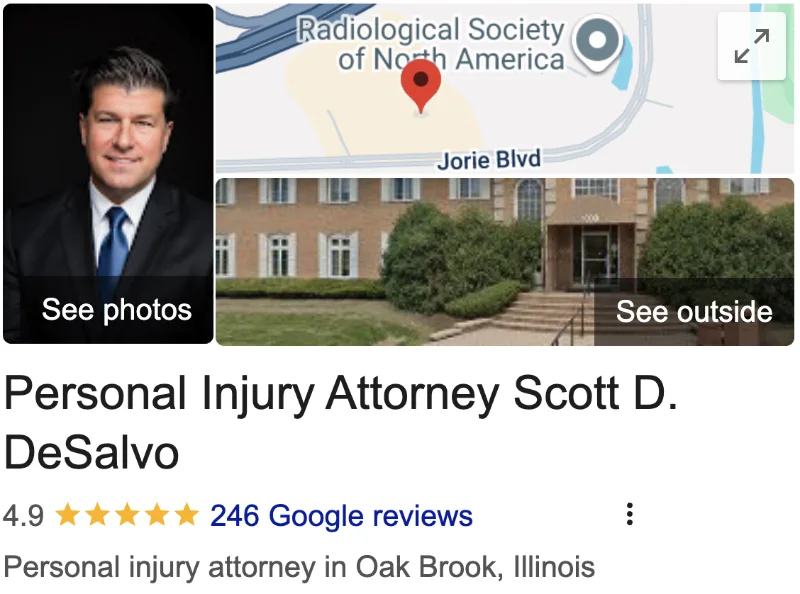
This attorney's office is conveniently located at 1000 Jorie Blvd, Ste 204, Oak Brook, IL 60523.
Whether residing in Glendale Heights itself or nearby DuPage County communities including:
This attorney is here helping you achieve justice.
This attorney understands traveling to law offices can be difficult when seriously injured. If office visits prove impossible, this attorney will come to you. We can meet at your home, convenient locations, or even hospitals throughout DuPage County.
The goal is making this process manageable during difficult times.

Injuries in Glendale Heights or anywhere in DuPage County demand immediate action from a Glendale Heights Personal Injury Attorney before critical evidence disappears.
Telephone this attorney now for your completely free consultation. I'm is available 24/7/365.
Calling, initiates:
Remember: no money from your pocket, no fees unless we win.
You have everything gaining and nothing losing by calling this attorney.
Don't allow insurance companies exploiting you during vulnerability. Get an experienced attorney genuinely caring about your outcome fighting for you.
Your fight becomes my fight.
Telephone us now: (312) 500-4500
I looks forward to hearing from you and learning how I can help achieve justice.


Most personal injury cases allow two years from injury dates—deadlines I carefully track and manage. Workers' compensation permits three years, though requiring employer notification within 45 days that your attorney ensures you meet.
Exceptions can modify these rules, making immediate consultation critical for deadline protection. Missing deadlines means permanent loss with no recovery possibility.
Nothing from your pocket to hire me. I work exclusively on contingency, receiving payment only if you receive compensation first.
Workers' compensation carries 20% fees (state law) for your attorney. Personal injury is 33 1/3%, or 40% if litigation becomes necessary. Medical malpractice is 33 1/3%.
Losing means you pay me nothing—you owe zero regardless of case outcome.
Not necessarily—consult me immediately to assess damage. Sometimes statements don't significantly harm cases. Other times they create substantial problems requiring experienced attorney damage control.
Contact me immediately so I can review what you said and determine the best path forward. Provide no additional statements without speaking with me first.
Yes—I can explain Illinois's "modified comparative negligence" rule thoroughly. Illinois follows modified comparative negligence under 735 ILCS 5/2-1116. If you are 50% or less at fault you recover, with damages reduced by your percentage. At 51% or more you recover nothing.
For example, being 45% at fault with $500,000 damages means recovering $275,000 with proper attorney representation and negotiation.
Don't let a lack of insurance prevent necessary medical care. Healthcare providers exist treating on lien bases, receiving payment from eventual settlements arranged by your attorney.
It varies based on numerous factors your attorney evaluates during initial consultation. I have settled straightforward cases within months, while complex cases have taken two years or longer.
Timeline depends on factors your attorney considers:
I push every case as aggressively as possible toward fair resolution.
Possibly not—approximately 90% of my cases settle without trial.
Filing lawsuits might require appearing 2-3 times for proceedings like depositions that your attorney prepares you for thoroughly. Proceeding to trial requires presence for entire trial duration in DuPage County courthouse.
However, most cases handled by me resolve through favorable settlement negotiations.
Prior injuries don't automatically destroy cases—your attorney can still pursue "exacerbation" claims successfully. Law recognizes claims for worsening of pre-existing conditions under Illinois statutes that I enforce.
Complete honesty with your attorney about prior injury history is essential for effective case strategy. Insurance companies will discover this information regardless through medical records review.
No—which is why your attorney can also handle retaliatory discharge cases when this occurs. Federal and Illinois state laws explicitly prohibit employers terminating or retaliating against employees filing legitimate workers' compensation claims that your attorney protects.
Proving illegal retaliation can be challenging, but I regularly handle these cases and understand how to prove them successfully.
You might still recover through your own uninsured motorist (UM) or underinsured motorist (UIM) coverage—something your Glendale Heights Personal Injury Attorney will investigate thoroughly. This optional coverage protects you when at-fault drivers lack adequate insurance coverage.
Many people don't realize having this coverage until their Glendale Heights Personal Injury Attorney reviews policies meticulously identifying all possible recovery sources.

Scott DeSalvo founded DeSalvo Law to help injured people throughout Chicago and surrounding suburbs. Licensed to practice law in Illinois since 1998, IARDC #6244452, Scott has represented over 3,000 clients in personal injury, workers compensation, and accident cases.
No Fee Unless You Win | Free Consultation | 24/7 Availability Call or Text: (312) 500-4500
>>Read More
Main Office:
1000 Jorie Blvd Ste 204
Oak Brook, IL 60523
New Cases: 312-500-4500
Office: 312-895-0545
Fax: 866-629-1817
service@desalvolaw.com
Chicago and Other Suburban Offices
By Appointment Only