Workers Comp Denied Claim Lawyer Chicago
Workers Comp Denied Claim Lawyer Chicago Tell Me Your Situation... All info is private. We will review your options and reach out to you. Full Name* Email* Phone* Approx. Date…






Here's the situation.
You got hurt at work somewhere in Chicago—maybe at a construction site in River North, nursing at Northwestern Memorial, driving a truck through O'Hare, working a warehouse in Clearing, serving tables on the South Side, stocking shelves in the Loop, whatever job pays your bills.
Could've been a fall. Could've been lifting something that blew out your back. Could've been faulty equipment. Could've been another worker's screw-up. Doesn't matter how it happened.
What matters is you're hurt, can't work, and you're wondering who's paying your bills while you recover.
I'm going to tell you something that'll piss you off: The insurance company is already building a case against you. Right now. While you're sitting at home in pain, they're looking for ways to deny your workers' compensation claim or pay you pennies on the dollar.
That's how this game works. After representing injured Chicago workers since 1998, I know every trick they pull.
My name's Scott DeSalvo, and I'm a Chicago workers compensation lawyer. I've been doing this for over 25 years. I've handled close to a thousand work injury cases from all over the city and Cook County.
Here's what I do: I fight to get you every dollar Illinois law says you're entitled to. And you don't pay me one cent unless I win your case. Not one penny.
You can call me right now—literally any time, day or night—and we'll talk about what happened and what we need to do next.
Sound fair?
"Scott is absolutely fantastic. He will always go the extra mile for his clients. They always take the time to return phone calls at all hours and I highly recommend him to all my friends."
-Melissa Brooks
"Great people and Scott's a great lawyer. They helped me make the wisest decision for my case, and that's important in serious legal matters. I trust him completely. He is the one to call."
-Tony Skvarenina
"Beyond satisfied with the services I received from this law firm. Definitely recommend! They got me fully paid and all the doctor bills, too. If you want the best, this is the law firm for your injury case!"
-Cynthia Rodriguez
"Scott represented me and I was really pleased with everything, my car accident paid a lot and quick. If you want a good Lawyer who is responsive, and straight with you, I highly recommend him."
-Greg Garcia
I could give you some polished marketing BS, but that's not my style. Here's the truth.
When I was nine years old, my father got catastrophically injured at work. He was a truck driver. Teamster. Union guy. Hard worker who provided for our family.
One day he got hurt bad enough that he couldn't work anymore. Those injuries to his neck, back, and spine were permanent. Changed everything for us. We struggled. Bills piled up. And his workers comp case dragged on for 17 goddamn years.
Seventeen years of insurance companies jerking him around. Seventeen years of lawyers who didn't give a damn about him. And at the end of it all? His own attorney sued him to squeeze more money out of his settlement.
That experience—watching what happened to my father and our family—is why I do this work. I represent injured workers exclusively. I never, ever represent insurance companies or employers. Only the people who got hurt and need someone to fight for them.
When you hire me, you're getting someone who takes this personally. Because I've seen what happens when injured workers don't have a real advocate in their corner.

Let me tell you about the kinds of cases that come through my door from all over Chicago.
Chicago's construction boom means thousands of workers face daily risks on job sites from the Loop to Lincoln Park, River North to the South Loop. Construction work is dangerous as hell:
Falls from scaffolding, roofs, and ladders. I've represented ironworkers, roofers, carpenters who fell multiple stories. These cause catastrophic injuries or death.
Crane and equipment accidents. Heavy machinery doesn't care if you make a mistake.
Trench collapses and excavation injuries. Getting buried alive is every construction worker's nightmare.
Electrical accidents on construction sites. Burns, electrocution, permanent nerve damage.
Struck-by accidents—falling objects, swinging equipment. I've seen workers killed by falling debris at Loop construction sites.
Demolition and renovation injuries in Chicago's older buildings.
Real Result: $430,000 settlement for an ironworker who fell from scaffolding at a River North construction site, suffering severe back and shoulder injuries requiring two surgeries.
Real Result: $265,000 for a carpenter in Pilsen who suffered traumatic brain injury when struck by falling debris at a West Loop job site.
Construction cases get complicated because multiple contractors might be involved. You need a lawyer who understands how these cases work and can identify all potential sources of compensation.
These are hands-down the most common workplace injuries in Chicago. I see them every single week from workers in every industry—warehouses in Clearing, hospitals in Streeterville, offices in the Loop:
Herniated and bulging discs in your back. Excruciating pain that shoots down your legs.
Torn rotator cuffs in your shoulder. Makes it impossible to lift your arm.
Shoulder impingement and labral tears. Constant grinding pain that doesn't go away.
Spinal cord injuries. These can be catastrophic and permanent.
Degenerative disc disease aggravated or accelerated by work. Insurance companies love claiming this is "pre-existing," but if work made it worse, you've got a claim.
Chronic pain and permanent work restrictions that change your life forever.
Real Result: $195,000 settlement for a warehouse worker in Clearing who suffered three herniated discs lifting heavy boxes at a UPS facility.
Real Result: $340,000 for a nurse at Northwestern Memorial Hospital in Streeterville who developed severe back injuries from repeatedly lifting and transferring patients.
Back and shoulder injuries don't heal overnight. You need ongoing treatment, sometimes surgery, often permanent restrictions on what you can lift or how you can move. That's why these settlements can be substantial.
Chicago is one of the biggest transportation hubs in the country. Truck drivers, delivery drivers, and transportation workers face serious risks:
Loading and unloading injuries. Lifting packages, furniture, heavy supplies all day destroys your back.
Accidents on highways—I-90, I-94, I-294, I-55, I-57. Car accidents while driving for work are covered by workers comp.
Slip and fall accidents at loading docks and truck stops. Ice and snow in Chicago winters make this worse.
Repetitive stress injuries from long hours behind the wheel. Your back, neck, and shoulders take a beating.
Back injuries from sitting in trucks for 10-12 hours a day. Sitting is actually terrible for your spine.
Shoulder injuries from climbing in and out of cabs dozens of times per day.
Real Result: $285,000 for a truck driver injured in a loading accident at a warehouse near Midway Airport.
Real Result: $175,000 for a FedEx driver who suffered severe shoulder and neck injuries in a rollover accident on the Kennedy Expressway near the O'Hare exits.
Driver injuries get tricky with workers comp versus regular auto insurance. You really need someone who knows how to navigate this and make sure you're getting all the benefits you're entitled to.
Not all work injuries happen in one dramatic accident. Some develop over months or years from doing the same motions over and over:
Carpal tunnel syndrome. Your hands go numb, you drop things, eventually you need surgery.
Tendonitis and tennis elbow. Constant inflammation from repetitive motions.
Trigger finger. Your finger literally gets stuck and won't straighten out.
Rotator cuff injuries from repetitive overhead work. Painters, electricians, warehouse workers—anybody reaching overhead constantly.
Back strain from repetitive lifting. Your back doesn't blow out in one moment—it degenerates over time from constant abuse.
Knee injuries from constant kneeling or climbing. Flooring installers, plumbers, roofers—your knees get destroyed.
Real Result: $125,000 for an Amazon warehouse worker who developed severe bilateral carpal tunnel syndrome from repetitive scanning and packing.
These cases are tricky because insurance companies fight like hell, arguing your injury isn't really work-related. They'll claim it's from your hobbies, your age, genetics, anything except work. I know how to prove these claims and win under the Illinois Occupational Diseases Act.
Exposure to hazardous materials or conditions at work can cause serious illnesses that develop over time:
Asbestos exposure and mesothelioma.
Chemical exposure injuries and burns.
Hearing loss from workplace noise.
Respiratory illnesses from dust, fumes, or chemicals.
Occupational cancers.
Lung disease from toxic exposure.
Under the Illinois Occupational Diseases Act, you may be entitled to benefits even if your symptoms didn't appear until years after the exposure. These cases require a Chicago workers' comp lawyer who knows what they're doing.
Chicago has some of the best hospitals in the country, and healthcare workers get hurt constantly:
Where I've represented workers: Northwestern Memorial, Rush University Medical Center, University of Chicago Medical Center, Advocate Christ, Stroger Hospital (Cook County Health), Mount Sinai, Swedish Covenant, Illinois Masonic, and dozens of other Chicago hospitals and clinics.
Common injuries: Back injuries from lifting patients—nurses destroy their backs lifting and transferring patients who weigh 200, 300 pounds. Needle sticks and exposure to bloodborne pathogens. Patient assaults—I've represented nurses who got punched, kicked, bitten by violent patients. Slip and falls in hospital hallways. Repetitive stress injuries. Chemical exposure.
Healthcare workers face unique challenges in workers' comp claims. Hospitals have aggressive insurance companies and often try to blame the injured worker for not following proper lifting protocols or safety procedures. I fight back hard.
E-commerce means massive warehouses all over Chicago and the suburbs. Warehouse work is brutal on your body:
Where I've represented workers: Amazon facilities throughout Chicago and suburbs, Target distribution centers, UPS hubs, USPS facilities, private warehouses in Clearing, Bedford Park, Bridgeview, throughout Cook County.
Common injuries: Forklift accidents—getting hit by a forklift or falling off one can kill you. Falling merchandise from high shelves. Repetitive stress injuries from scanning thousands of items per shift. Loading dock falls. Back and shoulder injuries from constant heavy lifting. Crushed hands and feet from dropped boxes or pallets.
Warehouse employers push productivity so hard that safety gets ignored. Workers are pressured to move faster, lift more, skip breaks. That's how people get hurt.
Factory workers at plants throughout Cook County and Chicago face serious hazards:
Machinery accidents and equipment malfunctions.
Chemical exposure from industrial processes.
Crush injuries from heavy equipment.
Repetitive motion injuries from assembly line work.
Amputations from saws and cutting equipment.
Burns from industrial processes.
Manufacturing injuries can be catastrophic. I've represented workers who lost fingers, hands, suffered severe burns, or developed chronic respiratory problems from chemical exposure.
H3: Retail Workers Throughout Chicagoland
Grocery stores, big-box retailers, shopping malls from Michigan Avenue to neighborhood stores—retail workers get hurt:
Slip and falls on wet floors or spilled merchandise. I see these constantly, especially in winter when people track in snow and ice.
Customer assaults—unfortunately common in retail.
Lifting injuries from moving merchandise and stocking shelves.
Repetitive stress from cashier work. Scanning items, handling heavy bags, standing on hard floors for 8-10 hour shifts destroys your back, legs, and hands.
Back injuries from stocking shelves. Heavy boxes, awkward positions, reaching overhead—it adds up over time.
Chicago's restaurant scene means thousands of food service workers facing daily hazards:
Slip and fall accidents on greasy kitchen floors. I've seen broken wrists, shattered ankles, head injuries. Restaurants are supposed to keep floors clean and dry, but when you're slammed during dinner rush, that doesn't always happen.
Burns from grills, ovens, fryers, and hot liquids. Grease burns are nasty and cause permanent scarring.
Cuts from knives and slicers. Sometimes minor, sometimes severe enough to cause nerve damage or loss of function.
Back injuries from lifting heavy food supplies, cases of beverages, bags of flour or rice. This stuff adds up over time.
Repetitive motion injuries from constant food prep work. Your hands, wrists, and shoulders take a beating.
Restaurant owners often pressure injured workers to keep working or not report injuries because they're worried about insurance rates. Don't fall for that. File your claim.
Even Chicago office workers in the Loop, River North, and downtown get hurt:
Carpal tunnel syndrome and repetitive stress injuries from typing and computer work. Your hands, wrists, and forearms get destroyed from typing 8-10 hours a day.
Back and neck injuries from poor ergonomics and sitting. Sitting for long periods is terrible for your spine and posture.
Slip and fall accidents in parking lots, stairways, or bathrooms.
Injuries from defective office furniture or equipment.
Real Result: $85,000 for a Loop office worker who developed severe carpal tunnel syndrome requiring surgery on both hands.
Office injuries don't get taken as seriously as they should, but chronic pain from repetitive stress can be just as debilitating as more dramatic injuries. You still can't work. You still need treatment. You still deserve compensation.
City workers—streets and sanitation, water department, parks district—face unique challenges:
The City of Chicago is self-insured, which creates different procedures than private employer claims. City workers' comp claims are handled differently and require a lawyer who understands how the City's self-insurance system works. I've represented dozens of City employees throughout all Chicago neighborhoods and know how to navigate the City's system and fight for municipal workers.
H3: O'Hare and Midway Airport Workers
Airport workers at O'Hare International Airport and Midway International Airport face serious risks:
Baggage handler injuries from lifting heavy luggage all day. Back injuries, shoulder injuries, hernias—it's brutal physical labor.
Ramp worker accidents—aircraft ground equipment is dangerous.
Security staff injuries and assaults.
Maintenance crew accidents.
Ground transportation worker injuries.
Slip and falls on wet ramps or icy pavement. Chicago winters make airport work even more hazardous.
Airport cases can be complex because multiple employers and contractors may be involved. I've handled numerous O'Hare and Midway injury cases and know how to navigate these complicated claims.
Public transportation workers throughout Chicago and suburbs face unique hazards:
Bus and train accidents while operating vehicles.
Assaults by passengers. CTA drivers get attacked more often than people realize—punched, spit on, threatened with weapons.
Repetitive stress injuries from driving routes daily.
Slip and falls at stations or on vehicles.
Back injuries from sitting and driving for hours. Bus and train seats aren't designed for 8-10 hour shifts.
CTA workers' comp claims involve public employer issues similar to City of Chicago cases. These require experienced representation.
After 25 years fighting these insurance companies, I've seen all their tricks. Here's what they do to injured Chicago workers.
The Recorded Statement Trap
They'll call you right after your injury, acting all friendly and concerned. "We just need to get your statement about what happened." Sounds reasonable, right?
Wrong. That recorded statement is a trap. They're looking for anything you say that they can twist to deny your workers' compensation claim. "I wasn't paying attention for a second" becomes "He admits he was negligent." "My back's been a little sore lately" becomes "Pre-existing condition."
Don't give them a recorded statement without talking to me first. Seriously. Call me before you talk to them.
The Delay Tactic
Insurance companies figured out decades ago that desperate people accept bad settlements. So they drag things out intentionally. They "need more information." They're "reviewing your file." They're "waiting for records."
Meanwhile, you're not getting paid. Bills are stacking up. Rent's due. You need groceries. Car payment's late.
Then they offer you $3,000 to settle when your case is worth $30,000. And because you're broke and desperate, you might take it.
That's why I exist. To push these cases forward and make sure you don't get taken advantage of when you're vulnerable.
The Pre-Existing Condition Lie
Here's their favorite scam: "Your injury was pre-existing. "
Even if you've never had a problem with that body part in your entire life, they'll claim it. They'll dig through your medical records looking for anything—anything at all—they can point to.
Got a sports injury in high school 20 years ago? Pre-existing. Mentioned back stiffness at a physical once? Pre-existing. Tweaked your shoulder moving furniture five years ago? Pre-existing.
But here's what they don't tell you: Illinois law says that even if you had a pre-existing condition, if work aggravated it, worsened it, or accelerated it, you still have a valid workers' compensation claim. And I've won those cases over and over.
The Company Doctor Scheme
They'll send you to "their" doctor for an examination. This doctor is being paid by the insurance company—sometimes hundreds of dollars per exam—and guess what they always say?
"Nothing wrong with him. He can go back to work."
Even when you can barely stand. Even when your own doctor says you need surgery. The insurance company doctor magically finds nothing wrong.
I know which doctors the insurance companies use in the Chicago area. I know their histories. I know their bias. And I know how to fight their bogus reports at workers' comp hearings.
The Pressure to Settle Fast
When you're injured and broke, any money sounds good. They know this. So they offer you a quick settlement—way less than what you deserve—and pressure you to sign fast before you have time to think about it or talk to a lawyer.
Once you sign that settlement and release, you're done. You can't come back later when you realize your injury is worse than you thought or you need more surgery.
Never sign anything the insurance company sends you without showing it to me first. Ever. I don't care if they say it's "just paperwork" or "routine forms." Show me first.
Most Chicago workers have no clue what they're actually entitled to under Illinois workers' compensation law. The insurance companies are betting on your ignorance. Let me educate you.
Every medical expense related to your work injury should be covered 100%. And I mean everything:
Emergency room visits at Northwestern Memorial, Rush, University of Chicago, Advocate Christ, anywhere.
Hospital stays and surgery.
Doctor appointments—and you get to choose your own doctor after the initial company exam.
Physical therapy and rehabilitation.
Medications and prescriptions.
Medical equipment like crutches, braces, wheelchairs.
Diagnostic tests—X-rays, MRIs, CT scans.
Chiropractic care if medically necessary.
Mileage reimbursement for driving to appointments. Whether you're driving from Pilsen to Streeterville, or Austin to Oak Brook for physical therapy—you get paid for every mile.
No co-pays. No deductibles. 100% covered by workers' comp insurance.
If they're refusing to pay for treatment your doctor says you need, call me immediately. That's illegal under Illinois law and I can fix it.
If your doctor takes you completely off work, you get temporary total disability benefits—TTD for short. That's two-thirds of your average weekly wage, paid every two weeks until you can return to work or reach maximum medical improvement.
These checks are supposed to start within 14 days of your injury being reported and you being taken off work. If they don't start on time, the insurance company owes you penalties.
A lot of Chicago workers wait months for their first TTD check because they don't know any better and don't have a lawyer pushing the case. That's illegal. I can get that fixed immediately.
When you're done with treatment but you still have permanent problems—chronic pain, limited range of motion, can't lift as much as before, permanent restrictions—you're entitled to permanent partial disability benefits.
The amount depends on what body part was injured and the severity of your permanent restrictions. This is where having a good Chicago workers' comp lawyer really matters because I fight to maximize your disability rating, which directly affects your settlement amount.
For catastrophic injuries that prevent you from ever working again, permanent total disability benefits can provide compensation for the rest of your life.
Can't do your old job anymore because of your permanent restrictions? You might be entitled to vocational rehabilitation or retraining benefits to learn a new trade or skill.
And if you have to take a lower-paying job because of your work limitations, we can fight to get you "wage differential" benefits—compensation for the difference between what you used to make and what you can make now. Over the course of your working life, that can add up to serious money.
If your work injury left you with serious scarring or disfigurement on your head, neck, hands, arms, or legs, you can receive additional compensation for that under Illinois law.
Burns, lacerations, amputation scars—these all qualify for disfigurement awards



Look, I'm not going to tell you I'm the only good workers' comp lawyer in Chicago. That would be ridiculous. There are other good lawyers out there.
But I will tell you this: I'm a different kind of workers' comp lawyer. And here's why.
When I was nine years old, my father was catastrophically injured at work. He was a truck driver and a Teamster. Still a young man at the time. But that injury took everything from him—his ability to work, his income, his health, his future.
The injuries to his neck, back, and spine were permanent. They changed his life forever. He was never the same.
After being hurt, my father hired the wrong personal injury law firm to handle his case. They were rude to him. Didn't explain things. Didn't return his calls. They didn't pursue his third-party case, leaving money on the table without even telling him about it.
His workers' comp case dragged on for 17 years. Seventeen years. And at the end of those 17 years of being jerked around by the insurance company, you know what happened?
His own lawyer sued him. His own lawyer wanted more money from my dad's settlement.
That experience—watching what happened to my father and our family—shaped who I am as a lawyer. It's why I do what I do. It's why I became a Chicago workers' comp lawyer in the first place.
I decided right then that if I ever became a lawyer, I would treat injured workers differently. With honesty. With care. With respect. Like family.
That's exactly how I run my practice today. Your fight is my fight.
Most lawyers do the bare minimum required continuing education. A few hours a year. Watching videos online. Checking boxes.
Not me.
I've spent over $100,000 of my own money—and hundreds of hours—flying across the country to train with the best trial lawyers in America. I did it for one reason: so you get the very best, most cutting-edge representation possible.
Here's some of the elite training I've completed:
This isn't stuff most lawyers even know exists. But I do it because you deserve a Chicago workers' comp lawyer who knows what the hell he's doing.
Some lawyers represent injured workers on Monday and defend insurance companies on Tuesday. Not me. Ever.
I have never represented an insurance company. Not once. Not ever. And I never will.
I only represent injured people. That means I'm 100% on your side. Always. No conflicts. No divided loyalties. Just me fighting for you against the insurance company.
A lot of lawyers only want the big, easy cases. The million-dollar settlements. The slam dunks.
I take the tougher cases too. The denied claims. The disputed injuries. The cases where the insurance company is playing hardball.
Why? Because those are often the workers who need help the most. And because I know how to win those cases.
My office is at 1000 Jorie Blvd, Ste 204, Oak Brook, IL 60523—it's where the top personal injury and workers' comp lawyers in Chicago have their offices.
Why does this matter?
Because my office is literally across the street from the Workers' Compensation Commission and the courthouse. The insurance companies know that. They know I can afford the expensive downtown rent. And they know I'm ready, willing, and able to fight and go to court on your case if there are any problems.
I settle about 90% of my cases quickly for my clients. But that other 10%? We go to court. We try cases. We fight. And insurance companies know that about me.
When you call my office, you're not going to get shuffled around to a paralegal who doesn't know your name. You're not going to leave messages that don't get returned. You're not going to wonder where your case stands or what's happening.
Here's my promise to you: we treat all injured workers with honesty, care, and respect. We return phone calls. We answer questions. We explain things in plain English, not legal mumbo-jumbo. We keep you informed every step of the way.
Because that's how I would want to be treated if I were hurt. That's how my father should have been treated. And that's how you deserve to be treated.

I see injured workers make the same mistakes over and over. Here's how to avoid them:
Report your work injury to your employer immediately—the same day if possible. Delays give insurance companies ammunition to deny your claim. They'll argue you weren't really hurt at work or it must not be that serious if you waited.
Don't give them that opening. Report it now. Today.
Go to the doctor immediately after your work injury. Don't wait. Don't "see how you feel tomorrow." Don't try to tough it out.
Gaps in medical treatment suggest to the insurance company that your injury isn't serious. They'll use that against you at every turn.
The insurance adjuster will call you. They'll sound friendly and concerned. They'll ask if you can just answer "a few quick questions" and maybe record the conversation "for their records."
Don't do it. Don't talk to them. Don't give a recorded statement.
Everything you say can and will be twisted against you. Call me first—day or night, 24/7/365—before you talk to any insurance adjuster.
The insurance company's first offer is almost always way too low. Always. They're testing you to see if you know what your case is worth.
Don't accept the first offer. Let me review it. Let me tell you what your case is really worth based on my experience handling thousands of workers' comp claims in Chicago.
I know this sounds paranoid, but trust me: the insurance company is watching your Facebook, Instagram, Twitter, and TikTok. They're looking for any photos or posts that make you look healthy, active, or happy.
Don't post anything about your injury, your activities, or your life while your workers' comp claim is pending. Just stay off social media entirely if you can.
Workers' compensation law in Illinois is complex. The Illinois Workers' Compensation Act is hundreds of pages long. The rules and regulations fill entire books. There are deadlines, procedures, legal standards, and court decisions that affect your case.
You wouldn't try to perform surgery on yourself, right? Don't try to handle your own workers' comp case.
Having an experienced Chicago workers' comp attorney levels the playing field against insurance companies with entire teams of lawyers working against you.
Find Out What YOUR Case Might Be Worth...for free.
Under the Illinois Workers' Compensation Act, you have important legal rights. Here they are:
These aren't just words on paper. These are real rights protected by Illinois law. And I fight every single day to make sure injured workers get them.
Look, if you've been injured at work anywhere in Chicago or the surrounding suburbs, don't wait another day to protect your rights. The insurance company has lawyers working for them from day one. You need someone fighting for you.
I mean it when I say 24/7/365. Your work injury doesn't wait for business hours, and neither do I.
If you're lying awake at 3 AM worried about your workers' comp claim, pick up the phone and call me. If you get hurt on a Sunday, call me. If you have questions on Christmas Eve, call me.
I'm available anytime because that's when you need help.
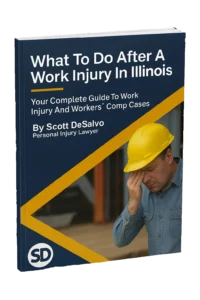
Get Your FREE Copy of...
Your complete guide to work injury and Workers Comp to give you everything you need to know if you or a loved one has been hurt at work.

Here's the bottom line: insurance companies count on injured workers not knowing their rights. They count on you being scared, confused, and overwhelmed. They count on you giving up or accepting whatever they offer.
Don't be that person.
Don't let them take advantage of you. Don't accept a lowball settlement. Don't try to navigate this complex system alone.
Call Scott DeSalvo Law now for your free consultation.
Let's talk about what happened to you. Let's talk about your injuries and your medical bills and your lost wages. Let's talk about what your case is really worth under Illinois workers' compensation law.
And then you can decide if you want to hire me or not. Your choice. No pressure. Either way, we end up as friends.
Sound good?
Call (312) 500-4500 anytime, day or night.
Or if you're not quite ready to talk yet, that's okay too. Fill out this form and tell me about your situation. I'll get back to you personally—not some assistant or paralegal. Me.
I look forward to hearing from you and learning about your work injury and what I can do to help.
Your fight is my fight. Let's win this thing together.

Here's the good news: you don't pay anything upfront. Nothing. Zero. I work on what's called a "contingency fee," which means I only get paid if I win your case.
In workers' compensation cases in Illinois, my attorney fee is set by state law at 20% of your settlement or award. That's it. The insurance company actually pays my fee separately—it doesn't come out of your money.
And if I don't win your case (which almost never happens), you don't pay me anything. Pretty good deal, right?
Under Illinois law, you must report your work injury to your employer within 45 days. You then have three years from the date of your accident to file your Application for Adjustment of Claim with the Workers' Compensation Commission.
But don't wait three years. File as soon as possible so you can start getting your benefits now.
No. It's illegal in Illinois for your employer to fire you, demote you, reduce your hours, or retaliate against you in any way for filing a workers' comp claim.
If your employer retaliates against you, that's a separate legal claim we can pursue on top of your workers' comp case.
Don't panic. Denied claims happen all the time, and they don't mean your case is hopeless. Insurance companies deny claims as a strategy—they're testing to see if you'll give up.
Don't give up. Call me immediately and we'll fight the denial. I've successfully appealed hundreds of denied workers' comp claims.
Yes, but not immediately. Initially, your employer has the right to send you to their doctor for treatment. But after you've seen their doctor, Illinois law gives you the right to choose your own physician for all future medical care.
It doesn't matter. Illinois workers' compensation is a "no-fault" system. You're entitled to benefits even if the accident was partially or completely your fault (with very limited exceptions like being drunk or intentionally hurting yourself).
It depends. Some cases settle in a few months. Others take a year or more, especially if we have to go to a hearing or if your injuries require ongoing treatment.
I work to resolve your case as quickly as possible while still getting you maximum compensation. I never rush you into a settlement that's less than what you deserve.
Generally, no. Workers' compensation is the "exclusive remedy," meaning it's your only option for recovering benefits from your employer.
However, you may be able to file a personal injury lawsuit against a third party (like an equipment manufacturer, another contractor, a property owner, etc.) if someone other than your employer caused your injury.
>> Go To Main Topic Page



Scott DeSalvo founded DeSalvo Law to help injured people throughout Chicago and surrounding suburbs. Licensed to practice law in Illinois since 1998, IARDC #6244452, Scott has represented over 3,000 clients in personal injury, workers compensation, and accident cases.
No Fee Unless You Win | Free Consultation | 24/7 Availability Call or Text: (312) 500-4500
>>Read More
Main Office:
1000 Jorie Blvd Ste 204
Oak Brook, IL 60523
New Cases: 312-500-4500
Office: 312-895-0545
Fax: 866-629-1817
service@desalvolaw.com
Chicago and Other Suburban Offices
By Appointment Only